Surgical staples hold the edges of certain incisions together while the tissues regain sufficient strength. Their metallic appearance can give the impression that they are easy to remove. However, removal requires specialized equipment, a clean technique, and, most importantly, examination of the closure by a professional.
Never attempt to remove, straighten, or cut a staple yourself. A date found online does not replace the surgeon's instructions. If the wound opens widely, bleeds heavily, or is accompanied by dizziness, confusion, loss of consciousness, difficulty breathing, or rapid deterioration, immediately call 15 (SAMU) in France, or 112 from any other European country.
What are surgical staples used for?
A skin staple brings the two edges of the skin together. The surgeon chooses this closure method depending on the area, the procedure, the tension on the incision, and the tissue characteristics. The visible staples do not necessarily represent the entire closure: internal sutures may also support deeper layers.
These should not be confused with internal staples used on an organ or blood vessel. These staples are not removed during a skin treatment. The discharge summary must specify the skin closure, the healthcare professional responsible for follow-up, and the procedure to follow in case of any problems.
Why is there no universal withdrawal date?
The appropriate timing depends on the location, length, and orientation of the wound, the tension during movement, the procedure performed, and the progress of healing. An incision in the scalp, abdomen, or near a joint is not subject to the same stresses.
Diabetes, fragile skin, infection, swelling, certain treatments, or slowed healing can alter the plan. Removal too early can cause the edges to separate. Removal too late can make the procedure more difficult, promote irritation, or cause more scarring. Only an examination can determine the best course of action.
Advertising
What should I check before leaving the establishment?
- The type of closure used and the possible presence of internal threads.
- The date or control criterion indicated by the surgeon.
- The location of collection: establishment, nursing office, doctor or other designated organization.
- The prescription and the letter are intended for the professional who will perform the treatment.
- The specific equipment provided by the department, if there is one.
- Instructions for dressing, hygiene, activity, and the number to call.
If any information is missing, contact the service directly rather than choosing a date from another transaction. The return-home checklist can help gather this information before discharge.
How to monitor staples on a daily basis?
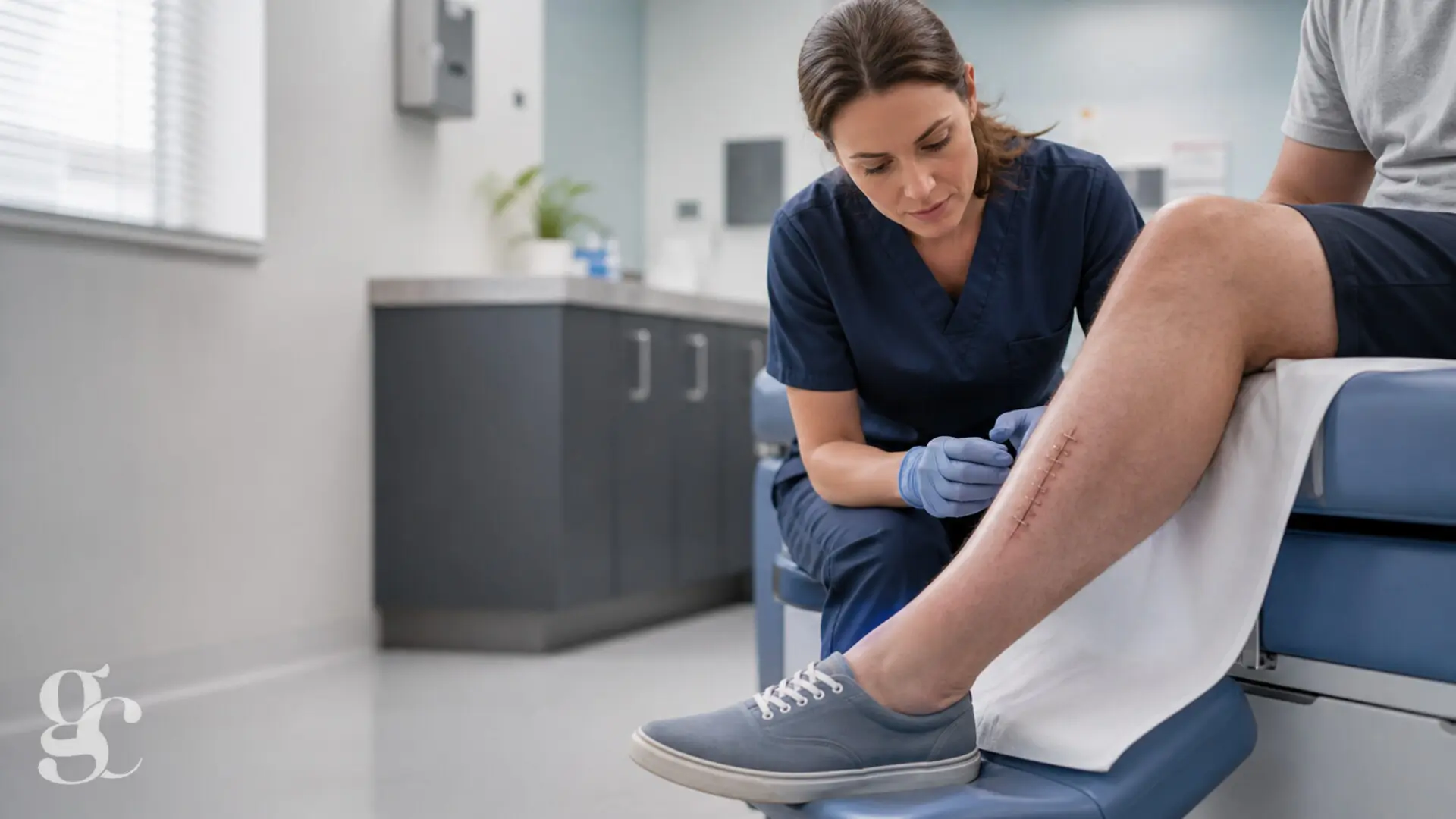
Observe the trend without manipulating it: the edges should remain close together, the pain should not increase, there should be no new discharge, and the surrounding skin should not become redder, hotter, or more swollen. A slight pulling sensation or itching may accompany the healing process, but this does not prove that the wound is ready for removal.
Follow the written instructions. Do not remove a dressing just to count staples if the team has asked you to leave it in place. The post-operative dressing guide explains general principles, but your surgery protocol remains the priority.
What changes need to be reported quickly?
- A spreading redness, increasing heat or swelling.
- A new pain, stronger or different from that described upon discharge.
- Cloudy fluid, pus, blood, or an unusual odor.
- A staple that lifts up, sinks in, disappears under the skin or falls out.
- Edges that are starting to separate between two staples.
- A moderate fever, chills, malaise or a general deterioration in condition.
Contact the surgical department, doctor, or nurse as soon as any of these changes occur. An infection of the surgical wound may require treatment before the scheduled date. Do not wait until your removal appointment to report it.
Advertising
What should you do if a staple catches or seems to be moving?
Avoid clothing, towels, jewelry, combs, or bed linens that could snag the closure. If a protective pad has been prescribed, wear it as directed. Do not push a staple back into the skin, attempt to straighten it with pliers, or cut any exposed branch.
If a staple falls out, note the change and observe without pulling the edges apart. Contact the team promptly, especially if the wound gapes, bleeds, or oozes. The surgical wound drainage guide helps describe the fluid but does not determine its cause.
Why must the removal be carried out by a professional?
Before beginning, the professional verifies the patient's identity, the removal instructions, the procedure, and the appearance of the wound. They look for signs of infection, drainage, excessive tension, or poor closure. They may decide to postpone the procedure, request a surgical consultation, or remove only some of the staples, depending on the medical plan.
A staple remover is an instrument designed to bend the staple so that its prongs exit the skin at the correct angle. Household pliers, on the other hand, pull on the metal and tissue, exposing the user to pain, injury, contamination, retained fragments, or an open wound.
How does the collection appointment work?
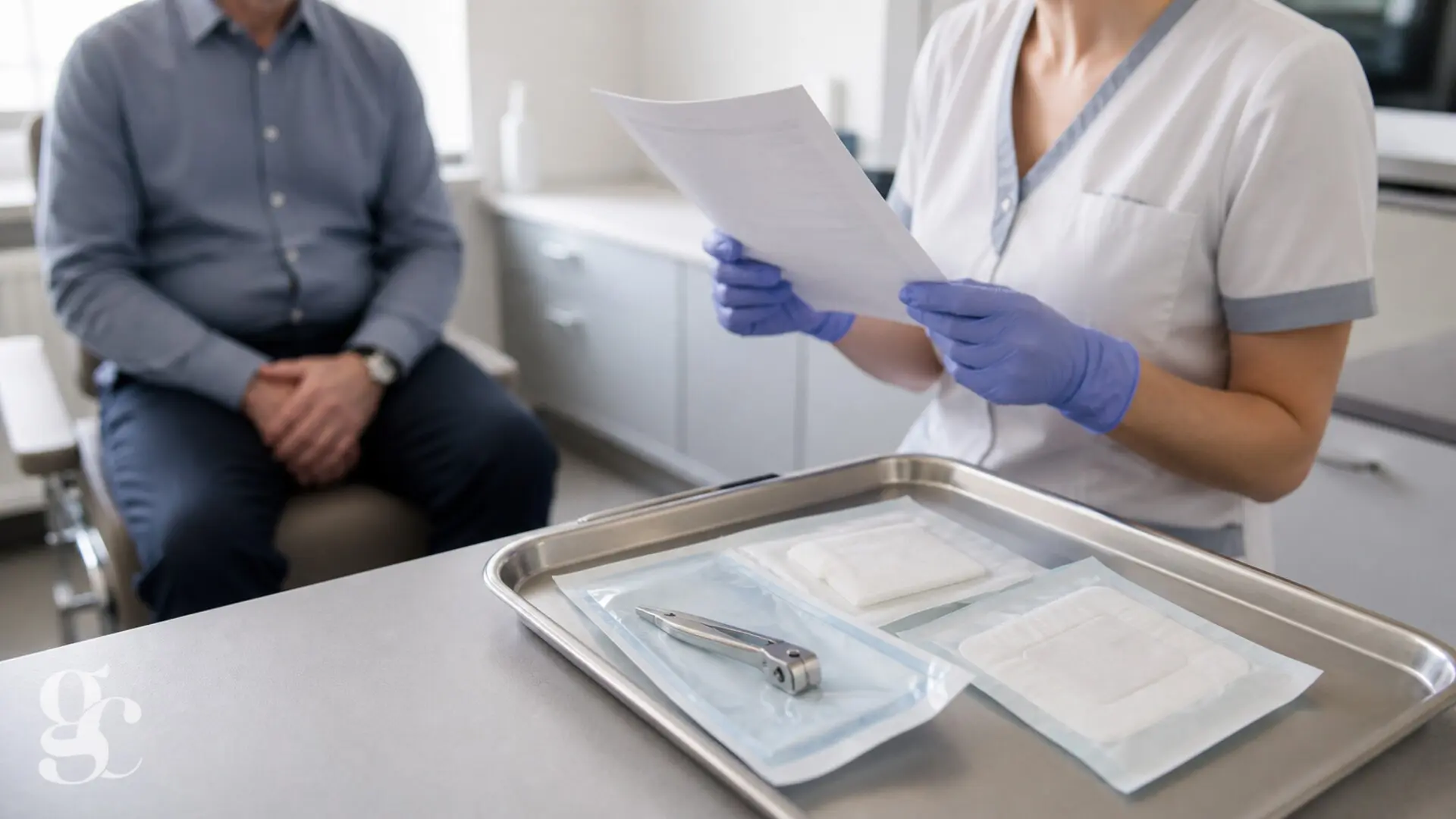
Before the gesture
Bring your discharge summary, prescription, and extractor if the facility provided one. Report any unusual pain, bleeding, discharge, adhesive allergies, and medications that affect blood clotting. Do not stop taking any medication on your own.
During the withdrawal
The professional removes the dressing if necessary, examines the line, cleans according to protocol, and then uses the extractor. They check each staple removed and monitor the behavior of the edges. A brief pulling sensation is possible; significant pain should be reported immediately rather than ignored.
After the gesture
Strips or a dressing may be applied if the healthcare professional deems it necessary. Ask for new instructions regarding hygiene, activities, and monitoring. Staple removal does not mean that the underlying tissues have regained their full strength or that all restrictions have been lifted.
Advertising
What actions should be avoided?
- Remove a staple with pliers, nail clippers, or a tool purchased online.
- Test the closure by pulling on the edges or pressing between the staples.
- Scrape off scabs, pierce a blister or squeeze a discharge.
- Applying an unsolicited antiseptic, cream, oil, or homemade preparation.
- Take a leftover antibiotic or change an anticoagulant without a prescription.
- Begin scar massage as long as the skin is not completely closed and cleared.
An itchy scar after surgery should not be relieved by manipulating the staples. Limit friction and seek medical advice if the discomfort becomes severe or is accompanied by a skin reaction.
When does the urgency outweigh the scheduled collection appointment?
Contact the service immediately if the wound reopens, if drainage occurs, if the dressing becomes saturated, if pain or swelling increases, or if there are signs of infection. The healthcare professional performing the removal should not discover a complication at the appointment that is already visible at home.
Call 15 (SAMU) in France, or 112 from any European country, if you experience heavy bleeding, a large open wound with visible deep tissue, significant discomfort, loss of consciousness, confusion, difficulty breathing, very pale or mottled skin, or rapid deterioration. Follow the operator's instructions and do not drive yourself if your condition is unstable.
F.A.Q
Is staple removal always painless?
No. Some people feel very little, others a pulling sensation or more pronounced discomfort. Severe pain, blockage, or bleeding should prompt the professional to reassess the procedure.
Can only some of the staples be removed?
Yes, in certain situations, but this decision rests with the professional after examination and according to medical advice. It should not be attempted at home.
Can a buried staple be pulled out further?
No. A staple covered by the skin or difficult to remove requires medical advice and appropriate equipment. Pulling harder can damage the wound or leave a fragment.
Verified institutional sources
- French National Authority for Health: Dressings for sutured wounds after surgery
- NICE: Prevention and treatment of surgical site infections
- University Hospitals Plymouth NHS Trust: Wound care and staple removal
- South Tees Hospitals NHS Foundation Trust: Staples and postoperative monitoring
- University Hospitals Sussex NHS Foundation Trust: Wound closure and monitoring
- NHS Borders: Professional Staple Removal Procedure
- Health insurance: Care, closure and monitoring of a wound
Transparency: None of the links in this article are affiliate links. No extractors, bandages, or skincare products are recommended for purchase.
Editorial note: This general information article was verified on July 17, 2026. Staple removal must be decided upon and performed by a professional after examination of the wound. The surgeon's and department's instructions take precedence over this guide.