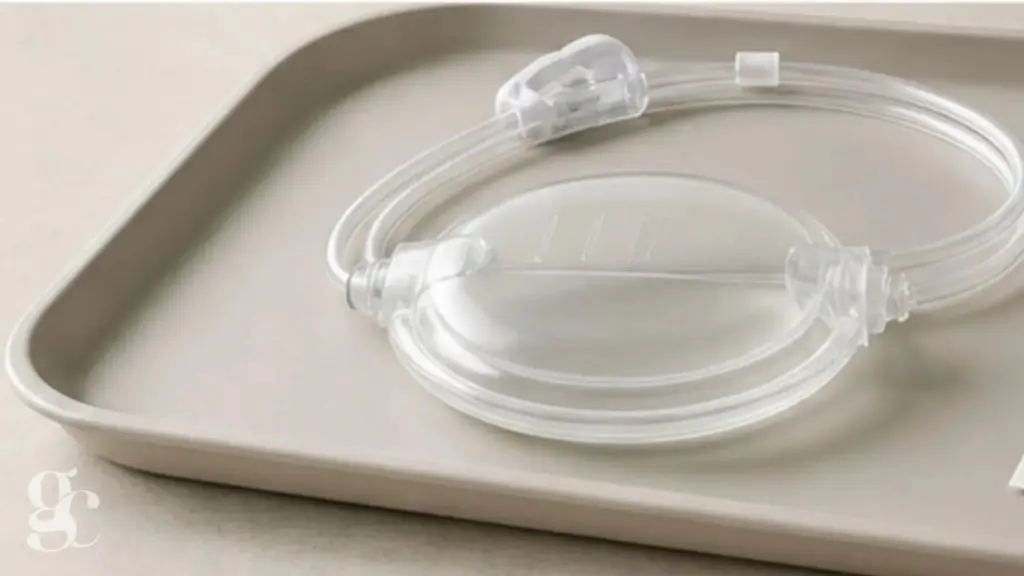
Going home with a surgical drain is possible when the team has arranged follow-up care, explained the device, and provided instructions. The drain removes fluid or air that may accumulate near the surgical site. Its presence does not necessarily mean that a complication has occurred, but it does require regular monitoring and adherence to instructions specific to the procedure.
A surgical drain at home should never be removed, reinserted, disconnected, or emptied unless the healthcare team has specifically instructed you on how to do this. If you experience heavy bleeding or bright red blood suddenly entering the drain, accompanied by dizziness, paleness, confusion, loss of consciousness, difficulty breathing, or rapid deterioration, immediately call 15 (SAMU) in France, or 112 from any other European country. Do not drive yourself if your condition is unstable.
What is the purpose of a drain after an operation?
A drain is a flexible tube placed by the surgeon to guide blood, secretions, lymph, or air out of the body. It can help limit fluid collection in certain situations. Its purpose, placement, and timing of removal depend on the procedure performed and the clinical course.
Several systems exist: some operate by suction, others by gravity; some lead to a closed reservoir, others to a bag or a different device. Two drains that look similar may therefore require separate piping. The site survey and team demonstration always take precedence over general advice found online.
What should be checked before returning home?

- The name or type of device, its purpose and the area concerned.
- The way in which the tube and the reservoir must remain fixed.
- The observations to be noted and the measurement method, only if it has been taught.
- Rules regarding hygiene, sleep, clothing and activity.
- The follow-up appointment and the arrangements made for the removal of the drain.
- The number for the surgery department to contact during the day, at night and on non-working days.
- The equipment provided or prescribed, without adding any product of its own initiative.
If any of this information is missing, contact the service before handling the device. The post-operative home checklist can serve as a reminder, while the plan established by the team remains the definitive reference.
Advertising
How to monitor a surgical drain at home?

The entry point into the skin
When the dressing allows, check for any spreading redness, increased warmth or swelling of the skin, increased pain, or leakage of fluid around the tube. Do not lift a dressing that should remain in place except to inspect the insertion site. These general principles of postoperative dressing supplement, but do not replace, the ward's instructions.
The tube and its fixing
Visually check that the tube is not trapped under the body, sharply kinked, pulled by clothing, or caught on furniture. The device must remain worn and secured as the team has demonstrated. Do not attempt to clear a possible blockage by squeezing the tube, and do not alter any clamp, connection, or setting without individual instructions.
The reservoir and the liquid
If monitoring has been requested, observe the trend, appearance, and markings on the container. A single color alone is insufficient to identify the cause of a discharge. In particular, report any sudden change, cloudy or foul-smelling fluid, bright red blood, leakage, or cessation of flow accompanied by pain or swelling. There is no universally applicable volume that can be used to make a diagnosis on one's own.
Should the drain reservoir be measured or emptied?
Only if the instructions you received upon discharge from the hospital specify it and if a healthcare professional has guided you through the procedure. The type of reservoir, the reading method, and how to maintain the closed system vary. If you were given a monitoring sheet, record the information at the requested intervals, including the time of observation and any changes noted.
Without proper training, do not open the container, transfer its contents, or attempt to recreate suction. Contact the team if the tank appears full, if its operation seems different, or if you have any doubts. Improvised handling can contaminate the system, alter drainage, or mask a problem.
What signs indicate that you should contact the team quickly?
- A new, stronger or different pain near the drain or the operated area.
- A spreading redness, heat, swelling or increasing hardening.
- Pus, an unusual odor, cloudy liquid, or a significant leak around the tube.
- A moderate fever, chills, malaise or a general deterioration in condition.
- A sudden change in flow, including a stoppage accompanied by tension or pain.
- A sudden increase in fluid, bright red blood, or a dressing that becomes saturated rapidly.
- A tube that appears out of place, a broken fitting, a disconnection or a tank that no longer functions as shown.
Don't wait until your next appointment to report these changes. A surgical site infection , fluid collection, or device problem requires appropriate consultation. The surgical wound drainage guide helps you describe what you see without making a diagnosis.
Advertising
What should I do if the drain comes loose, moves, or disconnects?
Never reinsert a drain into the wound. Do not push it in, pull on the remaining portion, or probe the opening. If the tube has come out, simply protect the area with a clean dressing without applying pressure to the wound, and then contact your healthcare provider immediately. If it is partially displaced or disconnected, keep the device still and seek professional instruction.
Do not reconnect any components, cut the tubing, or apply a clamp on your own initiative. In case of severe bleeding, respiratory distress, intense chest or abdominal pain, loss of consciousness, confusion, or rapid deterioration, call 15 (SAMU) in France, or 112 from any European country.
How can I live with the drain without putting it under strain?
Toileting and care
Wash your hands before approaching the area. Whether you can shower, wet the dressing, or use a protective covering depends on the procedure and equipment. Do not immerse the drain and do not apply any antiseptic, cream, powder, or homemade preparation unless prescribed.
Clothing, sleep, and travel
Choose clothing that won't snag the tube. Place the reservoir in the recommended holder, ensuring it doesn't dangle. When sleeping, maintain the permitted sleeping position and check that the device isn't jammed before getting up. When traveling, take the discharge summary and the service's contact information with you.
Activity and medications
The movements permitted depend on the surgery. Avoid any activity that puts strain on the tube until advised by the team and follow the post-surgery recovery program at home . Do not start any remaining antibiotics, change any blood thinning medication, or alter your pain medication after the operation without medical advice.
When and how is the drain removed?
Removal is decided by the surgeon or the responsible team after evaluating the reason for drainage, the clinical examination, and, when relevant, the observed progress. There is no universal duration or quantity applicable to all procedures. Low drainage or a fixation suture that appears loose does not justify removing the tube.
The procedure must be performed by a professional according to the provided plan. Do not attempt to cut a fixation, numb the area with a product, or replicate a video. If the appointment is not clearly scheduled, call the department rather than waiting or improvising.
Advertising
F.A.Q
Does a drainage stoppage mean that the drain can be removed?
No. This could be a normal progression, but it could also be due to a kinked, displaced, or blocked tube. If the blockage is sudden, accompanied by pain, tension, or swelling, contact the team immediately without squeezing the tube.
Can we wait if the drain falls out but the wound is not bleeding?
No. Protect the opening without attempting to reinsert the tube and contact the surgical department immediately. The team will decide on the next steps based on the procedure, the timing of the transfer, and your condition.
Is the color of the fluid enough to identify an infection?
No. The appearance must be interpreted in conjunction with the pain, odor, temperature, skin condition, and your overall health. Describe the changes to the healthcare professional without presuming to determine their cause.
Verified institutional sources
- French National Authority for Health: Organization of the return home after outpatient surgery
- National Cancer Institute: Post-surgery and drain
- National Cancer Institute: Definition of a drain
- Alder Hey Children's NHS Foundation Trust: Discharge information with a drain
- Cambridge University Hospitals NHS Foundation Trust: Returning home with a drain
- NICE: Prevention and treatment of surgical site infections
- Guy's and St Thomas' NHS Foundation Trust: Surgical wounds and signs of infection
Transparency: None of the links in this article are affiliate links. No drains, dressings, antiseptics, or accessories are recommended for purchase.
Editorial note: This general information article was verified on July 17, 2026. It does not replace a service demonstration, a discharge summary, or medical advice. The instructions of the team that inserted the drain take precedence over this guide.