Lymphedema and compression stockings: compression is a cornerstone of treatment, but it's not something you can just pick off the shelf. The French National Authority for Health (HAS) describes a two-phase treatment plan: volume reduction followed by a maintenance phase, using compression bandages, stockings, sleeves, or garments depending on the situation. The NHS adds three other components: skin care, exercise, and lymphatic drainage. Here's what distinguishes compression for lymphedema from that for varicose veins, how to wear and care for the garment, and how to protect the skin.
Quick answer
The compression garment for lymphedema is chosen and fitted by your healthcare team, who will also teach you how to put it on. Commercially available stockings for heavy legs are not a substitute.
Skin matters too: the NHS recommends moisturizing it every day, replacing soap with a gentle product and treating any cuts immediately, as lymphedema exposes you to skin infections.
| Phase | What the HAS and NHS describe | Who is in charge of it? |
|---|---|---|
| Volume reduction | Bandages, exercises, lymphatic drainage, skin care | Specialized team, trained physiotherapist |
| Maintenance | Compression garments worn daily, self-massage, exercise, skincare | You, with regular checkups |
Lymphedema and compression stockings: how is compression different?
In varicose veins, compression helps the blood flow back towards the heart. In lymphedema, it's the lymph that stagnates because the lymphatic system is no longer draining it properly. The NHS explains that this system doesn't have a central pump: it relies on muscle massage. Compression acts as a point of leverage for the muscles and pushes the fluid out of the limb.
This is why compression goes hand in hand with movement. It can take several forms: sleeves and gloves for the arm, stockings or tights for the leg, or Velcro bandages that are easier to apply yourself. To understand the condition itself, see our guide to leg lymphedema or arm lymphedema after breast cancer.
The two phases of treatment
The HAS (French National Authority for Health) describes a two-stage decongestive therapy, regardless of the location of the swelling. During the intensive phase, the NHS indicates that care can be provided daily for several weeks, with bandaging, exercises, and massages performed by a specialist therapist. This is followed by the maintenance phase: you take over with a compression garment, self-massage, exercise, and skin care, with check-ups every few months.
Advertising
Who chooses the clothing?
- The garment is prescribed and adjusted by the team that monitors the lymphedema; it is reviewed if the volume of the limb changes.
- You learn how to put it on correctly before wearing it on your own, according to the NHS.
- Compression is not suitable for everyone: the NHS cites leg artery problems, and the HAS reminds us that each device has its contraindications.
- The general rules for stockings (classes, sizes, refunds) are in our guide to compression stockings.
Wearing and caring for the garment
- Put it on in the morning, on clean, dry skin, without cream: cream makes it difficult to put on, reminds the Health Insurance.
- Have two garments so you can wash them alternately, in lukewarm water and without fabric softener, unless the instructions allow it in the washing machine.
- Dry them flat, never in a tumble dryer.
- Report to the team any clothing that is tight, rolls down, or no longer stays in place: the volume of the limb may have changed.
If putting on is difficult, a sock aid can help with the leg, provided the team approves it.
Taking care of the skin
The NHS considers skin care one of the four pillars of treatment to reduce the risk of infection. Its prevention advice is simple:
- Keep skin clean and dry, and replace soap with a mild cleansing product.
- Moisturize it daily to keep it supple; a doctor can prescribe a suitable cream.
- Disinfect any cut or scratch immediately, and protect yourself from insect bites.
- Avoid very hot baths and showers, saunas and steam rooms, and protect your skin from the sun.
- Wear gloves when gardening or cleaning, and cut your nails carefully.
The National Cancer Institute includes the daily application of an emollient cream among the maintenance treatments. The French National Health Insurance (Assurance Maladie) advises applying it in the evening before bed, after removing the stockings, when wearing compression stockings.
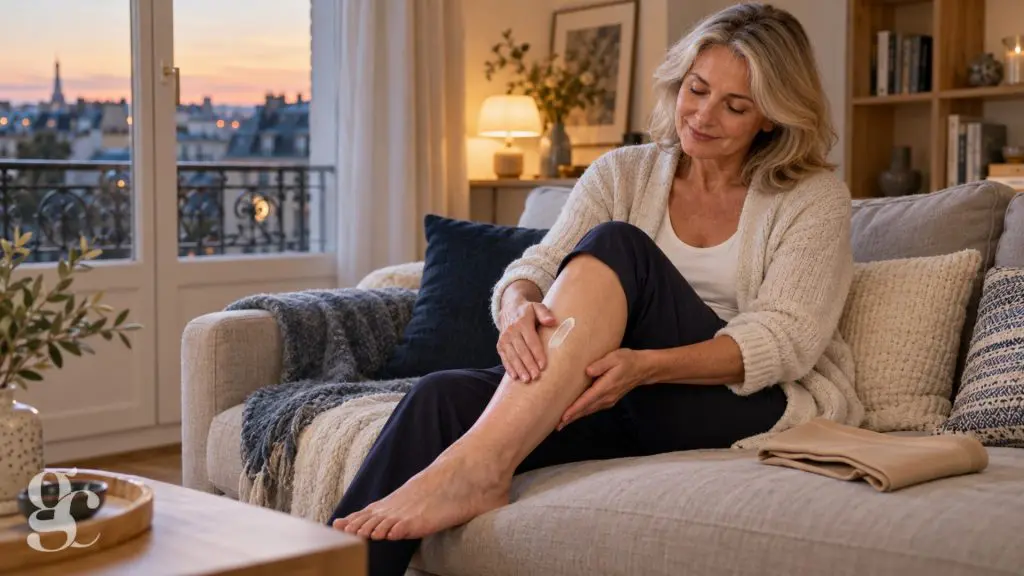
An emollient for dry skin
This hygiene product does not treat lymphedema. It is an example of an emollient, for the daily routine recommended by the NHS; your healthcare team can advise you on another product or prescribe a cream. For washing, choose a mild, soap-free cleanser.
The risk of infection: erysipelas
The French National Health Insurance (Assurance Maladie) lists lymphatic circulation disorders among the factors that contribute to erysipelas, a skin infection caused by bacteria. It manifests as a painful, red rash, most often on the leg, accompanied by fever. The National Cancer Institute considers it the main complication of lymphedema and advises seeking urgent medical attention in case of fever or redness in the affected area. It emphasizes the importance of consulting a doctor at the first sign of symptoms, as antibiotics are necessary, and urgently for vulnerable individuals: those with diabetes, heart failure, obesity, weakened immune systems, very high fever, or a severely compromised general condition.
Emergency: If you experience a rapidly spreading rash accompanied by a high fever, general malaise, confusion, or sudden shortness of breath, immediately call 15 (SAMU) in France, or 112 from any other European country. Do not drive yourself.
F.A.Q
Should the garment be kept on overnight?
This depends on the phase of treatment and the prescription: follow the instructions of the team that is treating you.
Is it the same compression as for lipedema?
No. These are two different conditions, even though they can occur together. See lipedema or lymphedema: the differences and our guide to compression garments for lipedema.
And what about taking the plane?
For lymphedema following cancer, the National Cancer Institute states that there are no contraindications to flying, regardless of the number or duration of flights. Ask the crew how to wear your clothing during the flight. For general guidelines, see Flying After Surgery.
Institutional sources
- French National Authority for Health, Medical compression in the treatment of lymphedema (best practices guide, updated January 11, 2013), accessed on October 23, 2026.
- NHS, Lymphedema: treatment, accessed on October 23, 2026.
- NHS, Lymphedema: prevention (review of March 29, 2023), accessed on October 23, 2026.
- Health Insurance, How to use your compression socks, stockings or tights (October 14, 2025), accessed on October 23, 2026.
- Health Insurance, Recognizing erysipelas (March 29, 2024), accessed on October 23, 2026.
- Health Insurance: What to do in case of erysipelas? (October 3, 2024), accessed on October 23, 2026.
- National Cancer Institute, Lymphedema after cancer treatment (June 16, 2023), accessed on October 23, 2026.
Editorial note: This article was written on October 23, 2026, using institutional sources consulted on that date. It provides information without offering a diagnosis or replacing the advice of your healthcare team. Internal reference: compression stockings-lymphedema-20261023.