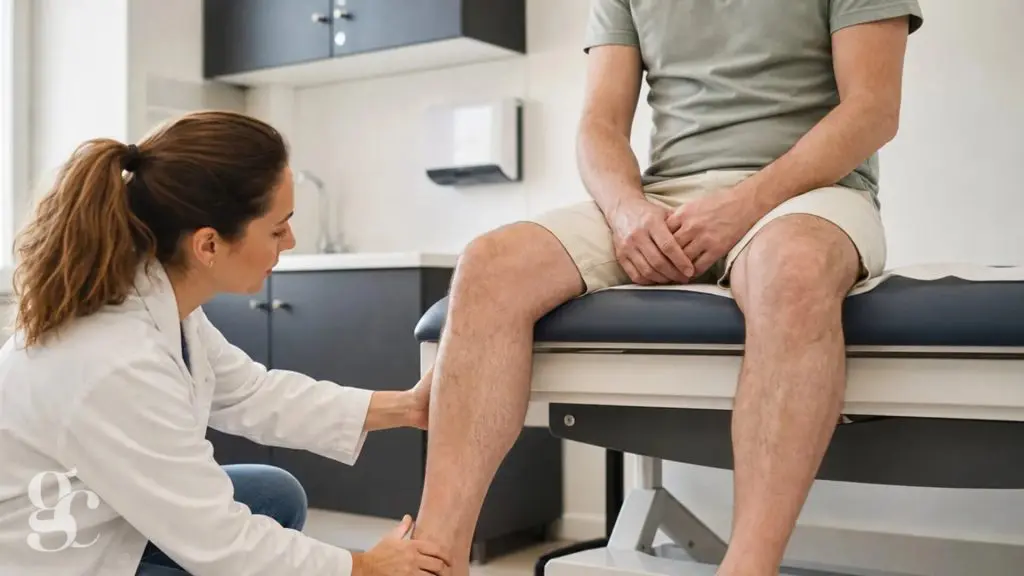
Lymphedema of the leg after surgery does not automatically explain all swelling. In the first few days, inflammation, immobility, or the surgical procedure itself can account for some of the volume. Conversely, phlebitis or infection sometimes need to be investigated quickly.
For general rules on compression stockings (classes, prescription, care), see our guide to compression stockings.
Lymphedema is a persistent accumulation of fluid in the tissues when the lymphatic system is no longer draining properly. It can occur after surgery involving lymph nodes or lymphatic vessels, particularly in certain cancer treatments. This guide helps organize observations and consultations, without making a diagnosis remotely.
Why might lymphedema of the leg occur after surgery?
The lymphatic vessels and lymph nodes play a role in returning fluids from the tissues. Surgery, lymph node dissection, radiation therapy, or a deep scar can alter this network. The remaining drainage sometimes compensates for a long time; in some people, swelling then gradually develops.
The risk depends on the area operated on, associated treatments, medical history, and the condition of the limb. It cannot be deduced solely from the name of the procedure. Surgery without lymph node removal can also be followed by edema for another reason, such as inflammation or venous disease.
What signs might suggest lymphedema of the leg?
A volume that persists or increases
Swelling can affect the foot, ankle, calf, thigh, or several of these areas. Shoes become tighter, sock marks remain visible, or both legs no longer fit the same way into clothing. The volume may initially fluctuate throughout the day before becoming more consistent.
A feeling of heaviness or tension
The leg may feel heavy, tense, or less mobile. The skin is sometimes supple at first and then thickens over time. These signs are not specific: venous insufficiency, a deep hematoma, or postoperative edema can give a similar impression.
Our comparison between lipedema and lymphedema details, in particular, symmetry, foot involvement, and sensations. None of these indicators replaces a clinical examination.
Advertising
How can it be distinguished from expected postoperative edema?
Swelling related to the surgical procedure generally appears in a timeframe consistent with the intervention and evolves as the wound heals. The surgeon is familiar with the treated area, the tissues involved, and the typical progression. The information sheet on postoperative edema explains the general indicators and signs that warrant a consultation.
Lymphedema is suspected when the swelling persists, recurs, or progresses beyond the expected rate, particularly if a lymphatic vessel may have been affected. It can also develop some time after surgery. Therefore, the date alone is insufficient to confirm or rule out the diagnosis.
Which diagnoses should be ruled out first?
Phlebitis
New calf pain, swelling (especially on one side), localized warmth, or a change in color may prompt investigation for deep vein thrombosis (DVT). Symptoms vary and can sometimes be subtle. After surgery, it's important not to wait until all the signs are present before seeking medical advice.
Skin or deep infection
Spreading redness, hot and painful skin, chills, or a general decline in health require prompt evaluation. A person with pre-existing lymphedema may be more susceptible to skin infections. Guides on fever after surgery and wound infection can help prepare for the call without delaying treatment.
A venous, articular or general cause
Venous insufficiency, significant limitations in walking, certain heart, kidney, or liver problems, and several medications can also contribute to edema. The doctor will assess the location of the swelling, whether it affects both legs, the patient's medical history, and other symptoms before determining a lymphatic origin.
When should you seek urgent help?
Sudden swelling of a leg, especially if accompanied by pain, warmth, or a change in color, should be evaluated promptly. Sudden shortness of breath, chest pain, dizziness, or bluish lips require immediate medical attention. These signs may suggest a pulmonary embolism and should not be attributed to known lymphedema.
Extensive redness accompanied by fever or chills also warrants prompt medical attention. Aside from these emergencies, contact the surgical team or your primary care physician if the leg swells, if the skin changes, or if mobility decreases.
Advertising
How is the diagnosis made?
The history and clinical examination
The doctor reviews the type of surgery, any lymph node removal, associated treatments, and timeline. They examine the skin, foot, scar, and mobility, and compare the limbs. Reproducible measurements are used to document progress rather than drawing conclusions from a single photograph.
Further tests depending on the doubt
A venous Doppler ultrasound may be requested to investigate a venous cause. In more complex situations, specialized lymphatic system testing or tissue imaging can help refine the diagnosis and guide treatment planning. Not all patients require the same tests.
What treatment can be offered?
Treatment aims to control swelling, preserve mobility, protect the skin, and limit infections. It often relies on decongestive physiotherapy, organized into a reduction phase followed by a maintenance phase. The program may combine compression, adapted movements, skin care, and manual techniques performed or taught by a trained professional.
Manual lymphatic drainage is not a universal, standalone treatment. Its effectiveness depends on the context and, when indicated, it is integrated into a broader range of measures. A wellness session marketed as a "detox" is no substitute for a comprehensive assessment or coordinated care.
Why does compression need to be prescribed and measured?
Bandages, socks, stockings, or tights do not all serve the same purpose depending on the stage of the condition, the shape of the leg, the skin type, and any contraindications. The choice of material, length, and level of compression must be individualized. A device that is too tight, rolls down, or leaves significant marks warrants reassessment.
Compression stockings worn after surgery may serve a different temporary venous purpose than those used for chronic lymphedema. Therefore, purchasing a "powerful" model based solely on online reviews may be ineffective or poorly tolerated.
When the garment has already been prescribed and measured, the difficulty may lie in the act of putting it on. The healthcare professional must assess hand strength, mobility, foot type, and the knit before offering assistance. An accessory cannot correct an incorrect size and cannot replace the recommended garment.
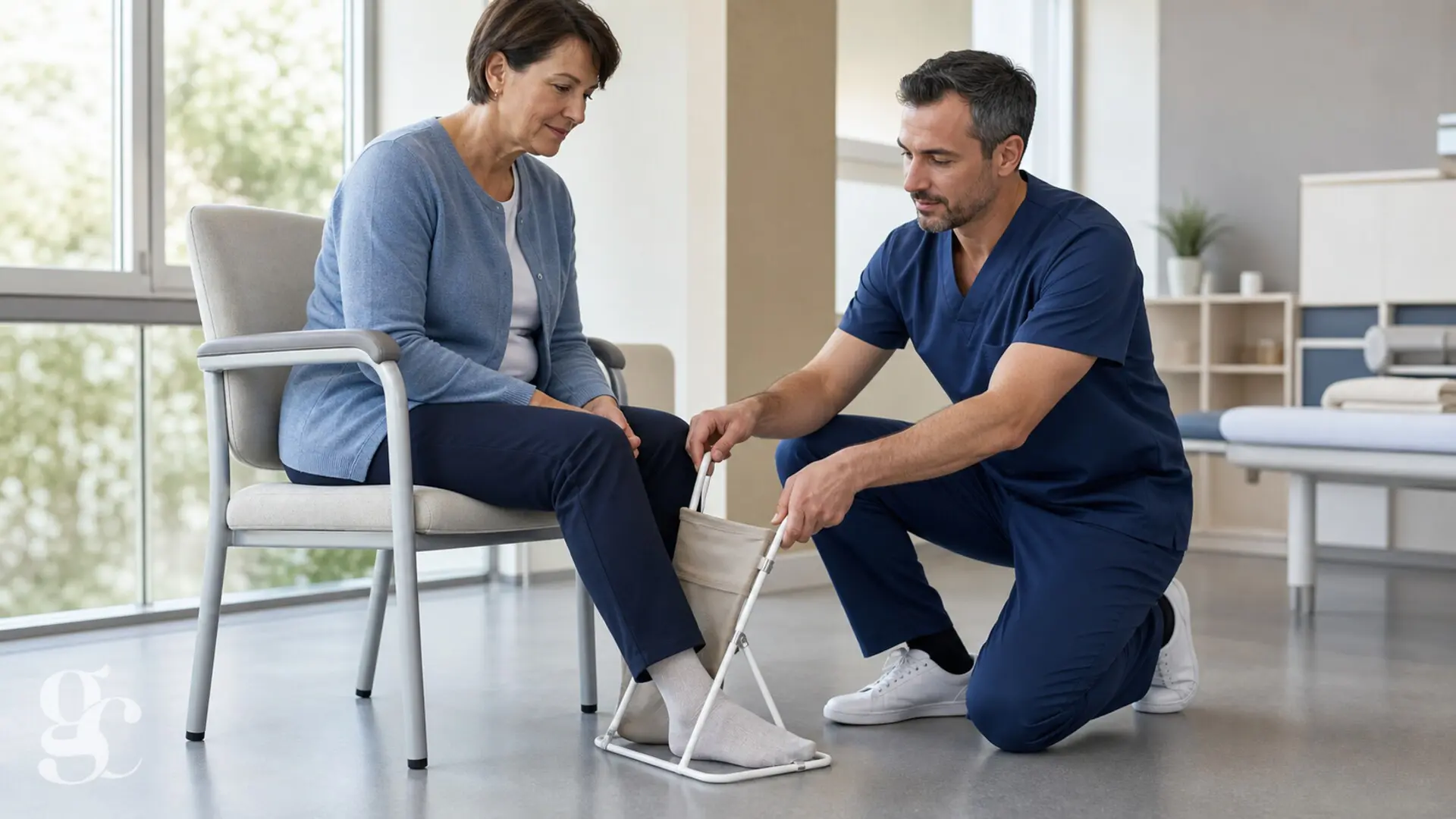
Transparency: The links for the donning aid shown below are affiliate links. GuideChirurgie may receive a commission without changing the price you pay. Check with your healthcare professional that this mechanism is suitable for your compression garment, your strength, and your mobility before ordering.
What can I do at home while waiting for the appointment?
- Note the date of appearance and the areas concerned;
- photograph the leg under similar conditions, without multiplying improvised measurements;
- observe the skin, shoes, mobility and variations throughout the day;
- Follow the post-operative instructions already given and do not add compression therapy or firm massage without advice;
- Prepare the operative report, treatments and vascular history.
The medical preparation checklist can also be used to gather documents for a post-operative consultation. If symptoms change rapidly, call rather than waiting for a scheduled appointment.
Advertising
To remember
Lymphedema can occur after surgery, especially when the lymphatic system has been affected, but not every swollen leg is lymphedema. The priority is to rule out urgent causes, document the progression of the condition, and obtain a complete evaluation. Compression and drainage strategies are then determined through an individualized approach.
Sources
- National Cancer Institute: Lymphedema after cancer treatment
- French National Authority for Health: Medical compression and lymphedema
- International Society of Lymphology: 2023 Consensus on the Diagnosis and Treatment of Peripheral Lymphedema
- Health Insurance: Symptoms and diagnosis of phlebitis
- NHS: Lymphoedema: overview, diagnosis and treatment