Lymphedema of the arm after breast cancer can begin with heaviness, a tighter sleeve, or a swollen hand. These signs are worth noting, as they can also indicate inflammation, shoulder weakness, infection, or another complication that requires further investigation.
Lymphedema occurs when lymphatic drainage of the arm becomes insufficient. It can develop after axillary lymph node surgery or radiation therapy, sometimes long after treatment has ended. Early management helps control symptoms and preserve mobility.
Why might lymphedema of the arm occur after breast cancer?
The lymph nodes and vessels in the armpit contribute to the drainage of the upper limb. Lymph node removal, lymph node dissection, radiation therapy, or wound healing can alter this network. The remaining system often compensates, but this compensation may become insufficient in some individuals.
The risk is not the same for all patients and cannot be calculated from a single element. The type of treatment, the extent of the lymph node procedure, the condition of the shoulder, weight, and other factors are interpreted together by the team.
What are the first signs to watch out for?
Tighter objects or clothing
A ring, bracelet, watch, or sleeve may become less comfortable on the treated side. Swelling may affect the fingers, hand, forearm, arm, or several areas. It is sometimes subtle and variable at first.
A different heaviness, tension, or mobility
The arm may feel heavy, tense, numb, or less flexible. Difficulty raising the arm can also stem from shoulder stiffness, postoperative pain, or scar tissue adhesions. Therefore, the assessment should examine both volume and function.
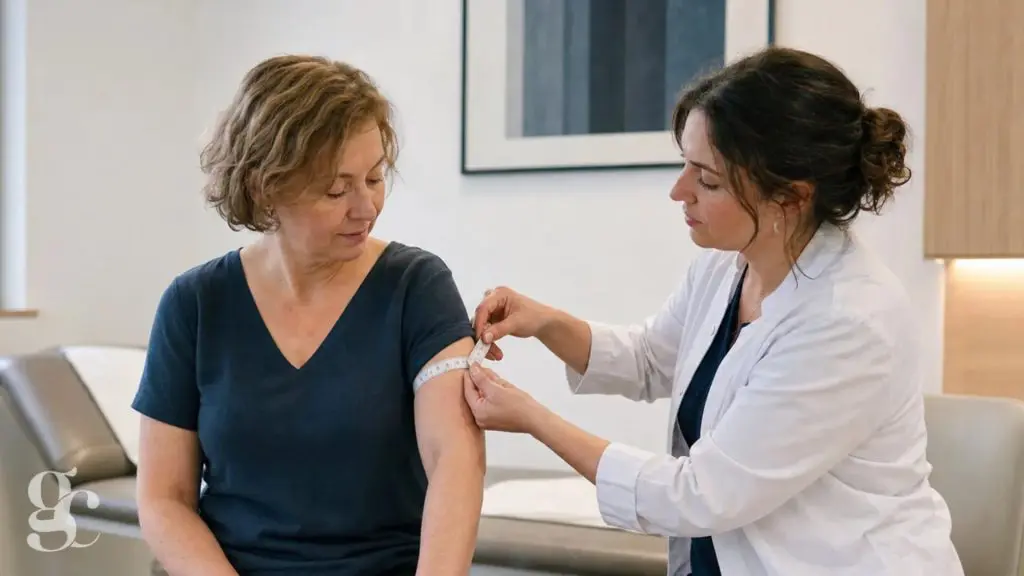
Comparable photos and a brief timeline can help with the appointment. However, avoid repeatedly squeezing the arm with a measuring tape: a useful measurement should follow reproducible guidelines.
Advertising
Can it appear long after treatment?
Yes. Lymphedema can develop during the treatment process or later. A normal arm in the months following surgery does not definitively rule it out. Conversely, very early swelling is not necessarily chronic lymphedema.
The guide on lymphedema after surgery explains the common mechanisms and the urgent causes to rule out. In the upper limb, it is also necessary to examine the shoulder, the scar, the breast, and the armpit.
What other causes can make the arm swell?
Postoperative edema and lymphocele
Transient inflammation may occur after surgery. A lymphocele is a localized pocket of lymph near the surgical site; it is not the same as diffuse lymphedema of the arm. The surgical team can provide details on the expected outcome.
The infection
A spreading redness, hot and painful skin, chills, or fever require prompt medical attention. The information sheet on surgical scar infection outlines the important details to provide when calling for help.
A thrombosis or a cancer-related problem
Sudden, very painful swelling, or swelling accompanied by shortness of breath, should be evaluated immediately. A new symptom after cancer treatment may also warrant further investigation. This does not necessarily mean there is a recurrence, but it does mean that you should not assume you have lymphedema.
How is the diagnosis established?
The healthcare professional reviews the treatments received, the date of onset, previous infections, changes in volume, and functional limitations. They examine the arm, hand, skin, shoulder, and surgical area. Comparative measurements are taken to monitor progress.
An ultrasound or Doppler ultrasound may be requested if another cause is suspected. Specialized lymphatic system examination is reserved for certain situations, particularly when the diagnosis remains uncertain or when surgery is being considered.
Advertising
Can lymphedema be prevented?
Current recommendations do not justify systematically prohibiting physical activity, blood tests, blood pressure measurements, or air travel solely because of breast treatment. However, a specific situation may lead the medical team to issue different instructions.
Maintaining a healthy weight and gradually preserving shoulder mobility are important measures. Manual lymphatic drainage performed as a preventative measure in individuals without lymphedema does not replace follow-up care. Resuming activities must respect wound healing and adhere to oncological guidelines.
What does the support consist of?
Decongestive physiotherapy
The strategy combines, as needed, compression, appropriate activity, skincare, exercises, and manual techniques. A phase aims to reduce volume, followed by a maintenance phase to stabilize the result. Manual lymphatic drainage can complement the overall approach, but it is not sufficient when used alone.
The compression sleeve
The compression sleeve must fit the shape of the arm, hand, skin, and the therapeutic objective. Measurements and reassessments are necessary. A rolled edge, increased hand swelling, tingling, or pain warrants checking the fit. The selection, application, and care of a compression sleeve after breast surgery are detailed in a dedicated article.
The venous compression mentioned in our article on postoperative compression stockings does not address the exact same needs as a sleeve for lymphedema. Therefore, purchases based solely on the concept of "strength" should be avoided.
How to take care of your skin and stay active?
Supple, intact skin limits entry points for infection. Minor cuts, burns, or irritations should be cleaned and monitored according to the team's advice. Promptly report any widespread redness, abnormal heat, or general deterioration.
Progressive physical activity contributes to mobility, strength, and quality of life. It is built upon the individual's current situation, without immobilizing the arm out of fear. In case of pain or stiffness, a trained physiotherapist can coordinate shoulder exercises with lymphatic drainage.
When should you seek medical help quickly?
- the arm suddenly swells or becomes significantly more painful;
- a hot redness spreads or is accompanied by fever and chills;
- the hand changes color, becomes cold or loses sensitivity;
- shortness of breath, chest pain or discomfort appears;
- A new symptom persists despite the usual measures.
For a non-urgent appointment, prepare your surgery and radiotherapy reports, a list of treatments, and a timeline. The GuideChirurgie medical checklist can be used as a basis for compiling these documents.
Advertising
To remember
Arm lymphedema can occur after certain breast cancer treatments, either immediately or later. Heaviness, tighter clothing, or changes in hand deformities should be noted. Diagnosis is made to rule out other causes, and management then combines coordinated measures with tailored compression. The Lipedema & Compression guide allows for comparison of guidelines without confusing the mechanisms.
Sources
- National Cancer Institute: Lymphedema after cancer treatment
- National Cancer Institute: Prevention and treatment of lymphedema after cancer
- Health Insurance: Breast cancer treatments and side effects
- International Society of Lymphology: Consensus 2023
- French National Authority for Health: Medical compression and lymphedema