A compression garment for lipedema is a therapeutic device primarily intended to alleviate symptoms such as pain, heaviness, or discomfort. It does not eliminate fatty tissue and should not be sold as slimming leggings. The diagnosis, the area to be covered, the type of knit, and the compression level must be individualized.
For commercially available stockings and their compression classes, which should be distinguished from custom-made garments, see our guide to compression stockings.
The choice should be made in consultation with a doctor and a professional experienced in compression therapy. Pant size, a photograph, or customer reviews are not sufficient. This guide complements our section on the symptoms, diagnosis, and treatments of lipedema.
Quick answer
Compression garments for lipedema help alleviate symptoms such as pain, heaviness, or discomfort; they do not eliminate fatty tissue. The diagnosis, the area to be covered, the type of knit, and the pressure are determined in consultation with a doctor and a professional experienced in compression therapy.
| Option | What this guide says | To check |
|---|---|---|
| Custom-made flat mesh tights | Described by the French National Health Insurance (Assurance Maladie) in the management of lipedema; better suited to certain body types. | Prescription, measurements and area covered |
| circular knit stockings | Commonly used for venous compression; may be suitable in certain situations | Do not substitute it alone for the prescription |
| Sculpting, "draining" or anti-cellulite leggings | Undocumented compression, not equivalent | Instructions and device identification |
| Pant size, photo or customer reviews | These are not enough: several measures are needed. | Measurements taken by a professional |
What is the purpose of a compression garment for lipedema?
Compression can support tissues and reduce certain functional discomforts. The French National Health Insurance (Assurance Maladie) presents it as a component of symptomatic treatment. The desired effect is not an immediate aesthetic transformation, but improved comfort as defined in consultation with the individual.
The response varies depending on location, sensitivity, skin type, body shape, activities, and the possible presence of another venous or lymphatic disorder. Clothing that is effective for one person may be poorly tolerated or unsuitable for another.
What clothing cannot promise
- It does not cure lipedema;
- It does not melt localized fat;
- it does not guarantee that the evolution will stop;
- it does not replace the diagnosis of a suddenly swollen leg;
- It doesn't correct a bad size simply by being tighter.
A feeling of intense pressure is not proof of greater effectiveness. Compression should achieve its intended purpose without causing pain, numbness, discoloration, or skin damage.
Advertising
Medical compression or consumer leggings?
Medical garments are chosen for a specific indication, area, and pressure level. They come with instructions and dispensing guidelines. Sports leggings, sculpting leggings, "draining" leggings, or anti-cellulite leggings may compress without proper documentation and are not equivalent.
The word "compression" on a shop's label is therefore insufficient. Look for the prescription or specifications provided by the professional, the device identification, the area covered, the type of knit, the sizing chart, and the care instructions. For this reason, no commercially available compression garment is recommended in this article: only a donning aid is presented below, after its compatibility with the prescribed garment has been verified.
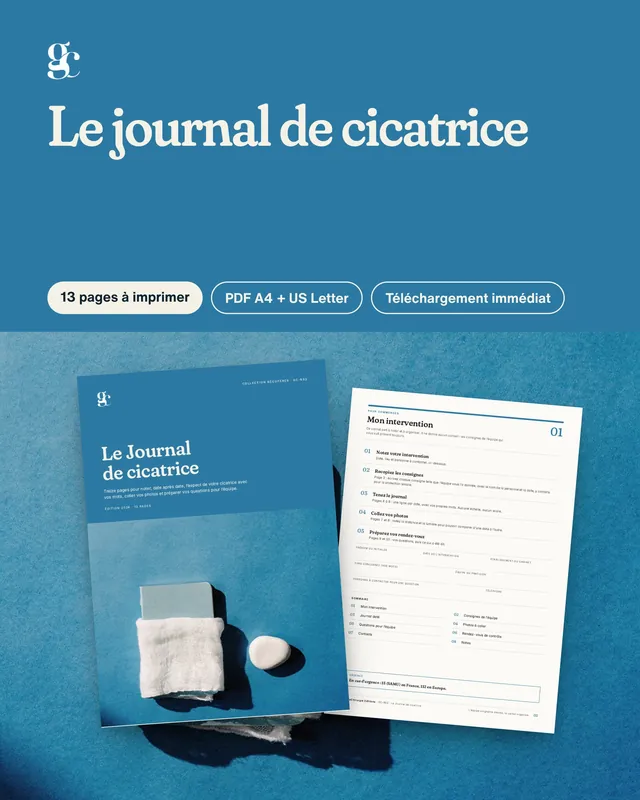
To find your clothing references and renewal dates, our Lipoedema Tracking Booklet (paid printable sheets) has a dedicated sheet for them, to be presented in store or during consultation.
What steps should I take before placing my order?
If the diagnosis is still unclear, start with our lipedema vs. lymphedema comparison guide . Ordering before this sorting process risks mixing medical compression garments, post-operative clothing, and consumer products.
Why is taking measurements so important?
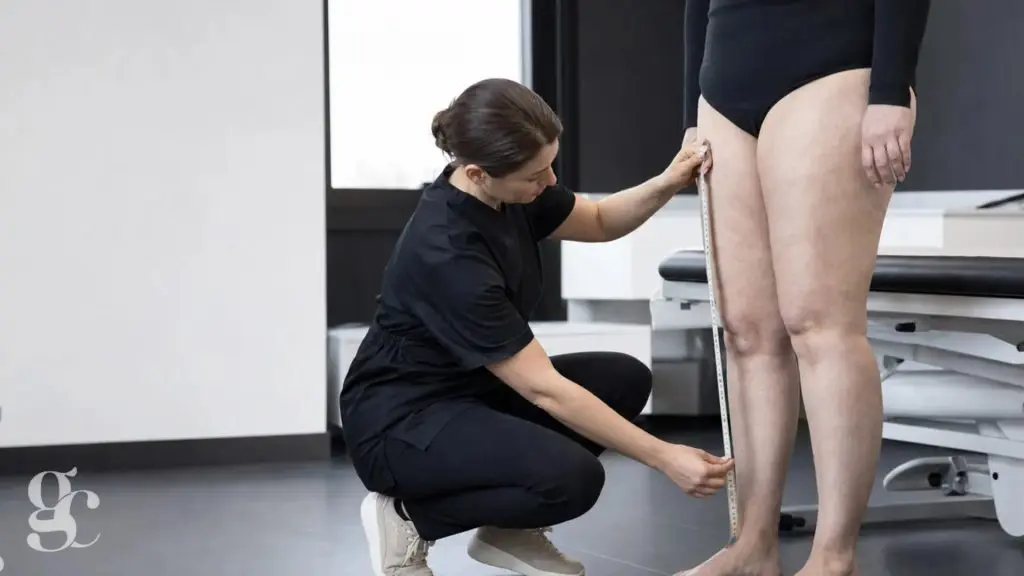
Lipedema can create significant differences in measurements between the waist, hips, thighs, knees, calves, and ankles. A standard size based on a single measurement may be too tight in one area and too loose in another. The professional will take several measurements depending on the specific garment and the manufacturer's instructions.
- It identifies changes in volume and unusual asymmetries;
- He checks the skin, folds and sensitive areas;
- it determines the usable height of the garment;
- It takes into account mobility and the ability to put it on;
- He checks the adjustment after receipt and organizes the corrections.
A recent change in the limb, an infection, or new swelling can render an older measurement unusable. Edema occurring after surgery is a different matter and should not be used as the sole basis for resizing a garment for lipedema. Do not purchase multiple garments before confirming that the first one fits properly and is well-tolerated.
Advertising
Flat stitch or circular stitch knitting: what do you need to understand?
Flat knit
The French National Health Insurance (Assurance Maladie) describes the use of custom-made flat-knit stockings in the management of lipedema. This type of stocking can better adapt to certain complex body shapes and be more resistant to creasing. This does not mean that a single model is suitable for everyone.
Circular knitting
Circular mesh is found in many venous compression stockings. It may be suitable in certain situations, but it should not automatically replace a prescription for garments specifically designed for lipedema. Body shape and the risk of wrinkles are important factors.
The German recommendation for lipedema emphasizes adapting the material and pressure to the symptoms and tolerance. Therefore, the strongest class is not an end in itself.
What area should the garment cover?
Compression can be applied to the legs, hips, abdomen, or arms, depending on the distribution of symptoms. The garment's top edge and hem should avoid creating a painful bulge. A garment that ends in the wrong place can roll down or concentrate pressure.
The presence or absence of a foot, briefs, suspenders, or a closure depends on the chosen design. These options affect fit, hygiene, toileting, and donning. They must be discussed before ordering, not added afterward.
How to recognize an incorrect fit
- the garment rolls, slips or forms deep creases;
- an edge digs into the skin or creates a painful bulge;
- a new pain appears or increases;
- tingling, numbness or loss of sensation may occur;
- the toes or fingers become cold, pale, bluish or very swollen;
- The skin becomes red, irritated, cracked or develops a wound.
Remove the garment if any circulatory or neurological symptoms appear and seek medical advice immediately. Do not cut out any areas, fold over the edge, or add foam to correct the problem yourself: these alterations change the pressure distribution.
Advertising
How can I make it easier to put on without damaging the device?
The professional should demonstrate the correct technique for the garment. Distribute the fabric gradually instead of pulling on the top edge. Pleats should be smoothed without twisting the fabric. Grip gloves or a threading aid may be offered if strength, mobility, or pain limits the movement.
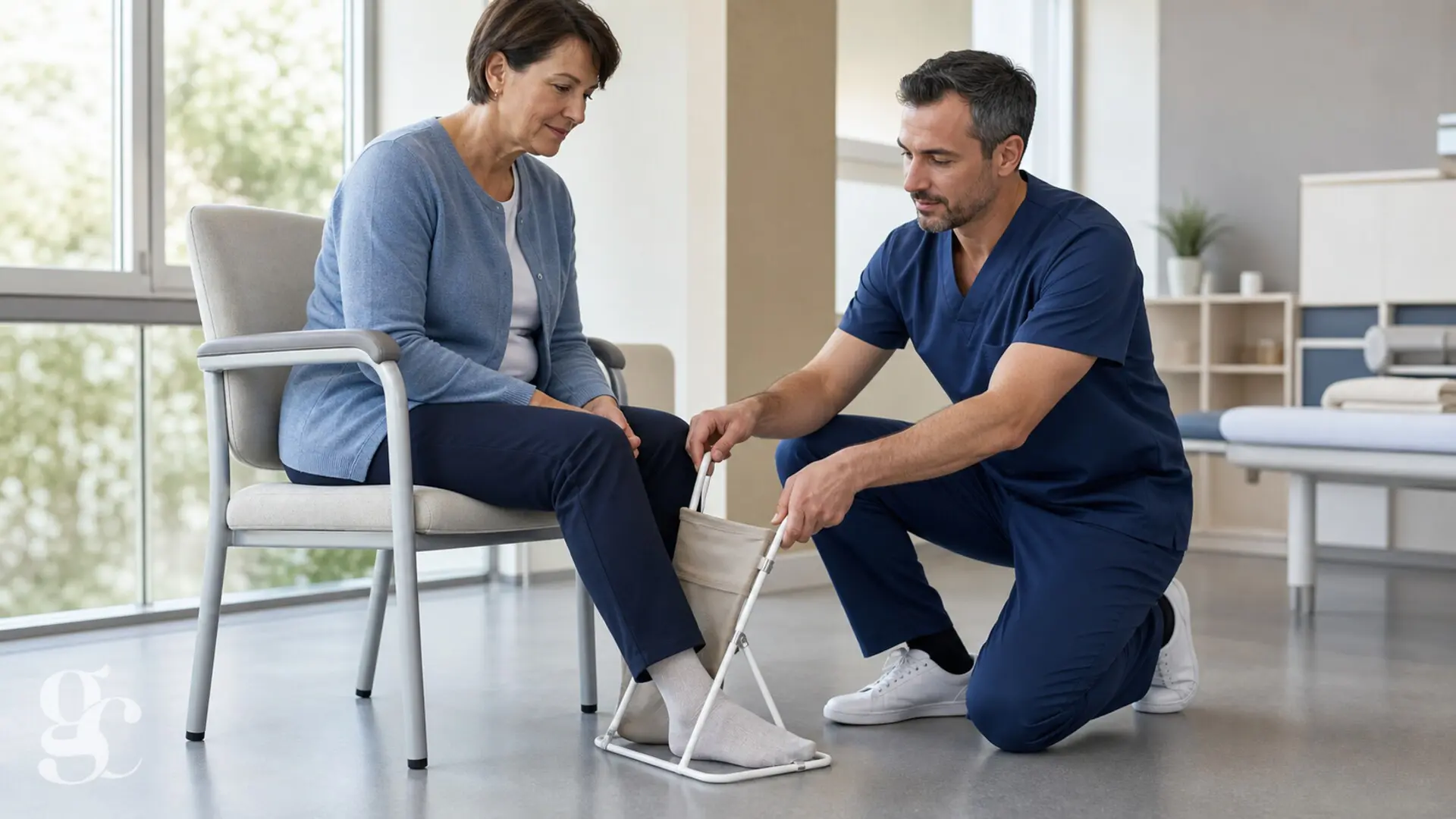
Our guide to compression stockings explains common purchasing mistakes, and our section on compression stocking aids compares the available mechanisms. However, the compatibility of any aid with your custom-made garment must be verified. Follow the washing and drying instructions; heat, harsh spin cycles, and unsuitable products can damage the fibers.
Commercial transparency: The image and button below are affiliate links to the exact same product page. GuideChirurgie may receive a commission without changing the price paid. This guide does not determine the garment, pressure, or size: first, have it confirmed to be compatible with the prescribed compression and to assess your ability to perform the procedure.
When should I ask for advice before placing any order?
An evaluation is particularly important in cases of unexplained pain, sensory disturbances, known arterial disease, fragile or damaged skin, infection, recent change in volume, shortness of breath, or unstable heart disease. Compression may be unsuitable or require a specific protocol.
A leg that suddenly becomes more swollen, hot, red, or painful should not be attributed to lipedema. Contact a healthcare professional promptly. Do not put on tighter clothing to try to hide the change.
Lipoedema compression and clothing after liposuction: what's the difference?
Conservative compression garments target the symptoms of diagnosed lipedema. Post-operative garments are designed to support a specific procedure involving incisions, swelling, and a surgical protocol. These are two distinct uses, even though stores sometimes use similar terminology.
After liposuction, the surgeon determines the model, the area, the timing of placement, and any necessary adjustments. Do not reuse an old prescription or purchase post-operative garments as a daily treatment for lipedema. The pre-operative checklist allows you to note the prescribed garment; compression stockings after surgery are for a different purpose altogether.
When should I remove the garment and seek medical help promptly?
Remove the compression garment and seek medical advice if you experience cold or discolored fingers or toes, increasing pain, numbness, deep marks, significant irritation, or a wound. A red, hot, and painful limb accompanied by malaise or fever should be evaluated the same day.
Call 15 (SAMU) in France, or 112 from any European country, immediately if you experience sudden shortness of breath, chest pain, loss of consciousness, confusion, or a rapid deterioration in your condition. Do not drive yourself and report any lipedema, recent surgery, and current treatments.
Verified institutional and professional sources
- Health Insurance: Lipedema Treatment
- NHS: Lipedema and the role of compression
- AWMF: S2k Recommendation on Lipedema
- University Hospitals of North Midlands: Fit and tolerance of compression garments
- French National Authority for Health: Principles of compression in lymphedema, a distinct condition
Editorial note: General information article verified on July 26, 2026. The type of knitting, the area, the pressure and the measurement process should be determined with a trained professional.