A compression sleeve after breast surgery is not an accessory to automatically purchase. It can be part of the treatment for upper limb lymphedema when diagnosed and assessed by a professional. However, wearing it "just in case" after surgery or while traveling does not have the same justification.
The prescription, the area covered, the pressure, the measurements, and the wearing schedule must be determined by the specialist team. This guide helps to understand the process, but it does not replace an examination of the arm, hand, skin, and scar. To distinguish between the different mechanisms, first read our comparison of lipedema and lymphedema.
Why is the compression sleeve not standard practice after breast surgery?
Breast or lymph node surgery can increase the risk of lymphedema, but a risk is not a diagnosis. NICE guidelines advise against offering compression therapy solely to prevent lymphedema in individuals at risk. Compression sleeves are used when assessment indicates that compression is indicated, based on a shared decision-making process.
A post-operative bra and a compression sleeve are not designed for the same area or have the same purpose. Do not extend support instructions given for the breast to the arm. Conversely, do not use sportswear as a substitute for a device chosen for lymphedema.
Advertising
Postoperative edema or lymphedema: what's the difference?
Temporary swelling may appear near the surgical site. Lymphedema is an accumulation of fluid related to the lymphatic system and can affect the arm, hand, breast, or chest wall. Heaviness, a feeling of tightness, tighter jewelry, a crease in the sleeve, or a difference in volume warrant a medical consultation, but are not sufficient for self-diagnosis.
The team is also looking for other causes: infection, venous problems, local reactions, or postoperative complications. Rapidly changing swelling after surgery should not lead to ordering a tighter compression sleeve. It must first be described and examined.
Who prescribes the sleeve and who takes the arm measurements?
The treatment plan may involve a doctor, a physiotherapist trained in lymphedema, a specialized nurse, and a pharmacist specializing in orthopedics or orthotics. The healthcare professional assesses the indication for the procedure, the skin, mobility, sensation, the shape of the limb, and the possible presence of hand swelling. They then determine the type of device and arrange for follow-up appointments.
Bring the prescription and report any recent surgery, pain, infection, vascular disease, loss of sensation, or difficulty using a hand. Photographing the label of the dispensed model can facilitate a refill, but an old reference does not replace new measurements if the volume has changed.
What measurements determine the correct sleeve?
The arm, the wrist and the usable length
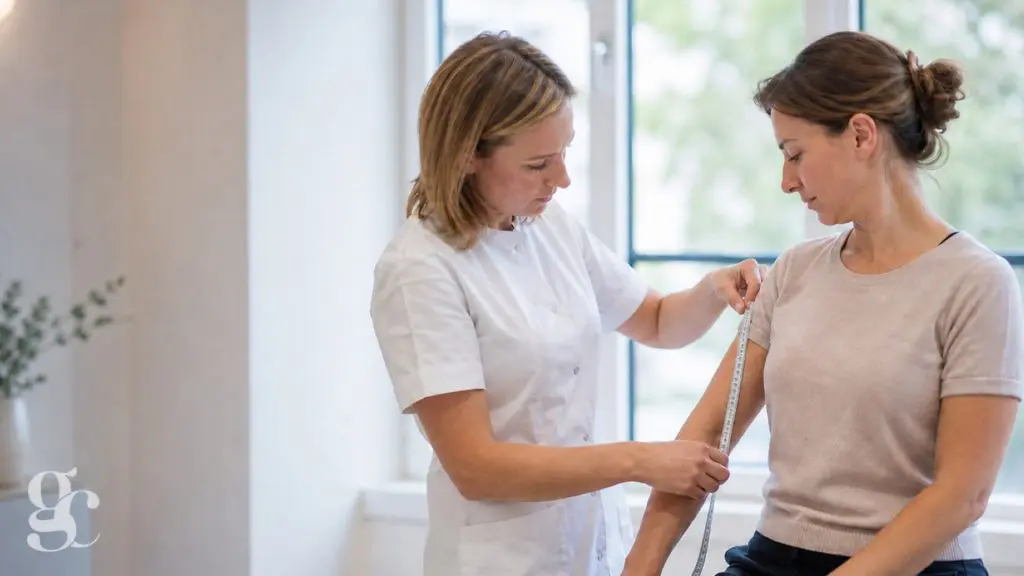
Several circumferences and lengths are taken according to the manufacturer's chart. Measuring only the bicep circumference or choosing your usual clothing size is insufficient. The top edge must remain at the correct height, without rolling or digging into the armpit, and the wrist must not create a constricting zone.
The hand and fingers
If the hand or fingers swell, a sleeve alone may not be suitable. A professional will assess the need for a compatible gauntlet or glove and check the fit between the two pieces. Adding an accessory yourself can create excessive overlap or leave an area uncompressed.
Standard or custom-made
A standard size may be suitable when measurements fall within a size chart. A unique body shape, variations in volume, or poor fit may necessitate a custom-made garment. The choice isn't solely based on price: fit, ease of dressing, and the possibility of alterations are also important.
Advertising
How do I put it on without creating creases?
The technique must be demonstrated using the exact model. The material is gradually distributed from the wrist upwards, without pulling abruptly on the edge or twisting the fabric. The sleeve should be smooth at the elbow and wrist. Grip gloves or a donning aid may be offered if shoulder, hand, or strength is limited.
Do not fold over any uncomfortable edges, cut the fabric, or add improvised padding. These alterations change the pressure. The same principle applies to compression garments worn after cosmetic surgery , even though their purpose is different.
How long should it be worn?
There is no universally applicable duration to copy from a forum. Wearing it during the day, at night, during activity, or while traveling depends on the prescription, the phase of treatment, and the instructions. Previous instructions may need to be revised if swelling, skin condition, or tolerance changes.
Ask who to contact in case of a problem, when to schedule an inspection, and how to care for the textile. Heat, unsuitable products, or improper drying can degrade its properties. A sleeve that is stretched, torn, deformed, or difficult to position should be reassessed.
What signs indicate poor tolerance?
- a new or increasing pain;
- tingling, numbness or loss of sensation;
- cold, pale, bluish or unusually colored fingers;
- a hand or fingers that swell beyond the sleeve;
- deep creases, a pinch, a rolling edge or a sliding device;
- an irritation, a blister, a wound or a mark that persists.
Remove the device and contact the care team if any of these signs appear. Pain is not proof that the compression is "working." Our post-operative pain guide helps you note its onset, location, and progression before calling.
Redness, heat or fever: when to consult a doctor quickly?
A red, hot, and painful area accompanied by fever, chills, or general malaise may indicate a skin infection. Remove the compression sleeve and seek medical advice immediately. Do not massage the area, tighten the compression, or conceal the infection with cosmetics.
Redness around an incision, drainage, or an open wound also warrants evaluation. Consult the guide on surgical site infection . Sudden shortness of breath, chest pain, loss of consciousness, or rapid deterioration of symptoms requires immediate medical attention.
Advertising
Why are no sleeves recommended for purchase here?
A single product description may correspond to only one arm, one size, and one specific configuration. At the time of reviewing this article, the exact medical reference identified was unavailable. Replacing it with a generic or sports sleeve would have created an incorrect equivalency. Therefore, GuideChirurgie displays no active commercial links in this listing.
If a suitable offer becomes available, it will only be displayed with its exact name, actual image, side view, size, and a clear note reminding users of the prescription. The absence of a product block is a security measure, not a monetization oversight.
F.A.Q
Do you need a sleeve to fly?
Not automatically. A person already being treated should follow their team's instructions; a person only at risk should not buy a preventative sleeve based solely on that. Prepare for travel with the relevant department if symptoms are present.
Can an old sleeve be reused?
Only after verification. The arm size, fabric condition, and sizing information may have changed. A model that still feels tight is not necessarily effective or properly fitted.
Verified sources
- NICE: Recommendations on the prevention and treatment of lymphedema
- National Cancer Institute: Breast Cancer and Lymphedema
- UCLH NHS: Risk Reduction and Signs of Lymphedema
- UHNM NHS: Tolerance of an arm compression garment
- St George's NHS: Fitting of a sleeve
- Dorset County Hospital: Wearing and monitoring the sleeve
Editorial note: General information article verified on July 17, 2026. The indication, measurements, pressure and wearing schedule are the responsibility of the team that assesses the lymphedema.