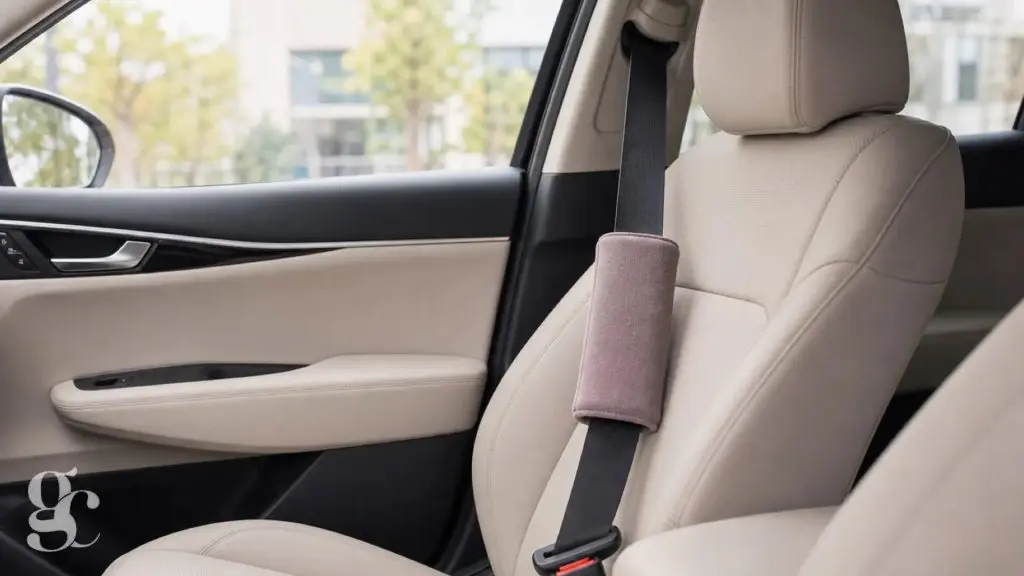
A seatbelt cushion after breast surgery can sometimes improve comfort when the strap is uncomfortable against a sensitive area, especially when traveling as a passenger. However, it remains an optional accessory: the seatbelt is still mandatory and must maintain its intended position, tension, and function.
The cushion does not alter, loosen, or shift the seatbelt. It does not protect a scar, wound, or implant in the event of a collision. It also does not prove that driving has resumed. Before your first trip, ask the surgical team if your wound, dressings, drain, or any other limitations make this accessory unsuitable.
What is the purpose of a belt cushion after breast surgery?
This is generally a padded textile cover that is placed in contact with the seatbelt to reduce the sensation of chafing or localized pressure. Some hospital teams mention a small, soft cushion under the seatbelt, on the operated side, as a possible comfort option for a passenger. This practical indication does not make it a protective device or a treatment.
The need depends on the procedure, the sensitive area, and the instructions received. A lumpectomy, a mastectomy, reconstruction, or cosmetic surgery do not involve the same incisions. The postoperative bra after breast surgery also follows a separate instruction: it should not be replaced or compressed haphazardly by this accessory.
What this accessory cannot guarantee
- It does not prevent complications and does not accelerate healing.
- In the event of an accident, it does not protect an implant, a scar, or a reconstructed area.
- It does not replace a bandage, prescribed clothing, or medical protection.
- It does not allow one to bypass new pain or a restriction imposed by the surgeon.
- It does not make driving safe if movement, vigilance, or emergency braking remain limited.
A marketing description might use the words "protection" or "recovery." Read them as sales pitches, not clinical evidence. The choice should be based on textile comfort and belt compatibility, without expecting any therapeutic benefit.
Advertising
Passenger or driver: two different situations
As a passenger, you can focus on getting settled and request a stop if discomfort increases. As the driver, you also need to be able to look around, maneuver, react quickly, and perform an emergency stop without hesitation. Taking medication that may impair alertness is also a factor.
The " Driving After Surgery" guide details these conditions. A comfortable cushion during a static test drive never constitutes authorization to resume driving. Follow the advice of the team, the information from your insurer, and the rules applicable to your situation.
Points to confirm with the team before the trip
- Can the operated area withstand contact between the belt and a soft textile?
- Does a dressing, tubing, or drain need to remain completely exposed?
- Is there a recommended position in the vehicle depending on the side being operated on?
- What symptoms should lead to interrupting the journey and calling the service?
- Are the medications I'm taking compatible with driving?
Also prepare for your return home: ensure there's available space, assistance getting in and out of the car, an accessible phone number, and contact information for the service. Our guide to post-surgery recovery at home helps you organize these elements beyond just the journey itself.
The belt must remain correctly positioned.
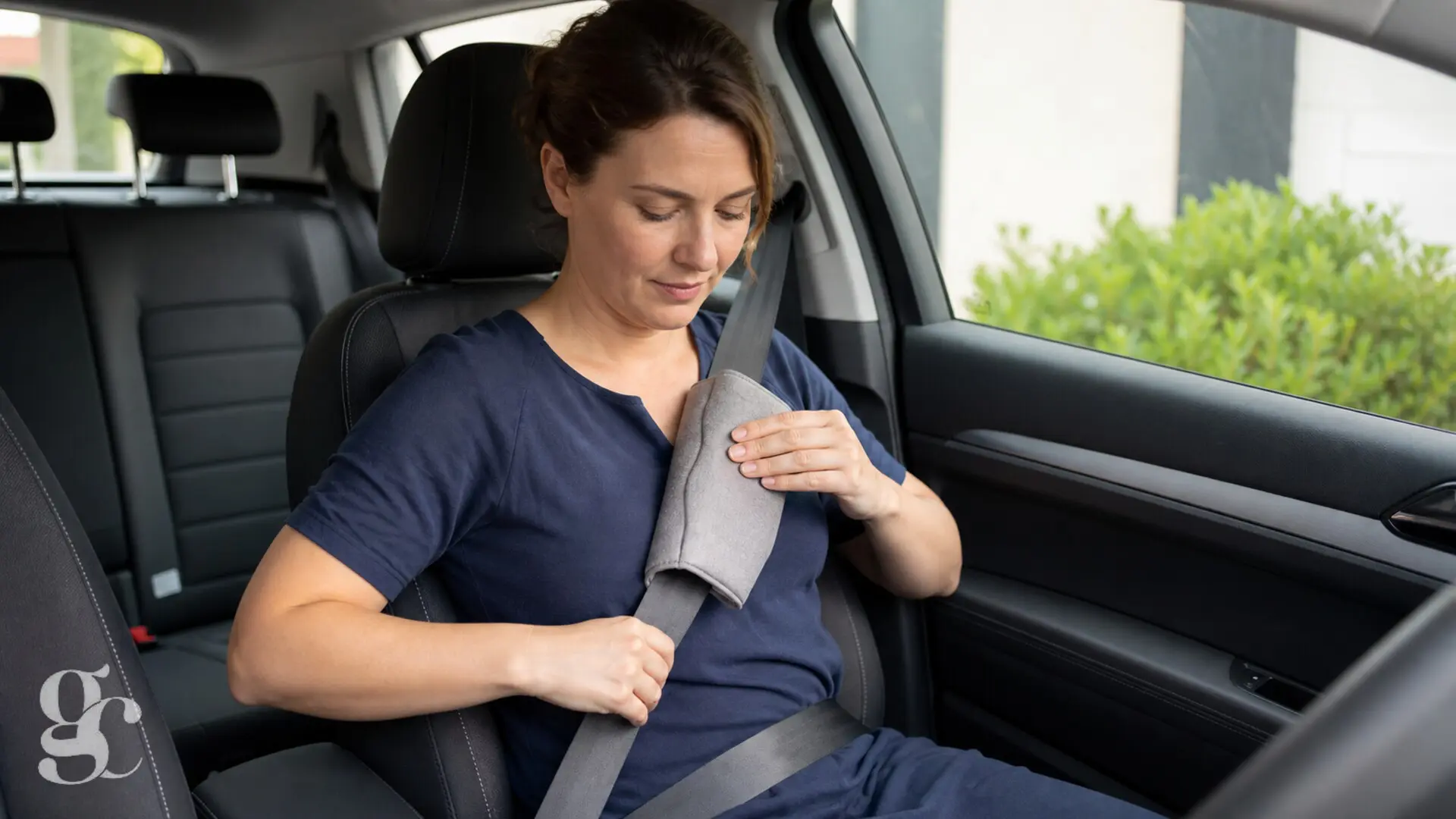
The diagonal strap remains in its intended path
It does not go under the arm or behind the back. Do not use the cushion to move the chest strap away from you or create any slack. The belt must lie flat, without twisting. Refer to the vehicle's manual for adjustment instructions and do not add any accessories that alter its geometry.
The lower part remains in place
The chest cushion must not lower, thicken, or displace the lower part of the seat belt. Do not combine the two straps in a single cover unless this configuration is provided by the vehicle. Any installation that becomes bulky or unstable must be discarded.
The belt buckle and its retractor remain free
After installation, check that the buckle is securely locked, the strap is not kinked, and the retractor takes up slack. The cushion should never obscure the buckle, block its movement, or prevent the belt from tightening. If in doubt, remove the accessory and use the belt normally.
Advertising
What criteria should be compared before buying?
Flexibility, dimensions and closures
Look for a soft material, a smooth surface, and clearly marked dimensions. Seams, buttons, zippers, or hook-and-loop fasteners should not be located over the sensitive area. Excessive padding is not necessarily more comfortable and is more likely to alter the strap's behavior.
Care instructions, composition and return
Check the fabric composition if your skin reacts easily, and ensure the cover is removable and washable according to specific instructions. Consult the return policy before trying it: opened or used textile items may be excluded. Photos alone cannot accurately assess softness, actual thickness, or the quality of the finish.
Compare an offer without turning the link into a recommendation.
Transparency: The link below is an affiliate link and may generate a commission for GuideChirurgie without changing the price you pay. As an Amazon Associate, GuideChirurgie earns from qualifying purchases. It provides access to a third-party seller's product page, not a medical recommendation. The offer is subject to change; please check the dimensions, composition, closures, seller, and return policy.
Textile cushion presented for postoperative comfort
Consider this option only if the strap can lie flat, be properly tensioned, and follow its normal path. Check the actual specifications of the offer before ordering.
Plan the first trip without improvising

Install the accessory while stationary, and with assistance if your movement is limited. Fasten the seatbelt normally, then visually inspect the strap, buckle, and retractor. If the cushion slips, obscures the area to be monitored, or requires you to hold the seatbelt by hand, remove it. During the journey, report any increase in pain and plan to be able to stop.
Having a surgical drain installed at home requires extra care: the tubing and reservoir must not be pinched or pulled by the seatbelt, cushion, clothing, or the edge of the seat. Ask the service to demonstrate the setup before you leave.
Advertising
Hygiene and inspection before each use
Do not apply the fabric directly to a wound, and do not use the cover as a substitute for a bandage. Wash the accessory according to its instructions, allow it to dry completely, and check the seams and fasteners. Remove it if it is damp, stained by a discharge, misshapen, or has become rough.
The condition of the surgical area may change between sessions. An accessory that was previously well-tolerated should be removed if swelling, sensitivity, or a new dressing alters the contact. The priority remains observing the skin and following the instructions given by the team.
When to remove the cushion and seek advice?
Remove the accessory if the pain increases, if the belt no longer slides smoothly, if the area becomes compressed, or if a drain is required. Any spreading redness, new swelling, bleeding, unusual discharge, wound opening, fever, or general malaise warrants prompt contact with the service. The post-operative pain guide will help you prepare the necessary information for this call.
Difficulty breathing, chest pain, significant general discomfort, or loss of consciousness are emergencies: call 15 (SAMU) in France, or 112 from any European country. Do not continue the journey to test whether the discomfort disappears, and do not allow the cushion to delay the assessment.
F.A.Q
Can the belt be loosened to avoid the pain?
No. Do not add any slack, do not block the retractor, and do not move the strap under the arm or behind the back. If the contact remains intolerable even with the belt worn correctly, the route and the situation must be discussed again with the team.
Does the cushion protect the scar or the implant?
No. It can only make the textile contact more comfortable. It offers no guarantee of protection in the event of an impact and does not replace monitoring the wound, dressings, or any unusual signs.
Does using it mean I can drive?
No. Resuming driving depends on your recovery, your movement, your ability to control the vehicle, and the effects of medication. The accessory does not change any of these factors.