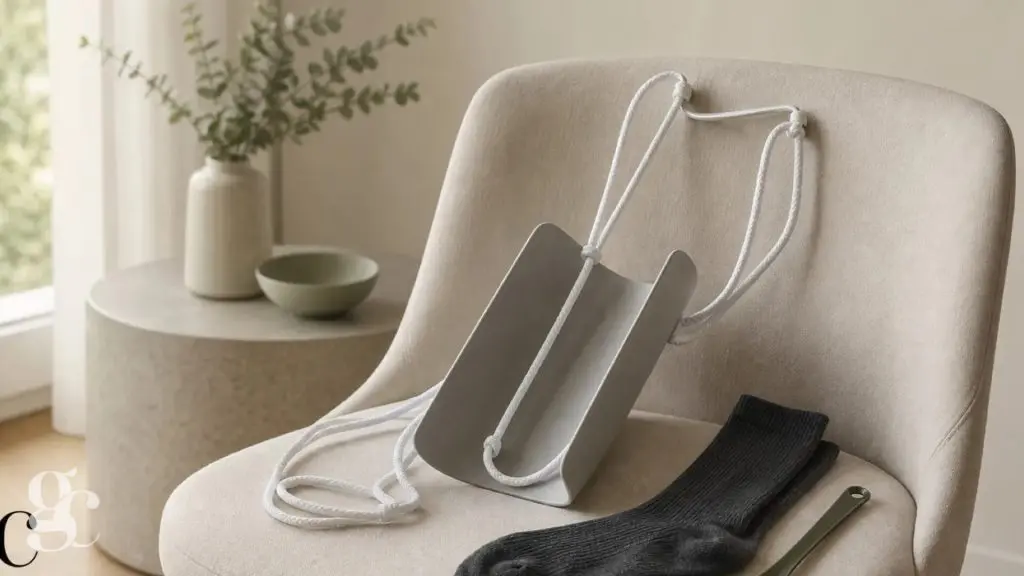
A sock aid after surgery can help put on the foot without bending over as much or pulling directly on the fabric. However, this aid is only useful if its shape matches the sock, if the hands can control the straps, and if the seated position allows for limited movement.
Before purchasing, ask your occupational therapist, physical therapist, or surgical team if this aid is suitable for your procedure. After hip, back, knee, or abdominal surgery, the restrictions vary. The device reduces movement; it does not make prohibited flexion, rotation, or weight-bearing movements acceptable.
What is the purpose of a sock aid after an operation?
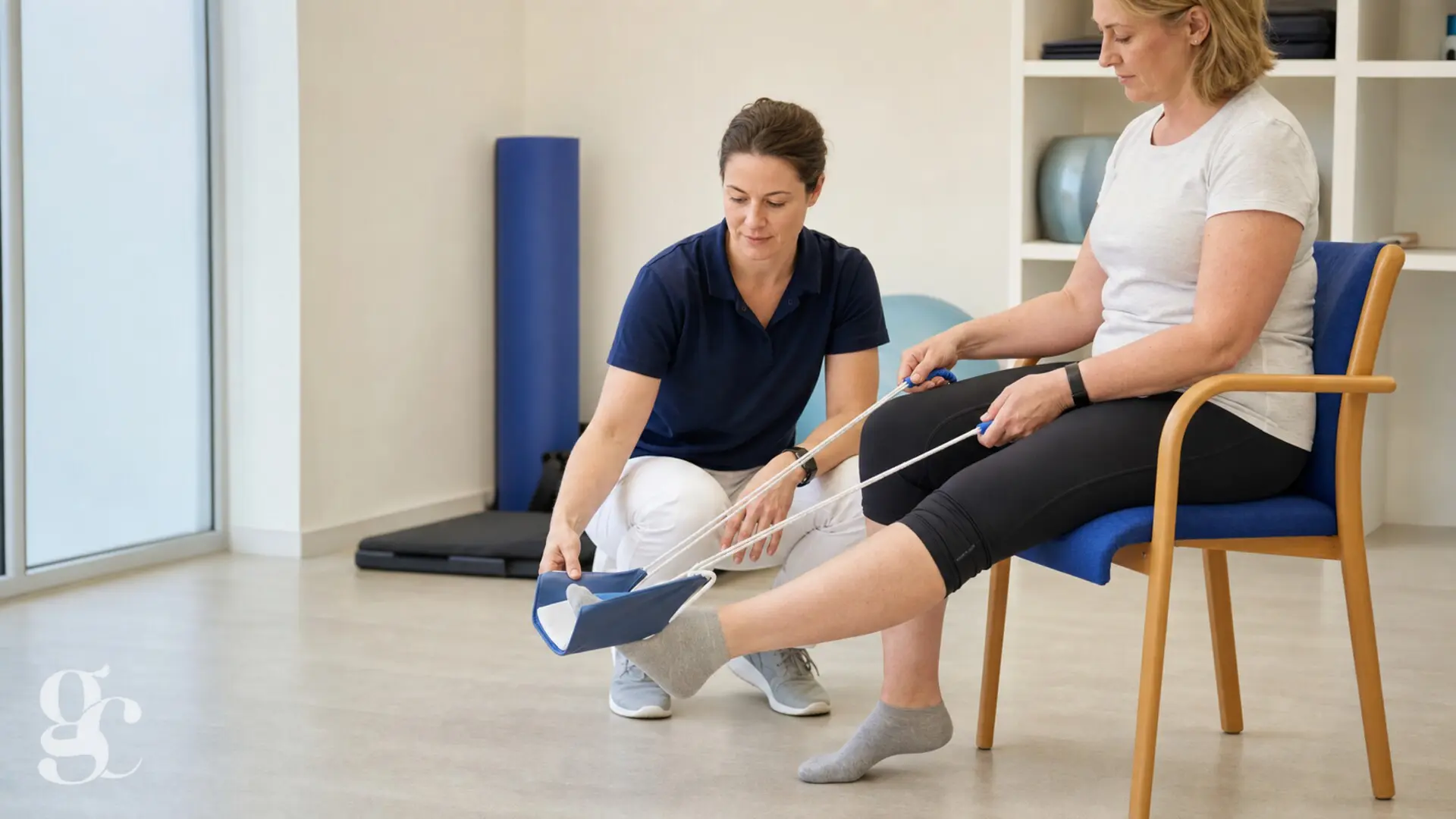
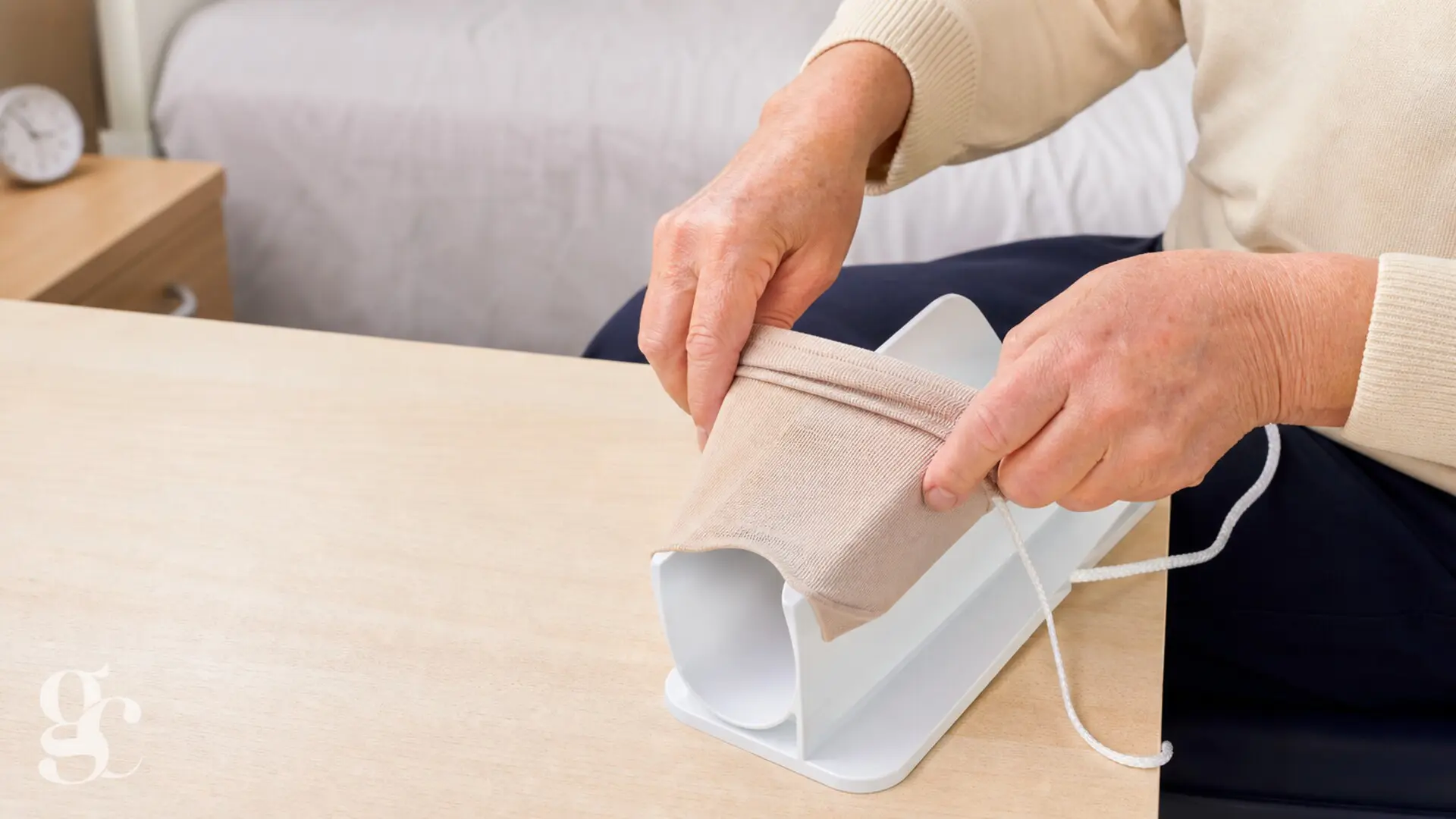
The device holds the sock open while the foot moves through the fabric. The user first places the sock on a gutter, lowers the assembly to the floor, then guides the foot and pulls the aid up using cords or handles. This can reduce the need to reach the toes.
It should not be used to move the operated leg, pull on a dressing, compress a swollen foot, or force a garment that is too small. It differs from a compression stocking aid , which is designed for medical garments that are more difficult to stretch and sometimes require a prescription.
In what situations can this assistance be offered?
After hip or lower limb surgery
Some rehabilitation programs include dressing aids when reaching the foot remains difficult. The team can demonstrate how to dress the operated side first and how to maintain a stable stance. This individualized demonstration is preferable to a generic video or advice from another patient.
When the torso or hands are limited
Abdominal or back surgery can make bending uncomfortable. Conversely, hand surgery, weak grip, or tremors can make cords difficult to control. In these cases, human assistance or another technique may be safer than an additional handle.
Advertising
Rigid gutter or flexible model: which to compare?
A rigid gutter keeps the opening in place and rests easily on the floor. However, it must have smooth edges and a width that fits the foot properly. A model that is too narrow can pinch the toes; a model that is too wide can stretch the sock or rub against a sensitive area.
A flexible sock holder is easier to store and can conform to the shape of the foot. It sometimes requires more coordination to keep the sock in place. Check that the material doesn't bunch up, that the seams don't protrude, and that the drawstrings remain attached to the holder.
Which handles actually make the movement easier?
Thick loops are often easier to grip than a thin cord. Their length should allow the stand to be set up without excessively raising the shoulders or bending the back. Two separate handles provide lateral control but require coordination of both hands.
Test the grip with any splints or limitations planned after the procedure. Never remove an orthosis to better hold the aid. A grasping tool serves other purposes and should not pinch a sock tightly against the skin.
Which socks does it work with?
Ordinary socks
The fabric should be able to open around the support without deforming or slipping before the foot is inserted. A thick seam, an insufficient size, or a very tight elastic can create uncomfortable pressure. Examine the skin after the first fitting, especially if sensitivity is reduced.
Restraints and prescribed devices
Do not automatically use the same tool for medical stockings. Their compression level, length, and application technique may require a specific device or professional assistance. A stocking applied with folds or turned inside out at the hem can create a pressure point.
Advertising
How to prepare for a first attempt?
- Choose a stable chair with a backrest and a confirmed height.
- Keep the phone, walking aids, and sock within reach.
- Request a demonstration before release if the tool is recommended.
- Try first with a close friend or family member present if the balance is uncertain.
- Put the stand and cords away from the walkway before you get up.
Prepare everything before sitting down to minimize repetitive movements. Comfortable post-operative clothing and a long shoehorn can be added to the kit, but they are not mandatory.
Also plan for the next step: once the sock is on, the shoe should remain accessible without you having to get up abruptly. A stable pair, opened before trying it on and positioned correctly, minimizes impromptu movements. The guide on non-slip shoes for recovery helps you check the sole, heel support, and closure.
What problems necessitate stopping?
Stop if your foot becomes stuck, if the pain increases, if your skin changes color, if a bandage shifts, or if you have to pull hard. A very swollen, hot, red, or painful foot should not be compressed into a sock to complete the procedure.
Check the device regularly. A cracked edge, a frayed rope, a loose handle, or a surface that is difficult to clean warrants replacement. If you lose your balance during testing, have the installation reviewed by a professional rather than trying again standing up.
How to compare models with caution?
Compare the gutter's width, flexibility, cord length, handle shape, actual dimensions, and return policy. Also, check that the instructions clearly explain how to install and remove the gutter cover.
A product description cannot be used to verify your posture or compatibility with prescribed support. Choose a model that can be tried on or returned, check the actual dimensions, and only purchase multiple items after a successful trial.
Transparency: The image and button below link to the exact same product page and are affiliate links. GuideChirurgie may receive a commission without changing the price you pay. This model is shown for use with regular socks: it should not be considered a compression stocking aid, nor should it justify any movement that is prohibited after your surgery.
F.A.Q
Can the sock also be removed with this aid?
Not always. Some devices have a dedicated notch, but the movement and pressure differ. Do not slide a rigid edge against an incision, fragile skin, or under compression clothing.
Do I need to buy a complete kit?
No. A kit may contain unnecessary or unsuitable tools. First, identify the truly difficult tasks, then choose each aid based on the demonstration received and the home environment.
Advertising
To remember
A sock aid can improve independence when bending over is difficult, but its effectiveness depends on posture, the sock itself, and hand control. Try it while seated, without putting pressure on your foot or any bandage, and have the technique checked if your surgery requires movement restrictions.
Verified medical and institutional sources
- Cambridge University Hospitals: Dressing aids after hip replacement
- Newcastle Hospitals NHS: Dressing and technical aids after hip surgery
- Leeds Teaching Hospitals: Rehabilitation and Sock Aid
- Royal Berkshire NHS: Technical aids and adaptations for daily life
- Royal National Orthopaedic Hospital: Hip Precautions
- NICE: Rehabilitation and learning to use assistive technologies
- NICE: Fall prevention and individualized assessment