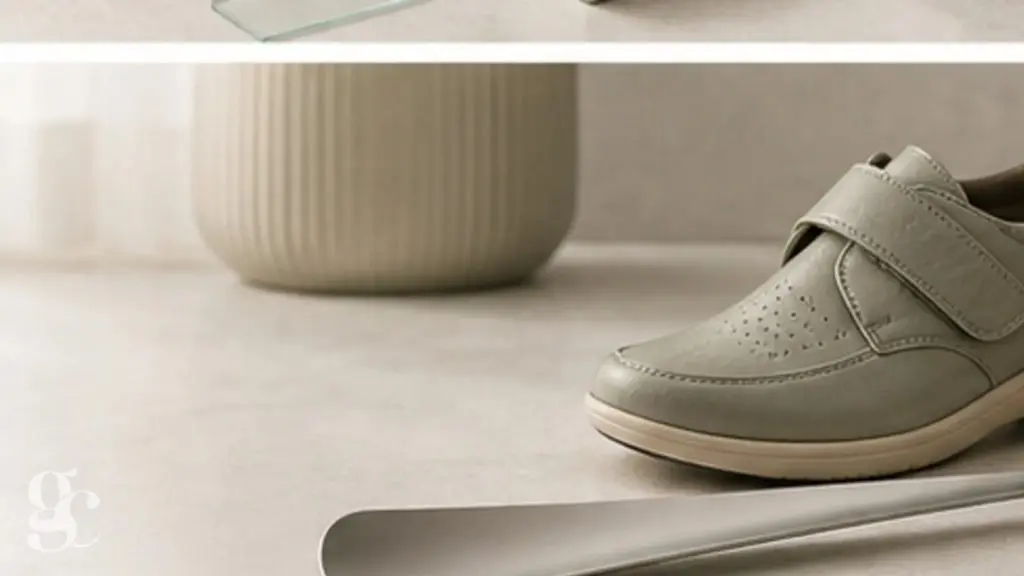
A long shoehorn after surgery can help guide the heel into the shoe without bending over as much. However, it is not a substitute for proper footwear, a demonstration by an occupational therapist, or assistance from a loved one when balance or movement remains uncertain.
Before using it, confirm that you can remain seated, move your foot forward, hold the handle, and apply gentle pressure. Following hip, back, knee, or abdominal surgery, restrictions vary depending on the procedure and recovery. The tool's length does not permit prohibited movements. Also, organize your shoes within easy reach using the home return checklist.
What is the purpose of a long shoehorn after an operation?

The shoehorn creates a smooth surface between the heel and the back of the shoe. It helps keep the heel counter open and allows the foot to slide in without crushing it. The elongated handle reduces the reach needed to access the heel, which can make dressing easier when flexibility is limited or uncomfortable.
It is not for putting on your shoe for you and should not be used to force a swollen foot. It should not be used to pull a leg, bring an object closer, scratch under a bandage, or provide support when standing up. For other remote actions, consult the guide to using a grasping tool after surgery.
Advertising
In what contexts can it be useful?
After hip or lower limb surgery
Some teams offer dressing aids when bending over to the foot should be avoided or remains difficult. A shoehorn may then be part of a set including a tong and a sock aid. This recommendation should be individualized: general guidelines for recovery after a hip replacement do not replace the precautions given by your department.
After abdominal or back surgery
The handle can reduce the need to bend your torso, but proper setup is still important. Twisting in a low chair, holding your breath, or lifting your leg with the tool can negate the intended benefit. Ask about posture and seating options that are best for your procedure.
Fixed length or telescopic handle?
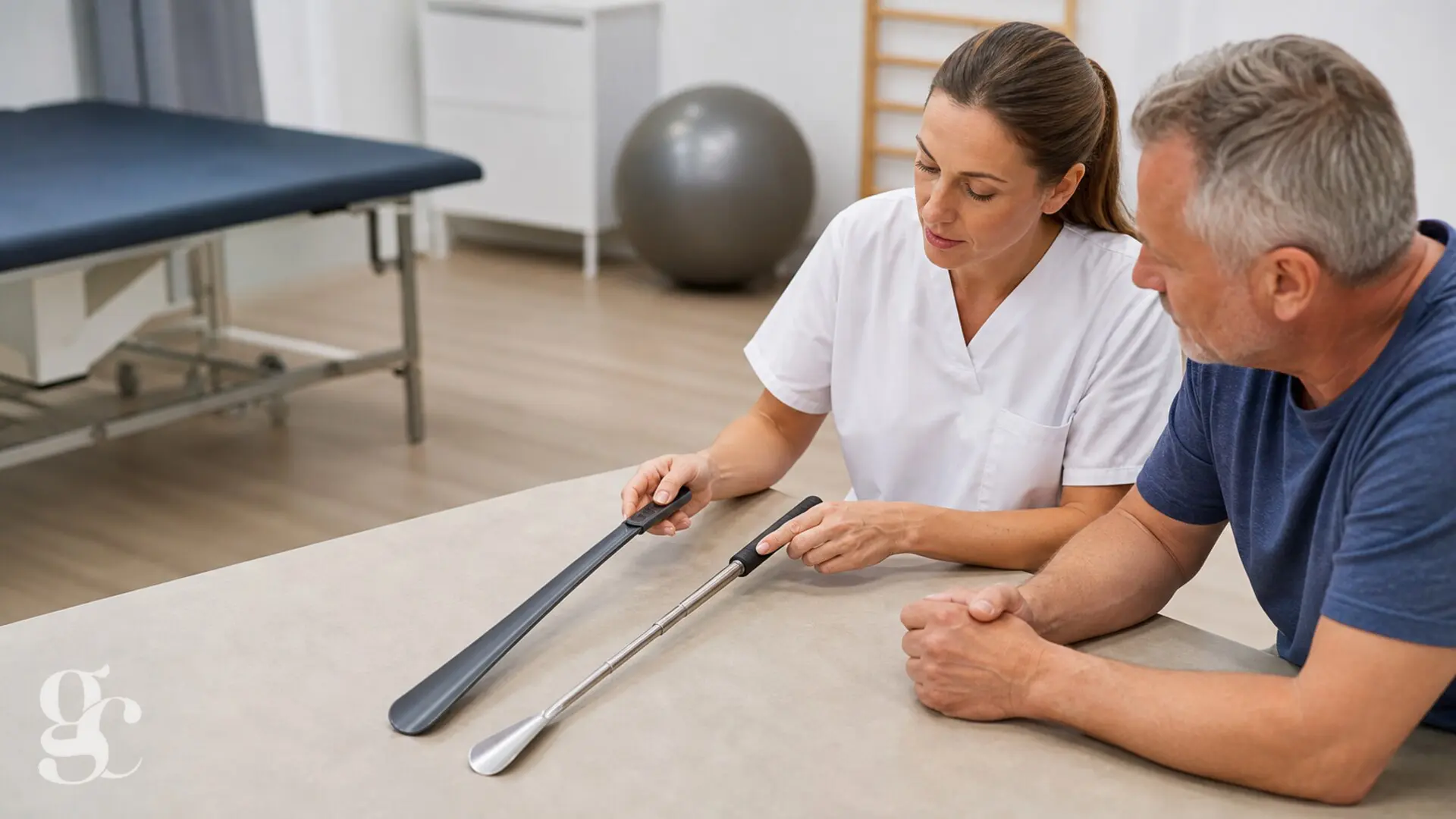
A fixed handle has fewer moving parts and often offers a more direct feel. Its length should allow you to reach your heel from your chosen seat without raising your shoulder or leaning forward. A very long handle can be difficult to maneuver in a confined space.
A telescopic handle is easier to store and can accommodate multiple users. Check that the locking mechanism doesn't slip under light pressure. A joint that rotates or folds back can be surprising and cause a loss of control. Test the mechanism before the postoperative period, if possible.
Metal, plastic or flexible horn: which to compare?
The rigidity of the handle
A rigid handle guides the heel precisely, but can damage a shoe or irritate the skin if the user pushes too hard. A very flexible model conforms better to the shape of the foot, while still being able to give way under pressure. Look for a compromise that suits your strength and coordination.
The edges and width of the spoon
The edges should be smooth, without any sharp corners or cracks. A wide spoon provides more heel support but may be difficult to insert into a narrow shoe. A thin piece slides in more easily and can concentrate the pressure. Run your finger over the entire surface before use.
Advertising
Why does the handle matter so much?
A thick or coated handle can be easier to grip if hand strength or dexterity is reduced. A loop allows the tool to be hung, but it should not wrap around the wrist during use. Check that the tool does not rotate in your hand and that its surface remains controllable even if slightly damp.
After hand or wrist surgery, asking your other hand to operate a long handle can be difficult. Do not remove a splint to improve your grip on the tool. If your grip remains insufficient, seek human assistance or another proven solution.
Which shoes work best?
The shoehorn works best with a shoe that is fairly open, has a stable heel counter, and an accessible closure. A shoe that is too tight, too short, or misshapen will not fit properly with this tool. A swollen foot or ankle may temporarily alter the required shoe size.
Avoid unstable mules and unsupportive slippers if your gait is unsteady. The page on non-slip footwear for recovery details the sole, heel, and closure. Easy-to-put-on clothing can also reduce the number of awkward movements required at once.
How can I try it without increasing the risk of falling?
- Sit on a stable seat that is fairly high and has a backrest.
- Place the shoe within reach before sitting down.
- Keep your foot on the ground or in the position permitted by the team.
- Slide the spoon behind the heel without pushing on the skin or the wound.
- Remove the tool before standing up and place it out of the way.
Try it out for the first time with a friend or family member, or a professional if your balance is unstable. Don't try putting on the shoes while standing with one leg raised. If you use crutches or a walker, keep them within easy reach and use them for their intended purpose.
When should the trial be stopped?
Stop if the pain increases, if your foot remains locked, if your shoe compresses a bandage, if your skin changes color, or if you lose your balance. Significant, new, or asymmetrical swelling should be reported to the team instead of being compressed in a shoe.
A shoehorn should never come into direct contact with an incision, pass under an orthosis, or displace a medical device. Inspect it regularly: a crack, a sharp edge, a loose handle, or an unstable locking mechanism warrants replacement.
Where can we compare models without confusing assistance with prescription?
Commercial transparency: The following image and button are affiliate links via Awin and point to the exact same product. GuideChirurgie may receive a commission without changing the price paid. A single, verifiable listing replaces the old generic Amazon and Rakuten searches.
A product description cannot confirm your permitted range of motion. If your occupational therapist recommends a specific shape or lends you equipment, this recommendation takes precedence over a commercial comparison. Do not purchase a set before verifying that one item is suitable for your posture and footwear.
F.A.Q
Can I use a shoehorn to remove the shoe?
Some models allow this, but the technique may require a different rotation or push. Have someone demonstrate the proper technique and do not clamp the tool against the operated foot.
Is the longest model always the best?
No. An excessively long handle can be cumbersome and less precise. The correct length depends on your height, the seat, the range of motion you allow, and how well you control the handle.
To remember
Choose a long shoehorn to simplify a difficult movement, not to circumvent a restriction. Compare length, rigidity, handle, edges, and shoe compatibility. Test it while seated, store it out of the way, and ask for a demonstration if balance, hand, or the area being operated on limits control.
Verified medical and institutional sources
- Newcastle Hospitals NHS: Dressing aids after hip replacement
- Royal National Orthopaedic Hospital: Hip precautions and long shoehorn
- Northern Care Alliance NHS: Occupational Therapy and Daily Living Aids
- Royal Berkshire NHS: Assistive Technology and Home Adaptations
- NICE: Individualized assessment and fall prevention
- Lincolnshire Partnership NHS: Choice of stable and suitable footwear
- NICE: Rehabilitation, autonomy and learning to use assistive technologies