A cushion after shoulder surgery should only be added, removed, or adjusted according to the team's instructions. An ordinary pillow can sometimes support the forearm for comfort. An abduction cushion integrated into an orthosis, however, is a medical device whose shape and adjustment depend on the specific procedure.
Rotator cuff repair, stabilization, fracture, and shoulder replacement do not protect the same structures. Even for two procedures with the same name, the associated techniques can change the immobilization. Therefore, the discharge summary and the splint provided by the hospital are your references.
Quick answer
A cushion after shoulder surgery should only be added, removed, or adjusted according to the team's instructions. An ordinary pillow can support the forearm for comfort; an abduction cushion integrated into an orthosis is a medical device, the shape and adjustment of which depend on the procedure.
| Situation | What there is to know | To check |
|---|---|---|
| Ordinary pillow under the forearm | Possible if the installation has been demonstrated or validated. | Do not force the shoulder, do not compress the hand or push against the wound |
| Orthosis abduction cushion | Medical device, adjusted according to the procedure | Exact name, manufacturer, reference and size, to be verified |
| Sleeping on the operated side | Not without explicit permission | The authorized position, to be requested before leaving the hospital |
| Cold, pale, or numb hands; pain that increases significantly | Contact medical professionals quickly | Do not loosen a complex orthosis on your own |
Cushion after shoulder surgery: ordinary pillow or abduction cushion?
A household pillow is used to support a part of the body or to relieve pressure points. It is not a substitute for immobilization. An abduction pillow is part of an orthosis designed to hold the arm in a specific position. Its presence, shape, and method of attachment should not be chosen based on resemblance to a photograph.
Why is a product sold for the shoulder not sufficient?
Two similar product references may correspond to different positions, sizes, or sides. An incomplete product information sheet cannot confirm the indication. Before purchasing, ask for the exact name, manufacturer, reference number, and expected size, then have the product verified to ensure it matches the prescription.
Why do the instructions change depending on the intervention?
After rotator cuff repair
Immobilization aims primarily to protect the repaired tissues. The type of splint and the permitted movements depend on the repair. A comfortable positioning should not displace the arm from the required position or encourage the patient to initiate active movements independently.
After a shoulder replacement
Anatomical shoulder replacement and reverse shoulder replacement do not necessarily require the same precautions. The quality of the tendons, surgical access, and associated procedures also play a role. Do not simply apply a recommendation given to another patient to your own situation.
After stabilization or a fracture
The protection may involve ligament repair, bone healing, or both. The surgeon specifies the prohibited movements and the times when the brace can be removed. No single, universal cushion summarizes these instructions.
Advertising
What information should be included in the hospital discharge letter?
- The name of the intervention and, if necessary, the associated actions.
- The model of splint provided or prescribed and the conditions for wearing it.
- Permitted movements and those to avoid.
- Wound care, hygiene and how to dress.
- Contact details in case of pain, splint problems, or changes in hand color or sensitivity.
If anything is missing, ask the team to clarify it before you go home. Our pre-operative preparation checklist can help you note any questions, but it does not replace the instructions from the hospital team.
How to sleep after the procedure?
The medical team may suggest a position on your back, slightly elevated, or sometimes on your non-operated side. These are options linked to a specific protocol, not a universally applicable prescription. Consult our guidelines for sleeping after surgery , and then adapt them only with the agreement of your medical team.
Can a pillow support the forearm?
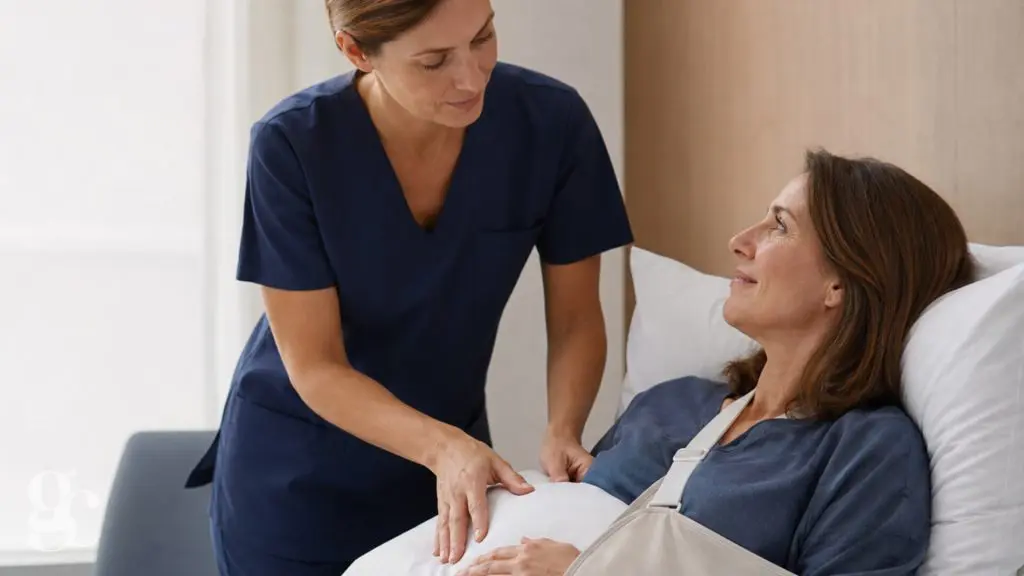
Yes, if this setup has been demonstrated or validated. The support should move with the arm without forcing the shoulder, compressing the hand, altering the straps, or pushing against the wound. Any position that significantly increases pain or causes numbness should be discontinued and reported.
Is it possible to sleep on the side where the surgery was performed?
Not without explicit permission. Body weight can compress the operated area and alter the arm's position. If sleep remains impossible despite the recommended positioning, contact the team rather than haphazardly piling up pillows.
What pillows should I use for sleeping?
The patient information sheet from Sherwood Forest Hospitals , an English public hospital (NHS), provides these guidelines for people who wear an arm support sling after shoulder surgery:
- Do not lie on the operated shoulder or arm.
- Sleep on your back or on your non-operated side, whichever you prefer.
- If you sleep on your back, place a pillow under the elbow of the operated arm.
- If you sleep on your non-operated side, rest your operated arm on a pillow placed in front of your stomach. Another pillow placed against your back will prevent you from rolling onto your operated shoulder during the night.
- Ordinary pillows are sufficient. According to the instructions, feather pillows are easier to position than foam pillows.
The same information sheet instructs you to keep the arm support sling on overnight. First, follow your team's written instructions: they may vary depending on your procedure.
Is a wedge-shaped cushion necessary?
A triangular wedge pillow is used to sleep with your torso elevated. The information sheet mentioned above doesn't refer to it; it simply mentions ordinary pillows. If the staff advises you to sleep elevated, ask them if a wedge pillow is suitable before buying one.
Coussin cale : seulement si votre équipe vous a conseillé de dormir relevé
Sleepling, coussin cale en mousse avec housse lavable, pour relever le buste dans le lit, d’après la fiche du fabricant. Il ne remplace ni l’attelle ni le coussin d’abduction remis par l’hôpital, et des oreillers ordinaires suffisent le plus souvent. Demandez à votre équipe si ce format convient avant de l’acheter.
How to monitor the splint, the skin and the hand?
Observe the contact areas of the straps without removing the brace. Any irritation, persistent marks, unusual swelling, or pressure points should be reported. The hand and fingers should also be monitored: color, temperature, sensitivity, and range of motion should be assessed according to the permitted limits.
What signs necessitate a quick consultation?
A cold, pale, or bluish hand, persistent numbness, significantly increasing pain, a splint that has become very tight, or sudden swelling warrant prompt medical attention. Do not loosen a complex orthosis without knowing which strap is responsible for its positioning.
Advertising
How to get out of bed without putting pressure on the operated arm?
Learn the transfer technique with a caregiver before leaving the hospital. Prepare the edge of the bed, use the non-operated arm according to the demonstrated technique, and avoid pulling on the person's immobilized limb. If a family member is assisting, they should know where to place their hands without moving the shoulder.
Washing, dressing, changing the cushion cover: how to protect the operated shoulder?
Choose comfortable clothing after surgery and dress in the order the team showed you. A pillow cover should be easy to change without lifting or pulling your arm. Ask for help if washing the cover requires removing a prescribed support.
When should I contact the surgical team?
Contact the surgical department immediately if you experience new or increasing pain, redness, discharge, a reopening surgical wound , fever after surgery , or chills. A wound infection cannot be diagnosed from a stock photo or online forum.
In case of difficulty breathing, chest pain, discomfort or rapid deterioration of general condition, immediately call 15 (SAMU) in France, or 112 from any European country.
Advertising
Should I buy a cushion before the operation?
Not without a specific reference. The hospital can provide the orthosis or prescribe a particular model after confirming the procedure. Buying too early risks choosing an unsuitable size, side, or device. If a household pillow is sufficient, the staff can demonstrate its placement without requiring you to purchase a medical product.
F.A.Q
Should I sleep with the splint on?
Follow the written instructions. Nighttime wear depends on the operation and the orthosis. Do not remove it because it seems uncomfortable: have the fitting and pressure points checked first.
Can an ergonomic pillow replace an abduction cushion?
No. A comfort pillow does not perform the function of a prescribed orthosis. Conversely, an abduction pillow should not be added unless requested by the medical team.
Dernière vérification éditoriale : 31 octobre 2026 ; dernière vérification commerciale : juillet 2026. Les références disponibles ont été auditées mais aucune ne permettait de confirmer simultanément le modèle, la disponibilité et l’adéquation à une prescription individualisée. La carte « coussin cale » et l’encadré « matériel », lorsqu’il s’affiche, contiennent des liens partenaires signalés comme tels ; aucun autre lien de cet article n’est affilié.
Medical sources and manufacturers
- French National Authority for Health: Tendinopathies and rotator cuff surgery
- French National Authority for Health: Rehabilitation after rotator cuff surgery or arthroplasty
- French National Authority for Health: Rationale for postoperative shoulder rehabilitation
- Orthorisq: Patient Information Sheets
- Hospices Civils de Lyon: Rotator cuff tear
- Toulouse University Hospital: Shoulder Surgery
- University Hospital Southampton: Post-rotator cuff repair care
- Frimley Health: Instructions after shoulder replacement
- Sherwood Forest Hospitals NHS Foundation Trust: Applying an arm support sling (fact sheet revised in October 2025)
- Enovis: References and characteristics of a shoulder abduction orthosis