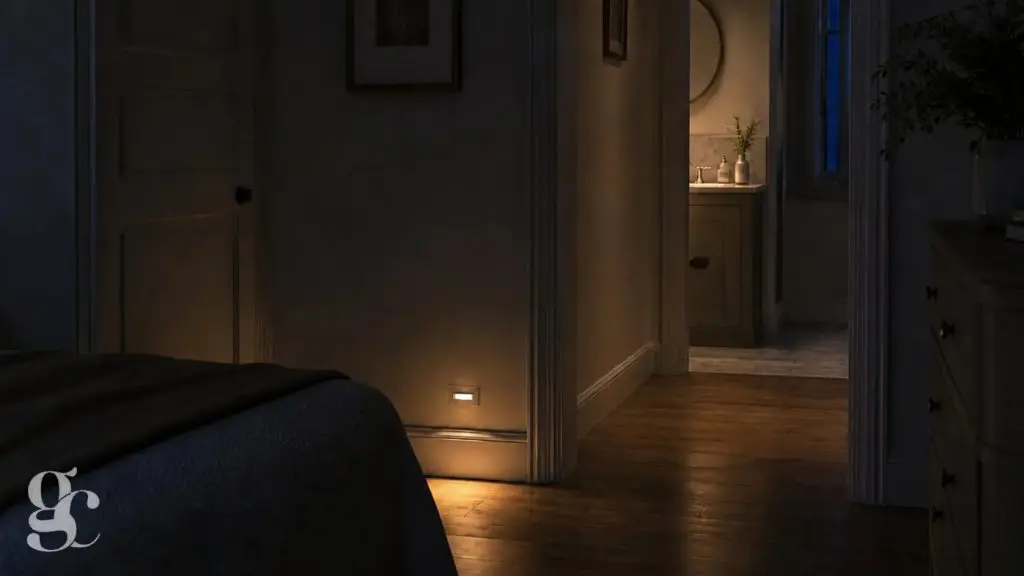
A motion-activated nightlight can make a nighttime journey easier to navigate during convalescence, but it doesn't replace main lighting or prescribed aids. However, it can also activate too late, cause glare, create shadows, or become an obstacle if its placement and mounting are poorly chosen.
The right goal is not to transform an accessory into a medical device. It is to provide predictable supplementary lighting on an already clear path, with an accessible main switch and a backup solution. No nightlight can guarantee the absence of a fall : balance, pain, medication, vision, footwear, and walking aids remain crucial factors.
Motion sensor night light: why prepare the lighting?
After surgery, getting up may require extra care: pain, fatigue, limited weight-bearing, a splint, or assistive devices can alter usual movements. In the dark, a threshold, a rug, a cable, or a low piece of furniture becomes harder to spot. A light can help you find your way before taking the first step.
However, it does not correct any discomfort or weakness. If the team requests assistance with getting up, the nightlight does not enable independent movement. Begin by preparing for the return home and keep the discharge instructions near the bed.
Motion detector or manual ignition: which to compare?
A motion detector eliminates the need to search for a tiny button in the dark, but its angle, range, and response time vary. It's essential to ensure it detects the person while they're still seated or as soon as they step onto the floor, without waiting until they've already entered the passageway. Doors, furniture, and textiles can obstruct the sensor.
An automatic mode can also react to the passage of a loved one or an animal. A permanent or manual mode remains useful for testing the route and as a backup. Don't rely on an app, a connection, or a remote control tucked away out of reach to get the only light available.
Advertising
How to illuminate without dazzling or creating deceptive shadows?
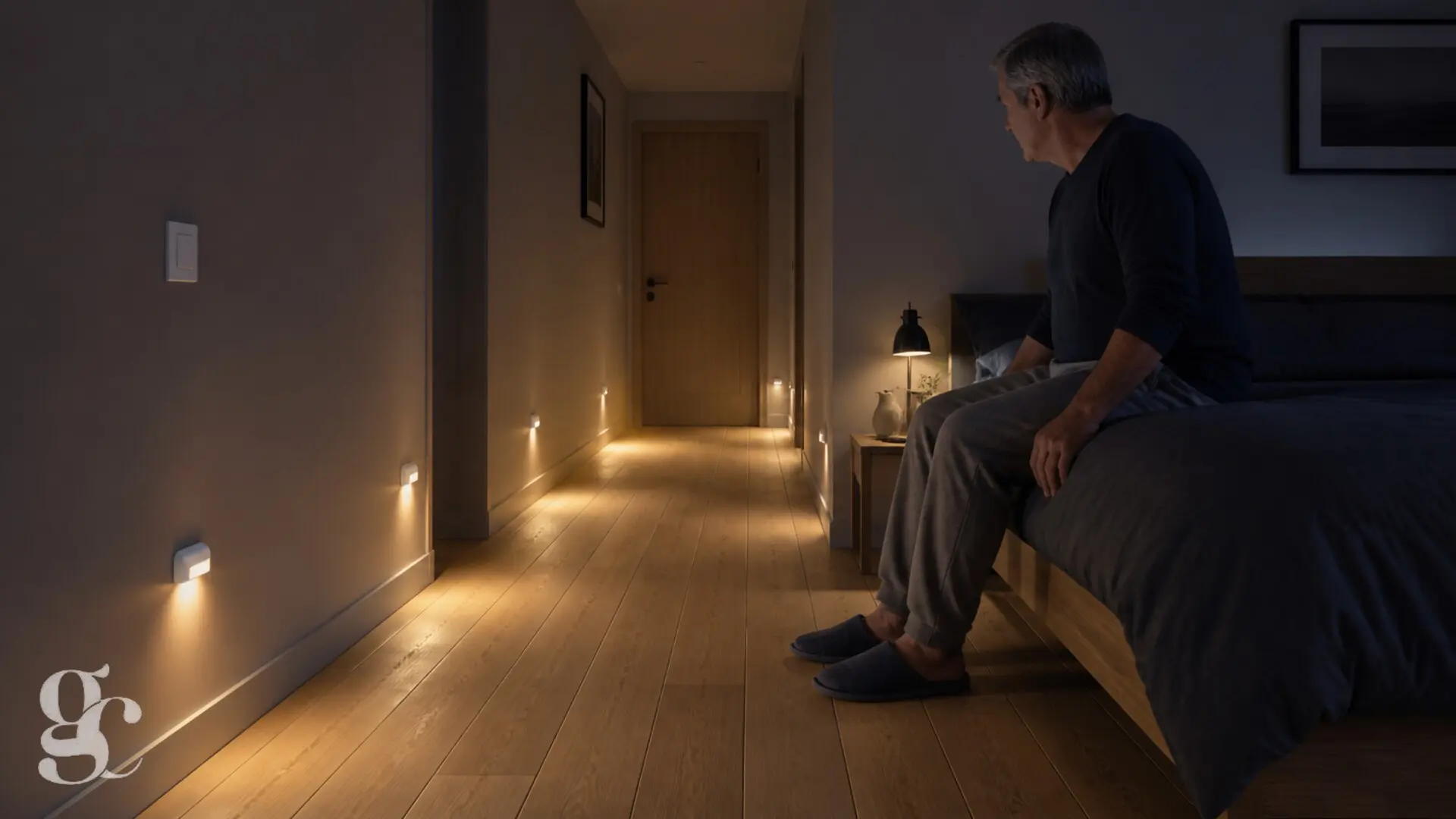
Bright, visible light isn't necessarily safer. When directed at the eyes, it can hinder visual adaptation and briefly obscure the rest of the room. Opt instead for evenly diffused light directed towards the floor or wall, avoiding direct reflections in mirrors, glass doors, or shiny surfaces.
Test from the actual lifting position
Try it from the bed, the armchair, and after using the toilet, wearing your usual glasses. Check the dark areas between two points of light and the appearance of steps or changes in flooring. A family member or friend can observe the route without encouraging the person to walk further than permitted.
Maintain accessible main lighting
The nightlight should be complemented by an easily accessible switch. If it doesn't turn on, if the room looks unusual, or if an object has fallen, turn it on fully before proceeding. A stable emergency light can be provided, without a cable running across the passageway.
Where can it be installed without adding a new obstacle?
The light source should clearly indicate the exit from the bed, the path, and the destination, without obstructing movement. Avoid placing it on the floor, carpet edges, or on fixtures that protrude at leg height, and avoid any loose cables. A wall-mounted or stable furniture installation must be able to withstand the passage of a hand, cane, or walker.
Before the procedure, walk the route with the provided technical aids and remove any unnecessary objects. The pre-operation checklist helps anticipate these adjustments. Do not secure the device to a grab bar, medical equipment, or a door that could cause it to fall.
Battery, batteries or plug: what compromises?
A battery-powered device can sometimes eliminate the need for an extension cord, but you must monitor its charge. An indicator light or a gradual decrease in brightness shouldn't be the only warning: regularly test the activation and plan to recharge during the day. Place the device on a non-combustible surface while charging and use the cable provided by the manufacturer.
A plugged-in model eliminates this routine, but it occupies an outlet and may protrude into a passageway. Do not use a stacked adapter or an extension cord under a rug. A device that is hot, damaged, deformed, or emitting an unusual odor should be unplugged without further attempt.
Advertising
Bathroom: what do IP and CE marking mean?
In a damp room, location and protection from water are crucial. The IP rating describes a defined resistance to the ingress of solid objects and water; it doesn't make any appliance suitable for every area of the bathroom. Follow the instructions and consult an electrician if you're unsure about the location.
The CE marking signifies conformity to applicable European regulations; it is neither a label of superior quality nor proof that the intended installation is safe. Verify the identity of the manufacturer or importer, the warnings, and the instructions in French. The guide for washing or bathing after surgery reminds you that the wound and medical restrictions take precedence over the equipment.
What do studies actually say about nighttime light?
Studies are investigating the use of nighttime guiding lighting, particularly among the elderly or in healthcare settings. These studies may suggest benefits for orientation or certain gait parameters. However, they do not demonstrate that every commercially available nightlight prevents falls at home after surgery.
The participants, rooms, sensors, and devices tested may not correspond to your home or the products sold. Therefore, it's important to avoid turning experimental results into marketing claims. Prevention recommendations remain multifactorial: environment, vision, medication, mobility, footwear, and support must all be considered together.
Two offers to check at the time of purchase
Transparency: The following two links are affiliate links. GuideChirurgie may receive a commission if you make a purchase after clicking on one of them, at no extra cost to the site. As an Amazon Associate, GuideChirurgie earns from qualifying purchases. The merchant pages determine availability, seller, package contents, features, and price at the time of viewing.
Two references to compare with your actual experience
Before ordering, check the mounting method, power supply, triggering mechanism, light orientation, instructions, CE marking and, if necessary, the IP rating suitable for the location.
What tests should be done before returning home?
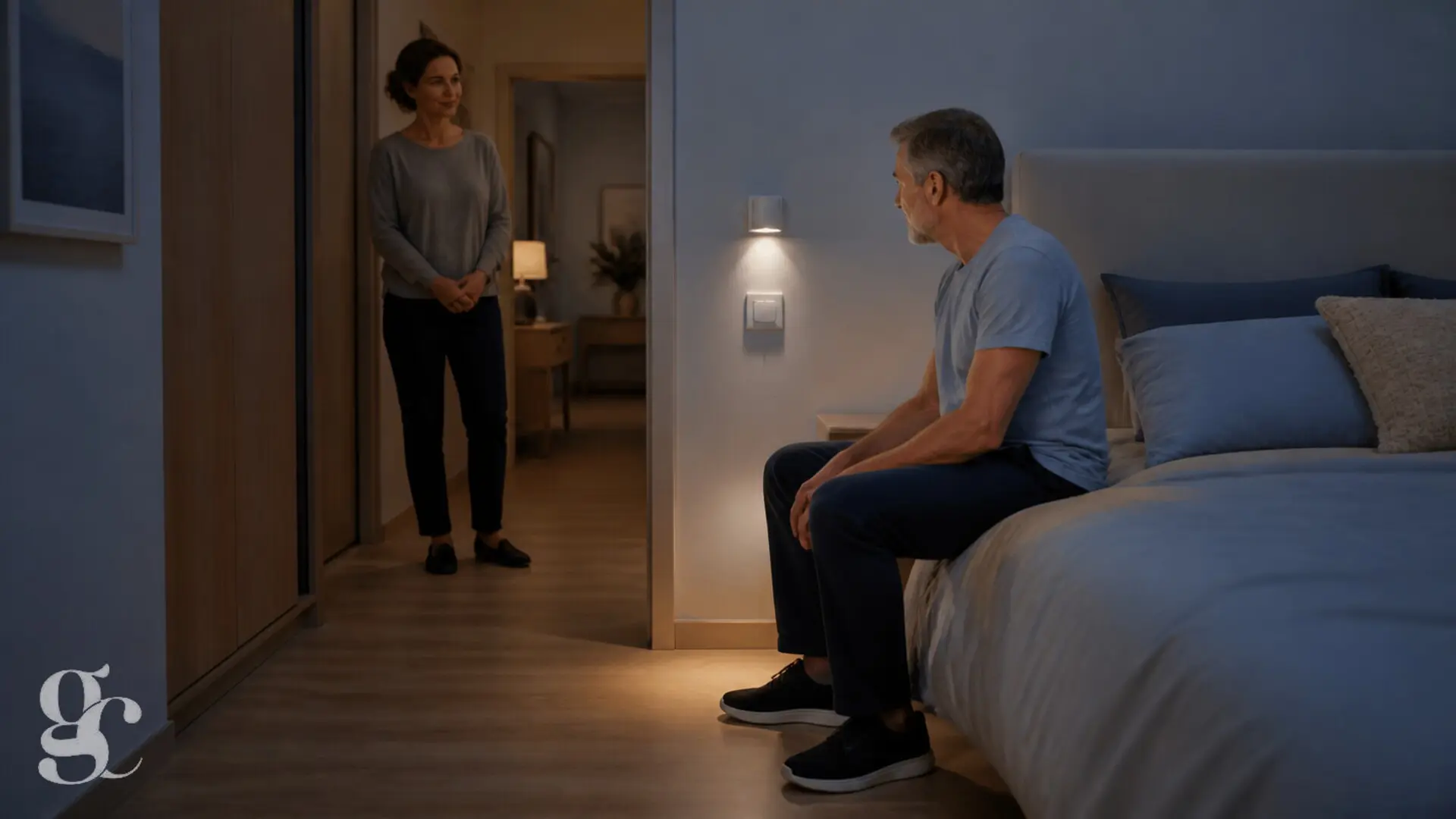
- trigger the night light from each actual starting point;
- check that no cables, chargers or boxes are obstructing the passage;
- observe the reflections, backlighting, steps and areas that remain dark;
- test the main lighting and the backup solution;
- have them try out the route with the glasses and aids provided;
- Note who will control the charging or replace the batteries.
A trial night before surgery may reveal premature or insufficient induction. Reassess after your return home, as your bed, medications, and abilities may have changed. For rest, also consult the guidelines for sleeping after surgery.
Advertising
When is lighting not enough?
Increasing pain, dizziness, discomfort, unusual weakness, or confusion should not be alleviated by simply increasing the light. Sit down or lie down safely and seek appropriate assistance. A fall, even without visible injury, warrants medical attention according to the department's guidelines, especially if you are taking blood thinning medication or have suffered a head injury.
The page on post-operative pain helps prepare for the call without delaying an urgent request. If getting up is not safe, ask the surgeon, physical therapist, or occupational therapist to assess the arrangements, aids, and need for assistance.
To remember
Choose a supplementary light that activates before movement, illuminates the floor without glare, and creates no cables or protrusions. Test it on the actual route, keep the main light accessible, and comply with electrical regulations, the IP rating, and the instruction manual. A nightlight complements a safety strategy; it does not replace human assistance or medical instructions.
Institutional and scientific sources
- French National Authority for Health, physical activity and elderly people at risk of falling
- NICE, recommendations on fall assessment and prevention
- PubMed, study on nighttime lighting to guide movement
- PubMed, study on ambient nighttime lighting and walking
- Handles: LED and blue light
- European Union, rules relating to CE marking