Pre-operative diabetes management cannot be achieved with a general guideline found online. The type of diabetes, medications, insulin, devices used, the procedure itself, and the organization of the facility all work together to determine the appropriate course of action.
The key document is an individualized written plan provided by the pre-operative team. It coordinates fasting, medications, monitoring, and procedures in case of an incident. Never change your diabetes treatment on your own, even if a previous operation went smoothly.
Why does having diabetes before an operation change the preparation?
Fasting alters eating habits, while surgical stress, anesthesia, pain, or infection can disrupt blood sugar balance. Not all common medications are managed in the same way, and a person using insulin does not have the same needs as someone treated with other medications.
The goal is not to achieve an ideal blood glucose level on one's own before admission. It is to avoid improvisation, to provide accurate records, and to allow the team to plan monitoring. An unusual blood glucose reading may lead to a reassessment of the plan, but no single reading allows the patient to decide for themselves whether to proceed with or postpone the procedure.
Advertising
What information should be passed on to the team?
- the type of diabetes and the professional or service that provides the follow-up;
- the exact name of all medications, injections and insulins used;
- the usual schedules and the actual catches made;
- the presence of a blood glucose pump, sensor or meter;
- recent episodes of hypoglycemia, hyperglycemia or ketones;
- kidney, cardiac, neurological or foot-related complications;
- difficulties in recognizing or treating hypoglycemia.
Please bring your prescriptions, follow-up report, and requested results. The pre-operative anesthesia consultation allows us to link this information to the planned procedure, but it does not replace contact with the diabetes team when necessary.
The individualized written plan: the central document

What the plan needs to clarify
The plan must identify each treatment and specify the corresponding decision before the procedure, on the morning of admission, and after the operation. It also indicates the planned monitoring, the equipment to bring, the contact person, and the procedure to follow if the operating time changes or if blood glucose levels become unusual.
In case of conflicting instructions
A summons, a court order, and an oral explanation can sometimes seem contradictory. Don't choose the version that seems most logical: contact the department and ask for written confirmation. Add this check to your pre-operative preparation checklist.
Fasting and treatments: two coordinated guidelines
Being fasting does not automatically mean that a medication should be stopped. Conversely, authorization to take a medication does not imply that one can eat or drink. The department must specify separately what applies to food, drinks, and each medication.
The hospital's instructions take precedence over the general guidelines in our article on fasting before anesthesia . If the schedule changes, ask if the plan is still valid. Do not extend your fast on your own, and do not break it without following the instructions given by the team.
Advertising
Why should you never change the treatment on your own?
Tablets, non-insulin injections, and different types of insulin do not have the same effects. Instructions also depend on the timing, the ability to eat, kidney function, and the type of procedure. Applying the wrong medication can cause hypoglycemia, hyperglycemia, or a metabolic complication.
In type 1 diabetes, insulin is essential and must not be discontinued by the patient. This does not mean that the usual regimen always remains unchanged: only the team's plan specifies any necessary adjustments. Recommendations for certain newer classes of medications may also change; an old document or advice from a relative does not constitute a directive.
Pump and sensor: what should be anticipated?
Report the device before admission
Provide the make and model of the pump or sensor, the installation location, and your ability to manage the device. The team must verify its compatibility with the intervention, the existing equipment in the control room, and the planned monitoring. Do not remove the device or disable its alarms on your own initiative.
Bring the reader, consumables, accessories, and your usual charging method if requested by the department. A continuous sensor does not necessarily replace hospital-based checks. Report any alarms, disconnections, or inconsistent readings instead of trying to conceal them to avoid postponement.
What should I prepare for the day of the operation?
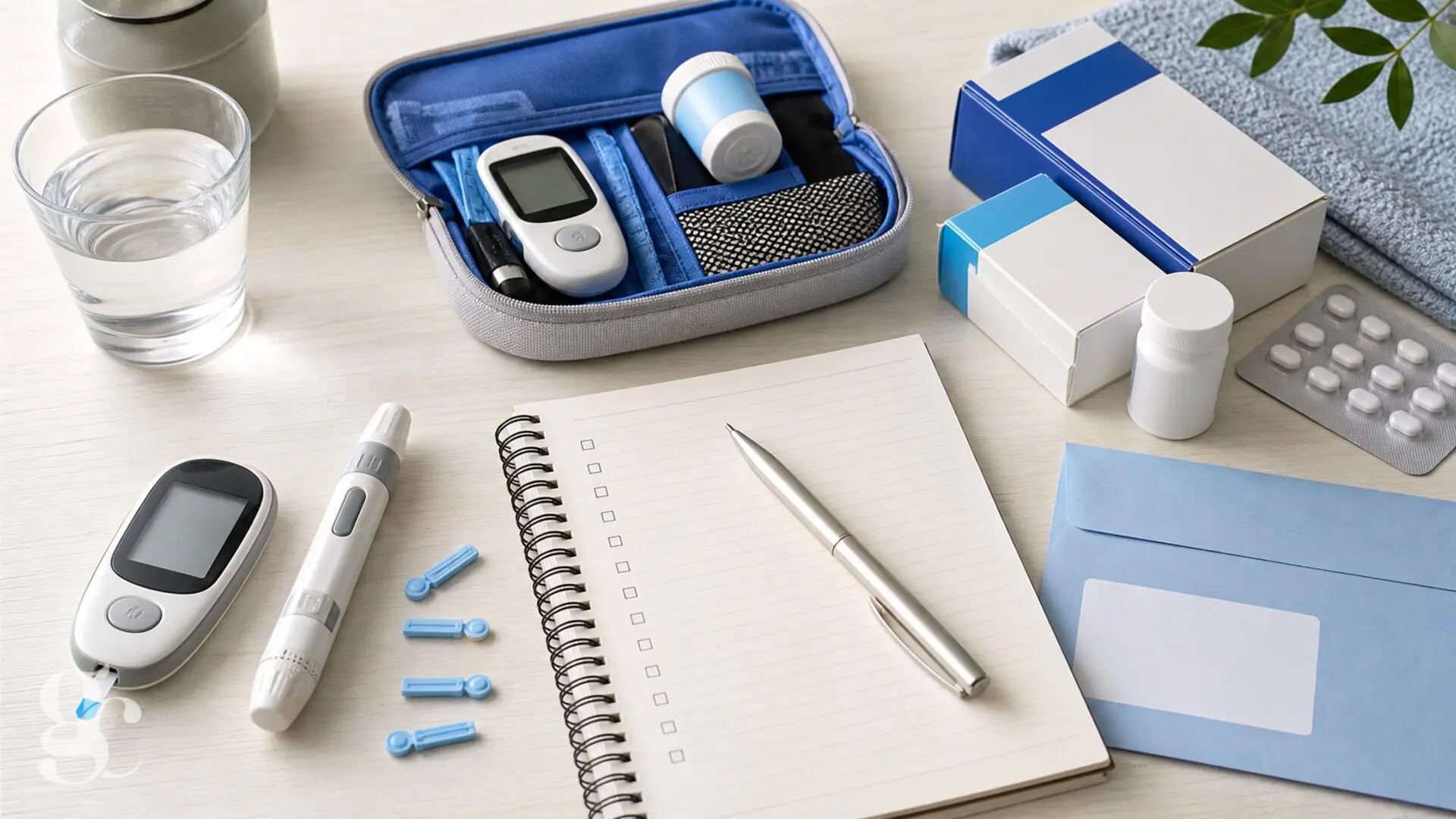
- the written plan and the summons;
- the up-to-date list of treatments and prescriptions;
- the measuring equipment and devices requested;
- the usual medication in its packaging, without taking it discreetly;
- the contact details of the professional who is monitoring the diabetes;
- personal emergency treatment only according to instructions received.
Keep the documents together and inform the accompanying person of the contact to call. The surgical pathway guide in France helps to locate appointments, but the procedure indicated by your hospital remains the priority.
Advertising
What should I declare upon arrival at the hospital?
Provide the exact time of your last meal, drink, and each relevant treatment. Specify if you followed the plan, missed an instruction, treated a blood glucose spike, or experienced a pump problem. Accurate information allows the team to tailor your care.
Do not pack any medication in your bag that the team expects to manage on their own. Ask who is monitoring the patient and how to promptly report any symptoms. If the wait is prolonged, do not assume on your own that you need to resume eating or adjust your insulin.
What should be done if an incident occurs during fasting?
If you experience typical signs of hypoglycemia, only use the personalized emergency plan you were given and notify the facility immediately. Safety takes precedence over simply observing the fasting schedule. Then, describe exactly what you consumed so the anesthesiologist can reassess the situation.
High blood sugar, ketones, a pump alarm, or feeling unwell should also be reported immediately without attempting to correct it yourself. Do not drive if you are impaired. In case of loss of consciousness or seizure, those around you should call emergency services.
What signs necessitate urgent medical advice before intervention?
- confusion, unusual drowsiness, seizure or loss of consciousness;
- persistent vomiting or inability to drink;
- Abdominal pain with deep or rapid breathing;
- ketones detected or suspected ketoacidosis;
- pump disconnection, failure or uncertain operation;
- fever, infection or rapid deterioration of general condition.
Contact the surgical or diabetology team immediately. If the condition is serious, call 15 (SAMU) in France, or 112 from any European country. Do not go to the operating room without having reported this information, and do not attempt to resolve the situation yourself to keep the scheduled date.
After the operation: how to secure the transition?
Diet, nausea, pain, and treatments received during the procedure may affect the resumption of your usual treatment. Before discharge, request an updated prescription and plan, and have any discrepancies with previous documents corrected.
Monitor the wound according to the facility's instructions. A scar that is more painful, hot, swollen, or accompanied by drainage should be reported; our guide on surgical wound infection provides guidance but does not allow for a remote diagnosis.
F.A.Q
Does an unusual blood sugar level automatically cancel the operation?
No. The team interprets the measurement in light of the symptoms, any ketones present, the intervention, and the patient's medical record. They may proceed, adjust, or postpone treatment. The patient should not conceal the result or make this decision alone.
Can I reuse instructions from a previous surgery?
No. The treatment, health condition, procedure, and protocols may have changed. Request a new written plan for each procedure.
Is the sensor sufficient for monitoring in the hospital?
Not necessarily. The facility can use its own controls and compare the results. Keep the sensor only if the team confirms its compatibility and function.
To remember
Prepare an accurate file, obtain an individualized written plan, and report any deviations as soon as they occur. Fasting, treatments, pump, sensor, and monitoring must be coordinated. No online advice justifies making changes on your own.
None of the links in this article are affiliate links. This general information is not a substitute for instructions from the surgical team, anesthesiologist, and other professionals who are monitoring your diabetes.
Verified medical and institutional sources
- Health Insurance: Medications for type 1 and type 2 diabetes
- NICE: Preoperative examinations and HbA1c in diabetic patients
- NICE: Perioperative care in adults
- Center for Perioperative Care: Perioperative Management of Diabetes
- NHS: Preparing before an operation
- Leeds Teaching Hospitals: Information for diabetic patients who have undergone surgery