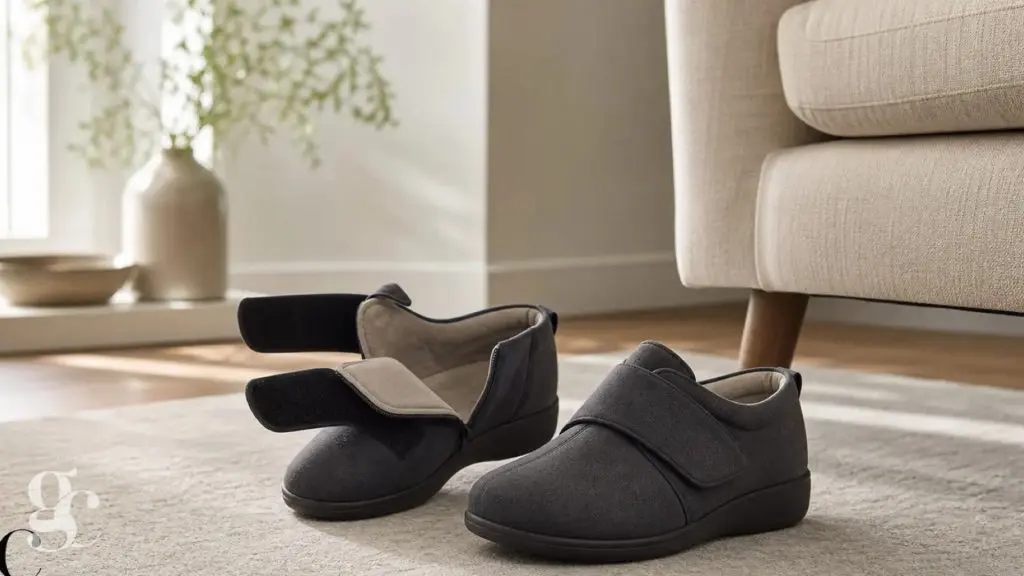
Adjustable shoes after surgery can better accommodate a temporarily swollen foot or ankle. However, they should not compress the area, conceal worsening swelling, or replace a postoperative shoe or orthosis prescribed by the surgeon.
Before purchasing, ask for clarification on the permitted weight-bearing, the presence of a dressing, the type of insole required, and the possibility of wearing regular shoes. A surgically operated foot can change volume throughout the day; therefore, a size chosen based on a single measurement is not always sufficient.
Adjustable shoes after surgery: when to seek medical advice?
Local swelling may accompany recovery, but its progression is important. Contact the team if the swelling increases significantly, if the skin becomes very tight, hot or red, if the pain changes, if the toes change color, or if a bandage appears compressed.
A swollen leg on one side, especially with pain, may warrant investigation for deep vein thrombosis (DVT) after surgery . Sudden shortness of breath, chest pain, or general malaise requires calling 15 (SAMU) in France, or 112 from any other European country. Purchasing a new shoe should never delay this evaluation.
Prescribed postoperative shoe or comfort model?
A postoperative foot shoe can distribute pressure or protect a specific area according to a goal defined by the surgeon. Its shape, straps, and rigidity are designed to meet this requirement. A wide, commercially available shoe does not serve the same purpose.
If the team allows regular shoes, ask when they should be used and whether they must be worn on both feet. A significant difference in height or stiffness between the two sides can alter gait and put stress on the knee, hip, or back.
Advertising
Which opening makes it easier for the foot to enter?
A truly wide opening
The tongue should open wide enough to allow the foot to be inserted without pushing on the toes or bending a bandage. Check the actual opening in the photographs and description: a shoe advertised as "wide" may simply have a longer sole, without any additional volume at the instep.
Velcro, elastic laces or zip
A hook-and-loop closure is easy to adjust, but the strap must remain long enough when the foot swells and not come undone while walking. Elastic laces make it easier to put on, but don't offer the same adjustment in all areas. A zipper can create a pressure point if it's located near a scar.
Width, depth and shape of toes: what to measure?
Length alone doesn't describe the fit. Compare the width at the forefoot, the depth over the toes, and the volume around the instep. If a bandage is present, ask if the measurement should include it and if its thickness will change.
The toes should not bump or overlap. The heel should remain supported without slipping with each step. Buying a much larger size to gain width can create excessive length and increase the risk of tripping.
Sole and support: what are the stability criteria?
A stable, well-maintained sole that's suitable for the ground is more important than just a non-slip pattern. It shouldn't twist excessively or catch abruptly on the ground. A closed heel generally helps to keep the foot in place, unless otherwise specified by the team.
The guide to non-slip footwear during recovery details these points. Test the shoe with crutches or a walker if you use them, but only according to the technique and support you learned with your physiotherapist.
Advertising
How can I try it without hurting my foot?
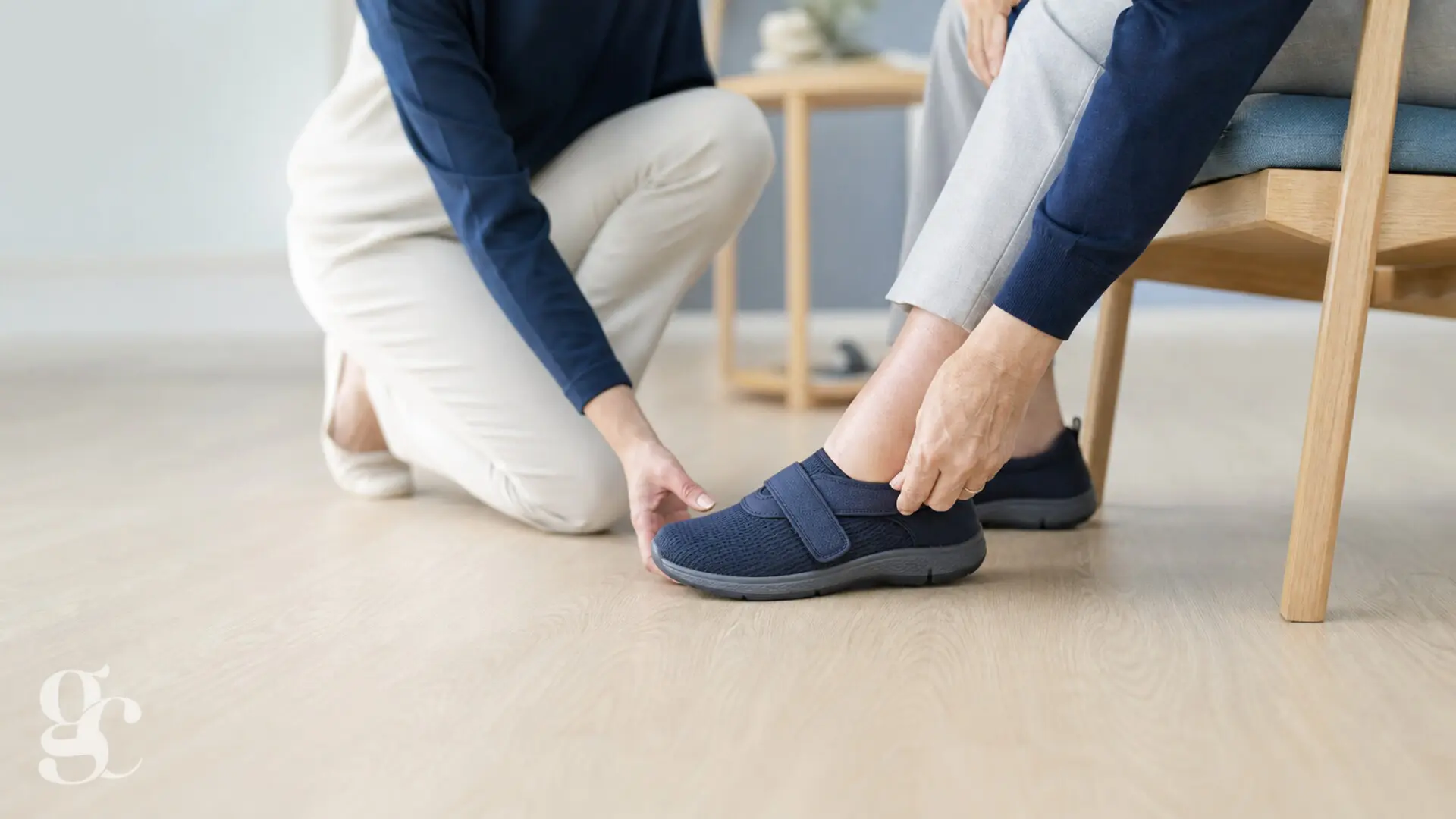
- Sit on a stable chair, with your foot supported if you have been advised to do so.
- Open the shoe completely before inserting your foot.
- Do not push on an incision, splint or dressing.
- Close gradually without trying to eliminate the swelling.
- Check the skin, toes and dressing after a few permitted steps.
Stop wearing if you experience pain, numbness, tingling, discoloration, deep indentations, or a cold foot sensation. A closure that needs to be tightened to the maximum to hold the heel in place may indicate that the last is not suitable.
Socks and compression: what precautions should be taken?
The sock should remain smooth and not create a bulge at the opening of the shoe. If compression stockings are prescribed after the operation, their application and size must be checked separately. A wider shoe will not correct poorly fitting compression stockings.
Do not add insoles, heel pads, or improvised padding without consulting a doctor. These items reduce internal volume and can shift pressure points. Similarly, a product marketed as an anti-postoperative swelling treatment is not a substitute for identifying the underlying cause.
How to compare adjustable shoes?
Check the actual opening, width, depth, strap length, heel support, and return policy. Trying them on is recommended; if not, measure both feet according to the manufacturer's instructions and ensure that returns are still possible after trying them on indoors.
The DGCCRF (French Directorate General for Competition Policy, Consumer Affairs and Fraud Control) recommends checking the actual characteristics, the seller, and the return policy before making an online purchase. For shoes related to rehabilitation, prioritize a fitting service or a return policy that respects the product's new condition. Don't rely solely on terms like "orthopedic" or "medical" in the title.
Also compare the shoe's weight, the ease of opening, and the ability to operate the closure with your hands as they will be during recovery. A seemingly practical model can become difficult to use if the strap is short, if the tongue springs back, or if the foot needs to be lifted to close the shoe.
Transparency: The image and button below are affiliate links and redirect to the same product page. GuideChirurgie may receive a commission without changing the price paid. This product features a double hook-and-loop closure and is advertised for "sensitive feet." It is neither a prescribed post-operative shoe nor a solution for a bulky dressing : confirm the permitted weight-bearing, available volume, heel support, and gait safety before purchasing.
F.A.Q
Should I buy a size up?
Not automatically. A larger shoe size can cause the foot to slip. Instead, look for a suitable width and depth, then check the length with the foot and bandage in the permitted configuration.
Is a very open mule more practical?
It easily accommodates the foot but may lack heel support and increase the risk of tripping. An adjustable opening combined with a stable back is often more controllable, subject to team guidelines.
Advertising
To remember
An adjustable shoe should accommodate the volume without compressing, support the heel, and remain stable. Distinguish it from a prescribed post-operative shoe, measure its width and depth, try it on gently, and monitor the swelling. Any unusual signs should be reported before seeking a commercial solution.