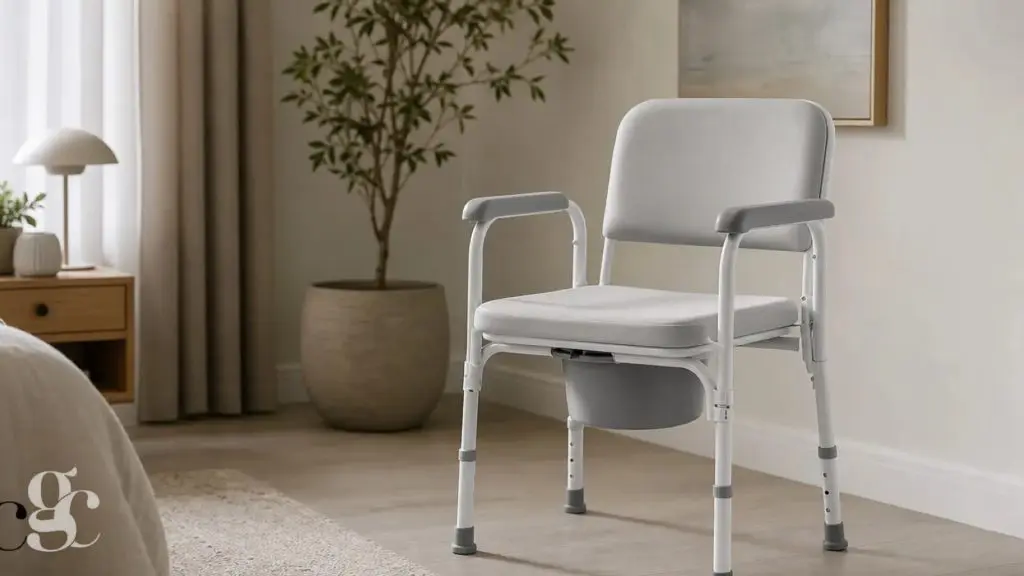
A commode chair, also called a bedpan chair, can prevent a difficult trip to the toilet. However, it should not be installed without assessing the transfer, the height, the stability of the floor, the arm strength, and the ability of a caregiver to maintain it.
First, ask the occupational therapist, physiotherapist, or discharge team if this equipment is necessary and if it can be loaned. An unsuitable chair can tip over, slip, or make getting up more difficult. The need may also be better met by a booster seat or a different arrangement.
What is the purpose of a commode chair during convalescence?
The device combines a seat with armrests and a removable container placed under the opening. It can be installed near the bed when distance, obstacles, or an emergency make accessing the toilet difficult. Some models can also be placed over a toilet bowl, if their design and the surrounding environment allow.
This is not a shower chair, a transfer chair, or a walking support. A post-operative shower chair has different requirements regarding water resistance and drainage.
Advertising
In what cases should an evaluation be requested?
An assessment is particularly important if the person leans to one side, cannot push up with both arms, needs assistance to stand, or is at risk of falling. The maximum weight specified by the manufacturer must also be compatible with the user and any assistive movements required.
The occupational therapist takes into account the surgery, any prohibited movements, walking aids, the bed, and the flooring. They may suggest a loan and check the transfer technique. Home recovery is best planned before admission rather than at the last minute.
How to choose the right height?
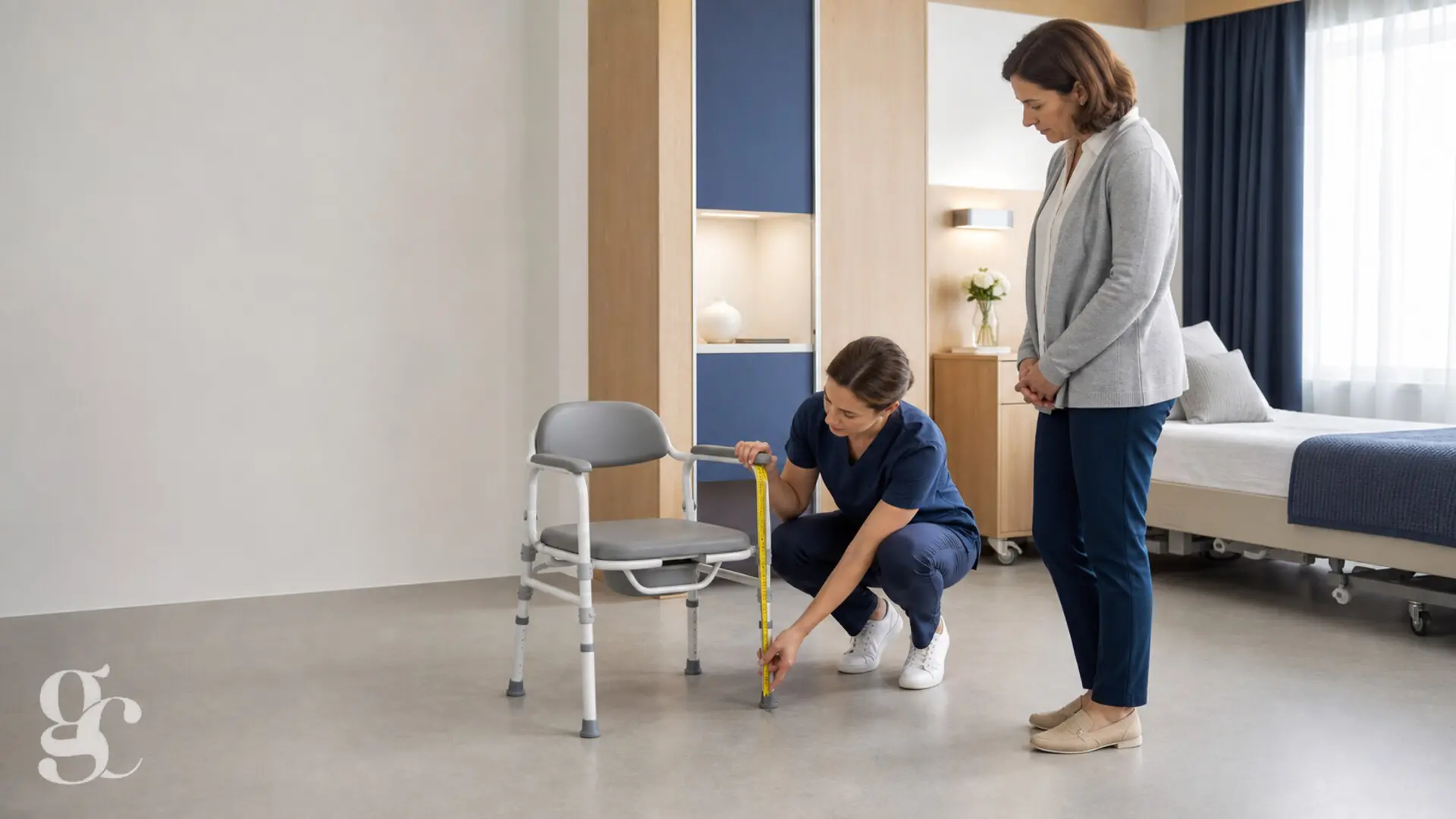
The feet must be able to rest on the floor and the knees must remain in the permitted position. A seat that is too low requires more effort to stand up; a seat that is too high can leave the feet unsteady. The height is adjusted according to the individual, their footwear, and the specific instructions for the procedure.
On an adjustable model, all legs must be at the same level and each clip must pass completely through the designated supports. Do not use improvised shims. Compare with the toilet seat riser guide after surgery to ensure that the journey to the toilet remains possible.
Commercial transparency: The following image and button are affiliate links via Awin and link to a specifically identified toilet chair. GuideChirurgie may receive a commission without altering the price paid. This product replaces the toilet seat riser, which was not relevant to the main topic.
Fixed or retractable armrests: what to check?
Fixed armrests
They provide a stable point of reference for sitting down and pushing up, provided you have sufficient arm strength. Check their width, height, and rigidity. A person pulling violently on one side can unbalance the chair.
Removable armrests
They can facilitate some lateral transfers, but only using a learned technique. The mechanism must lock securely without play. Do not remove an armrest to improvise a transfer from the bed; both the caregiver and the user could injure themselves.
Advertising
Where should the chair be placed without increasing the risk of falling?
- Choose a horizontal, dry, solid and non-slip surface.
- Place the chair away from walkways and without moving rugs.
- Leave enough space for the walking aid and the caregiver.
- Keep a light source accessible for nighttime travel.
- Use a firm back support if the manufacturer or professional requests it.
The path between the bed and the chair must be clear. A bed rail should not be added without first checking the bed and the risk of entrapment. Lighting, cables, and shoes are just as important as the main equipment.
How do I check the bucket and the lid?
The container must fit snugly, remain accessible to the caregiver, and be removable without lifting the person. Check the handle, lid, and for any cracks. A poorly positioned bucket may leak or shift during use.
Do not exceed the specified level and do not transport the open container. Disposable bags or covers must be specifically designed for the model. Keep cleaning products out of reach and do not mix chemicals.
Maintenance and hygiene: what organization is needed?
Clean according to the manufacturer's instructions, using the specified product and contact time. Wear recommended protective gear, empty the container into the toilet, and wash your hands. Dry the frame and check the end caps to prevent moisture from making the floor slippery.
Decide in advance who will perform the cleaning. If the caregiver cannot lift the container, squat, or clean without difficulty, inform the department. The presence of an accompanying person after outpatient surgery does not mean they can perform all the necessary tasks.
What signs indicate that the chair should no longer be used?
Stop using the chair if it moves, if a leg adjusts on its own, if a tip is missing, if an armrest is loose, or if the frame is cracked. Contact the supplier for repair or replacement; do not reinforce the device with tape.
Also request a reassessment if strength, balance, pain, or transfer ability changes. Equipment that was suitable on the day of discharge may become unsuitable after a fall, illness, or worsening condition.
Other equipment for getting up, washing and sleeping is presented in the guide to equipment to have on hand after an operation.
Advertising
How to prepare a comparison without choosing the wrong model?
Before ordering, note the dimensions, maximum load, settings, included parts, instructions, and return policy on a detailed product page. A single results page is insufficient to confirm the correct part number.
First, check loan options and arrange for a home assessment. A sales listing cannot confirm floor stability, transfer techniques, or the appropriate height. Avoid buying used if the history, parts, and manual are unavailable.
F.A.Q
Can the chair be used as an armchair during the day?
Not automatically. Comfort, pressure distribution, and support may not be sufficient for prolonged sitting. Use the seat cover only as directed in the instructions and adjust your position according to the advice provided.
Is a folding model preferable?
It's easier to store, but every lock and joint must be checked before use. A fixed model might be simpler. The choice depends on the available space and the required stability.
To remember
A commode chair should be considered a transfer aid, not just a receptacle. Have the height, armrests, flooring, maximum weight capacity, and maintenance checked. Loan options are available whenever possible, and discontinue use at the first sign of wear, damage, or a change in mobility.
Verified medical and institutional sources
- Kingston and Richmond NHS: Use of a fixed commode chair
- North Bristol NHS: Occupational therapy equipment loaned to homes
- Lancashire Teaching Hospitals: Adjusting and checking a commode chair
- NICE: Fall prevention and individualized assessment
- DGCCRF: Check the characteristics of a product bought online
- NHS Ayrshire and Arran: Choosing a suitable seat