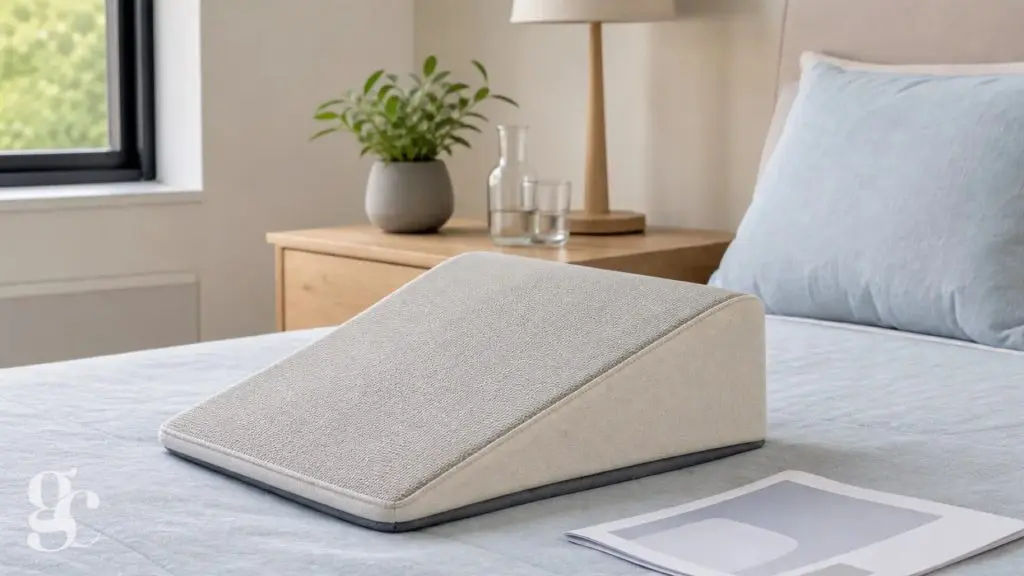
A leg support after surgery can help maintain the limb in the desired position, but it does not automatically determine the correct height or angle. These parameters depend on the procedure, the dressing, the permitted weight-bearing, circulation, sensitivity, and the goals set by the healthcare team.
Before purchasing, ask for specific instructions: which part of the limb to support, which position to avoid, when to remove the support, and what symptoms should prompt a call. A comfortable wedge in a store can become unsuitable as soon as it compresses the heel, puts strain on the knee, or displaces the surgical area.
What is the actual purpose of a leg support after an operation?
The support can stabilize a resting position, prevent the limb from slipping, or facilitate a specifically recommended elevation. It is a comfort and positioning aid. It does not replace prescribed mobilization, wound monitoring, or medical prevention of phlebitis.
Postoperative edema does not have a single cause. A swollen leg can be an expected reaction, a consequence of immobilization, a venous problem, or a complication. Elevating the leg should never delay seeking medical advice if the swelling changes abruptly or is accompanied by other symptoms.
Why does the correct position vary depending on the operation?
After foot or ankle surgery, the team may want to support the limb while protecting a cast, boot, or bandage. After knee surgery, they may request that a specific alignment be maintained and that a cushion not be placed in a particular location. After hip surgery, movement restrictions may also necessitate adjustments to the positioning.
Therefore, there is no universal rule such as "higher is always better." The instructions must specify the supported area and remain compatible with the exercises, transfers, and permitted weight-bearing. If the written instructions and your perceived comfort contradict each other, contact the service rather than improvising a new posture.
Advertising
What questions should you ask before making a choice?
- Must the limb remain straight or is a bend allowed?
- Can the heel be supported or must it be clear?
- Should the wedge only support the leg or also the foot?
- Is the device compatible with a plaster cast, splint, or boot?
- Should it be removed for sleeping, moving around, or doing exercises?
- What changes in pain, color, or sensitivity should raise concern?
Photographing the setup shown by the physiotherapist or requesting a diagram can be more helpful than simply providing a height measurement out of context. Also, incorporate the setup into the home recovery plan : available space, access to the toilet, and assistance with transfers.
What material criteria should be compared?
A fairly long and stable surface
A wedge that is too short concentrates pressure on a small area. A narrow or very lightweight base can pivot when the person moves. The support should rest flat on the bed or sofa, without tipping over or forcing the limb into a groove that is too tight.
A clean, non-slip cover
The cover must be easy to care for according to its instructions and must not create any creases under the skin. A very slippery material will cause the limb to slide down; a rough material can irritate sensitive skin. Also check that the zipper is not located under a pressure point.
A shape compatible with the morphology
Standard dimensions alone are insufficient to predict the placement of the knee, calf, and heel. Compare the usable length, the width of the channel, the firmness, and the product's returnability. A professional might recommend simple, well-positioned pillows rather than a molded wedge.
How to position the leg without creating a new support?
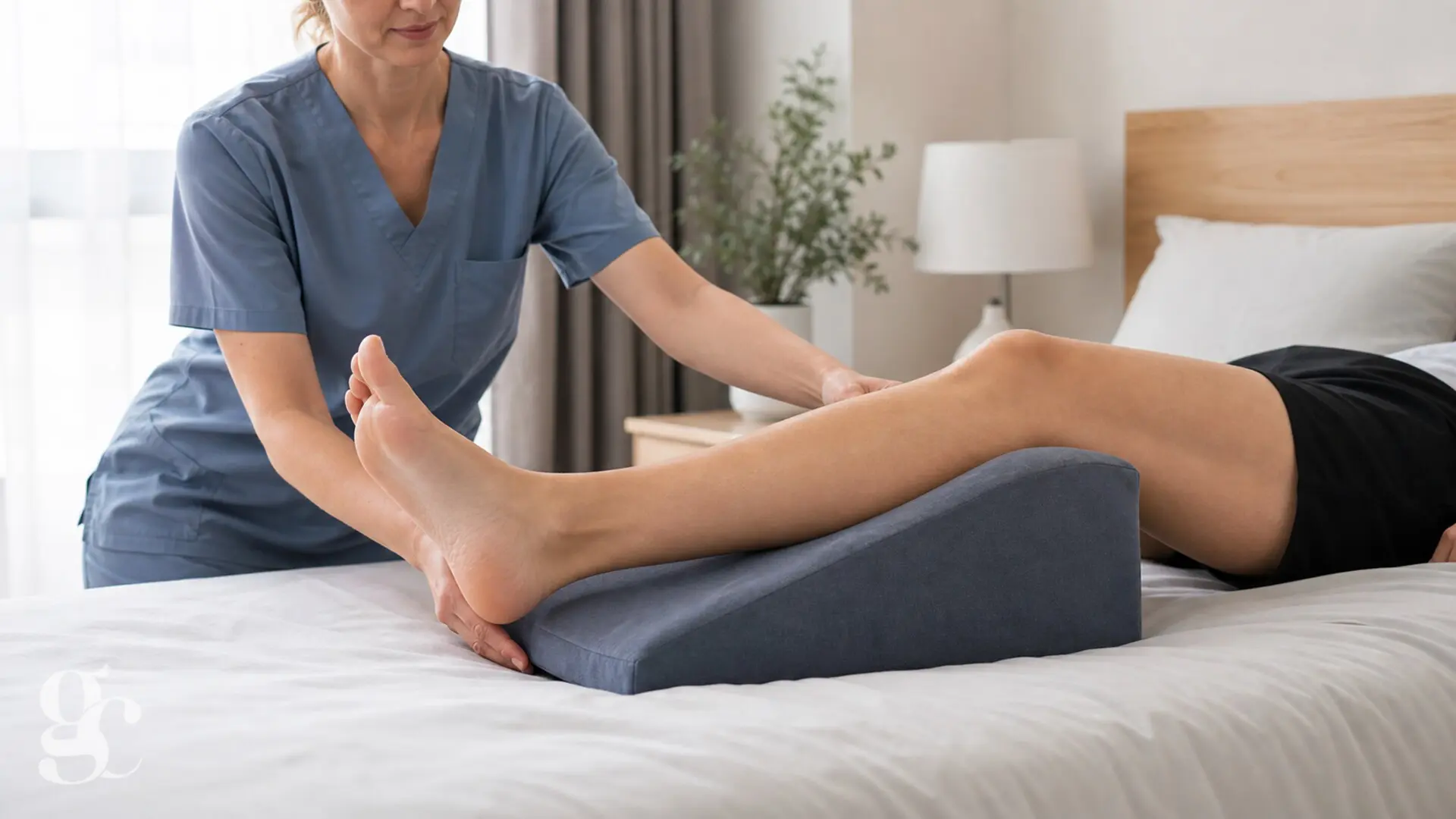
Prepare the wedge before lying down and ask for help if you cannot lift the limb without twisting it. Position it as a single unit using the technique demonstrated by the team. Then check that the dressing is not compressed, that the toes remain visible if necessary, and that no hard edges leave marks on the skin.
The position should allow you to follow post-operative sleeping instructions without adding unnecessary pillows. Do not restrict the limb to the point of preventing a permitted change of position. Prolonged and unprescribed immobility can itself cause problems.
Advertising
Which pressure zones should be monitored?
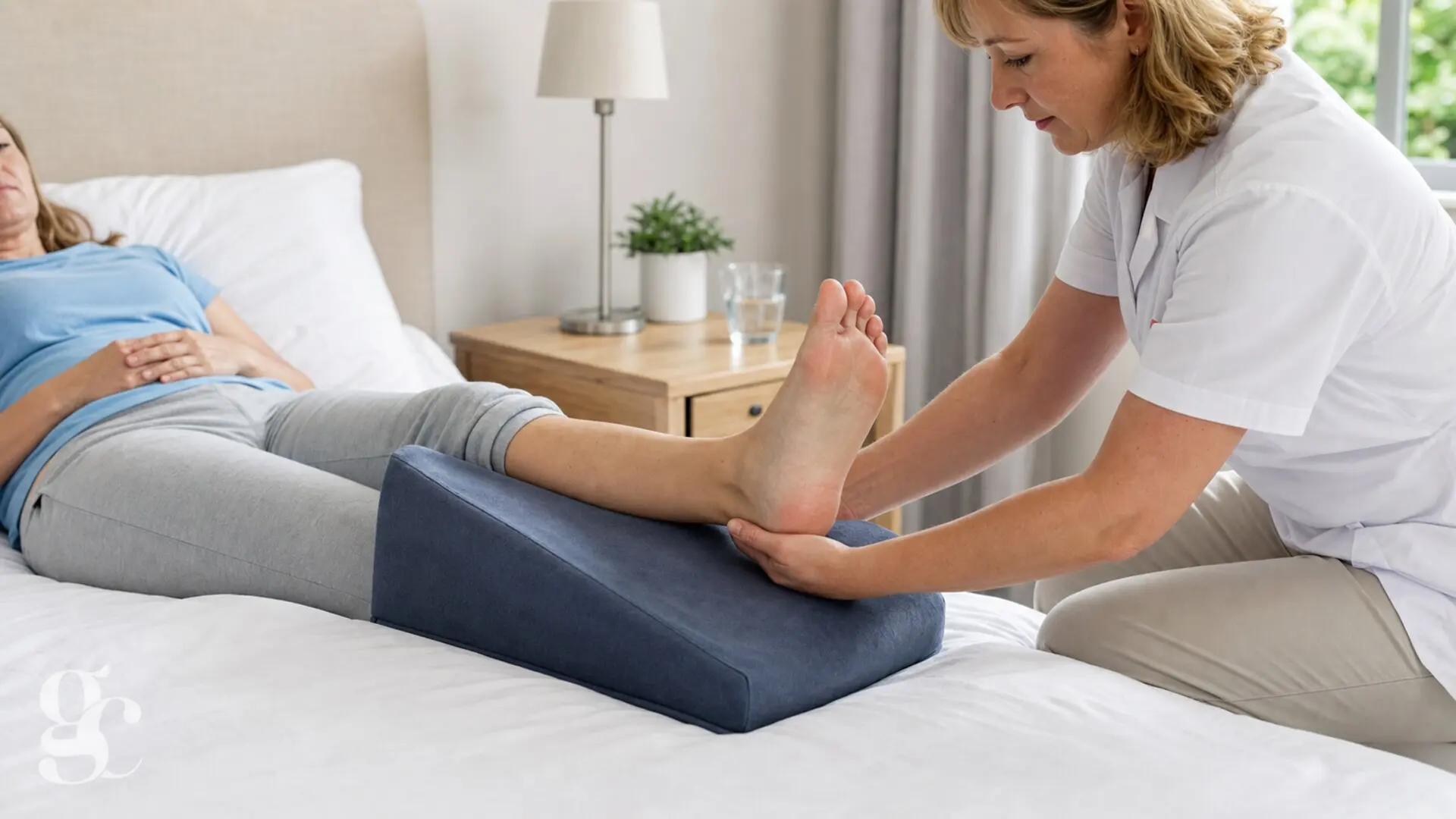
Observe the accessible areas before and after use: heel, calf, back of the knee, edges of the cast, and side of the ankle. Persistent redness, burning, numbness, localized pain, or damaged skin warrants discontinuation of the support and consultation with a professional.
Monitoring should be increased if sensitivity is reduced, circulation is poor, the person cannot change position independently, or if a rigid device is worn. So-called "memory foam" does not guarantee the absence of pressure sores. Choosing a medical support requires an assessment, not simply a product description.
How to protect the dressing and the scar
The wedge must not rub against the closure, pull on any tubing, or conceal a leak. If a drain or catheter is present, the placement must be validated by the team. Do not place a thick towel or improvised waterproof covering that would trap moisture around the skin.
Consult the post-operative dressing guide to distinguish routine checks from reasons for consultation. A wedge soiled by drainage must be removed from the treatment area and cleaned according to the instructions; it must not be used to conceal the abnormality.
Does a leg elevation cushion necessarily relieve pain?
A prescribed position may be more comfortable, but any increase in pain warrants a check of the setup first. A wedge that is too firm, a forced knee, a weight-bearing cast, or a slipping limb can all cause new discomfort. Carefully remove the support if the team has given you permission to do so and seek advice.
Equipment does not replace a postoperative pain management plan . Do not change medication or mobilization because the position seems effective or ineffective. Unusual pain may indicate a problem that requires investigation.
Advertising
When should you seek advice quickly?
- the swelling increases suddenly or becomes very asymmetrical;
- the calf becomes painful, hot or unusually tense;
- the toes change color, get cold or become numb;
- the plaster cast appears tighter or pain resists prescribed measures;
- the wound bleeds more, drains, opens or is accompanied by a general feeling of illness;
- The leg cushion causes a persistent mark or skin lesion.
Contact the surgical department that operated on you or the healthcare professional listed in your discharge papers. In case of sudden shortness of breath, chest pain, severe discomfort, loss of consciousness, or any other emergency, call 15 (SAMU) in France, or 112 from any other European country. Do not waste time adjusting the wedge to "test" a new position.
Should I buy a wedge before the operation?
Not without instructions. Some teams provide support, recommend using available linens, or prohibit any pressure that the intended wedge would create. Wait until you know the type of immobilization, the desired position, and the individualized duration of use.
Commercial transparency: The following image and button are affiliate links via Effinity and link to a specifically identified leg elevation cushion. GuideChirurgie may receive a commission without affecting the price paid. This reference is used solely to compare size and dimensions after the positioning has been validated by the healthcare team; it does not constitute a prescription or a guarantee of results.
F.A.Q
Can the wedge be replaced by several pillows?
Sometimes, if the team demonstrates precisely how to position them, pillows can shift, create creases, or support the wrong area. Have the setup checked and verify it after each movement.
Must the heel always remain suspended in mid-air?
No. It depends on the surgery, the skin, the immobilization, and the support. Heel offloading may be prescribed in certain situations, but it should not be improvised.
Can the wedge be used all night?
Only if the instructions allow it and if the position remains safe during sleep. Ask when to remove it, how to monitor the skin, and how to get up without twisting the limb.
Verified medical and institutional sources
- Kingston and Richmond NHS Foundation Trust: Returning home after orthopedic surgery
- Cambridge University Hospitals: Advice after an ankle injury or operation
- Royal National Orthopaedic Hospital: Preparing for foot or ankle surgery
- Worcestershire Acute Hospitals: Exercises and swelling management after knee surgery
- Royal Orthopaedic Hospital: Post-surgery discharge advice
- NHS: Recovery after an operation
Editorial content verified on July 17, 2026. It provides information but does not replace the written instructions of the team that is familiar with your intervention.