A dental infection before surgery, or symptoms that suggest one, must be reported promptly. The dentist will assess the mouth; the surgeon and anesthesiologist will determine if this situation will alter the planned treatment. The patient should not conceal symptoms or decide to cancel the procedure on their own.
This page does not provide a universal timeframe between dental treatment and surgery. Precautions vary depending on the infection, the urgency of the procedure, the patient's overall health, and the possible presence of a valve or joint implant. The individualized instructions of the dental team take precedence over any schedule found online.
Why report a dental infection before surgery?
A dental infection is a bacterial infection located in a tooth, its root, or the gum. It may remain localized or be accompanied by swelling, fever, and a general decline in health. The surgical team must be aware of any ongoing infection, even if it appears to be distant from the area to be operated on.
Reporting the problem helps coordinate the dental evaluation and surgical plan. It does not prove that the infection will reach the surgical site and does not, on its own, predict the final decision. During the pre-operative anesthesia consultation , describe the symptoms and any treatments already received, without downplaying them.
What signs might suggest a dental infection?

In the mouth
- intense, throbbing pain or pain triggered by chewing;
- swollen, red or sensitive gums;
- an unusual bad taste, discharge, or bad breath;
- difficulty opening the mouth or chewing;
- a broken, loose or recently treated tooth that becomes painful.
Regarding the face or general condition
Swollen cheek, jaw, or lymph nodes, fever, chills, marked fatigue, or general malaise all indicate the need for prompt medical attention. Mild pain does not rule out a problem, especially if a tooth has undergone root canal treatment or if the symptoms have been masked by other medication.
Advertising
What should be done as soon as symptoms appear?

- Contact a dental surgeon and specify that an operation is scheduled.
- Notify the surgeon's office or the pre-operative number provided by the facility.
- Provide the name of the intervention, the symptoms, their evolution and the treatments currently being carried out.
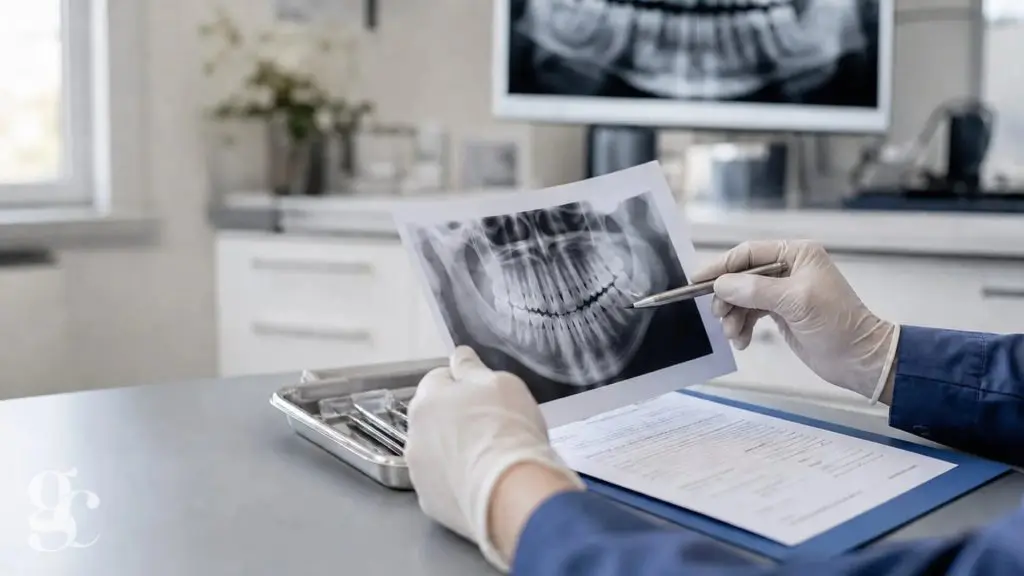
- Ask how to send the dentist's report and any X-rays.
- Follow the instructions received without changing the date of the operation or the prescription on your own.
Add the dentist's contact information and any documents obtained to your pre-operative preparation checklist . If symptoms change after the initial call, report this change instead of assuming the first response remains valid.
Will the surgery be automatically cancelled?
A dental infection does not automatically lead to the cancellation of the operation. The team weighs the clinical condition, the necessary dental treatment, the surgical urgency, and the risks inherent to the procedure. They may maintain the planned schedule, request a second opinion, adjust the treatment plan, or postpone it when it seems safer.
A decision that belongs to the professionals.
The dentist does not decide alone whether to proceed with the surgery, and the patient should not base their decision on a previous experience. The department performing the surgery is familiar with the procedure and its level of urgency. The surgical pathway in France helps identify the relevant contacts, but their direct instructions always take precedence.
Why no generic time frame is reliable
An extraction, drainage, conservative treatment, or an active infection are not all the same. Healing, persistent symptoms, and the type of surgery are more important than a single number of days. Request a written or clearly documented decision when multiple teams are involved.
Heart valve or joint prosthesis: what do the recommendations really say?
The HAS framework is targeted
The recommendation from the French National Authority for Health (HAS) concerns the oral healthcare of individuals at risk of infective endocarditis and includes specific provisions for valvular procedures. It should not be interpreted as a rule applicable to all operations, nor as authorization for self-prescription.
The ADA limits antibiotic prophylaxis to specific situations.
The American Dental Association reminds patients that antibiotic prophylaxis before dental treatment is not generally recommended for all individuals with joint replacements. Specific situations should be discussed between the dentist and the dental team providing prosthetic care. This framework does not allow for the treatment of an abscess alone, nor does it determine the outcome of abdominal, ophthalmological, or cosmetic surgery.
Observational studies illustrate this uncertainty: a cohort published in 2024 found an association between preoperative dental screening and a lower frequency of early prosthetic joint infection, without demonstrating a causal link. Another cohort, focused on valve replacement, showed no reduction in the risk of endocarditis with mandatory dental screening. These results justify targeted evaluation, not a promise.
Advertising
Should I take an antibiotic before the operation?
Do not start taking antibiotics on your own initiative. Leftover medication from a prescription may be unsuitable, temporarily mask symptoms, and delay necessary dental treatment. Antibiotic prophylaxis around certain procedures is not the same as treating an existing abscess.
Do not request an antibiotic simply to "save the date" of the surgery. The dentist chooses the dental treatment; the surgical team decides on the next steps. Do not discontinue any prescribed medication or add anti-inflammatories without consulting your doctor.
What information should be provided after dental treatment?
- the diagnosis retained and the tooth or area concerned;
- the treatment performed and the treatments still planned;
- the prescribed medications, along with the prescription;
- the evolution of pain, swelling and possible fever;
- the dentist's contact details for exchange between professionals.
Do not present the disappearance of pain as proof that the problem is completely resolved. The team assesses progress and reviews documents. This coordination is part of the coordinated preparation for surgical recovery , without creating a uniform dental procedure for everyone.
When should you seek urgent dental advice?
A dental abscess will not disappear on its own and requires treatment by a dentist. Seek urgent medical attention if you experience suggestive pain, swelling of the gums or face, fever, general malaise, discharge, or increasing difficulty opening your mouth. Also, inform the surgical team.
What signs indicate that you should call for help?
Difficulty breathing, speaking, or swallowing; significant or rapidly progressive swelling of the mouth, face, or neck; severe discomfort; confusion; or rapid deterioration may indicate a serious spread of the disease. Call 15 (SAMU) in France, or 112 from any European country, immediately. Do not drive or wait for your pre-operative appointment.
Advertising
What if the problem appears after the operation?
Contact the dentist and the team that performed your surgery, providing the date and type of surgery, your current medications, and any dental symptoms. Do not alter any blood thinning, pain relief, or other medications yourself to allow for treatment. The professionals will coordinate the level of urgency and any necessary precautions.
A dental infection and a wound infection are two distinct conditions. If the scar becomes redder, hotter, more painful, or starts to ooze, also consult the guidelines in the post-operative dressing guide and contact the relevant department.
F.A.Q
Should a painless cavity be reported?
Report any known dental problems and ongoing treatments. A cavity is not automatically an abscess or a reason to postpone your appointment. The dentist will assess the situation, and the surgical team will determine its suitability for the planned procedure.
Can the dentist provide a certificate?
He can share his diagnosis, the treatments performed, and the expected outcome. This document informs the surgical team but does not replace their decision. Ask the department what information is truly necessary.
Can I wait if the pain decreases?
No, if an infection is suspected. A perceived improvement is not enough to confirm that the cause is being treated. Continue the dental evaluation and inform the team of the actual progress.
To remember
If you suspect a dental infection, contact your dentist and the surgical team, provide specific details, and let them coordinate the decision. There are no universal waiting periods, cancellations, or antibiotics. Recommendations for valve and orthopedic issues remain limited to the situations they describe.
None of the links in this article are affiliate links. This general information is never a substitute for an examination by a dentist or an evaluation by the surgeon and anesthesiologist who are familiar with your case.
Verified medical and institutional sources
- French National Authority for Health: Oral health care for patients at risk of infective endocarditis
- American Dental Association: Antibiotic prophylaxis before dental procedures
- Health Insurance: Definition, causes and symptoms of a dental abscess
- National Health Service: Dental abscess
- Fenske et al.: Preoperative dental screening and infections of joint prostheses
- Krasniqi and colleagues: Dental screening before valve replacement and endocarditis