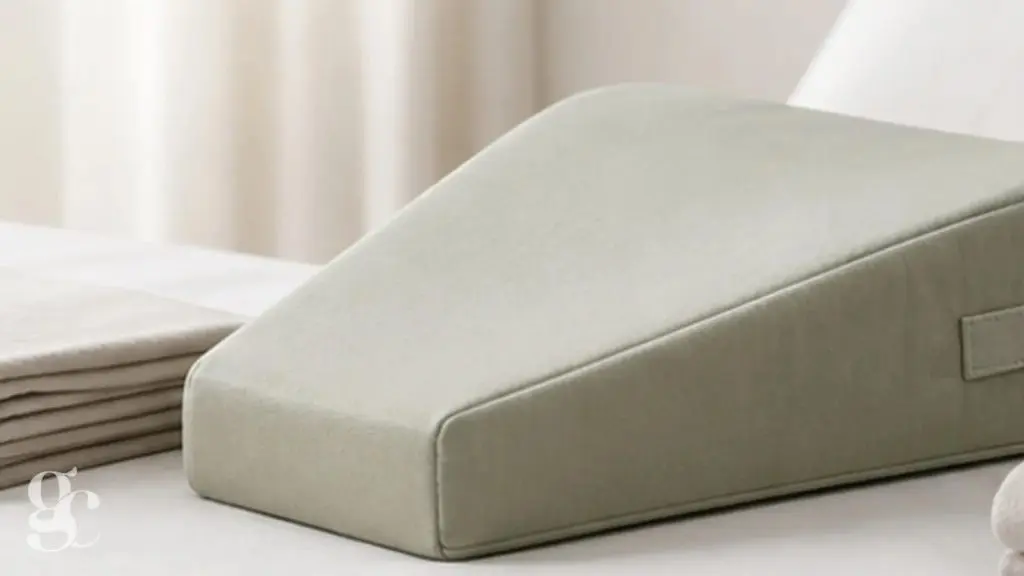
An abduction cushion after hip replacement should only be used if requested and demonstrated by the surgical team. Precautions vary depending on the surgical approach, hip stability, type of procedure, and patient profile. An ordinary pillow or knee separator sold online does not automatically replace the prescribed device.
The goal may be to maintain a specific resting position, limit involuntary movement, or help a loved one follow instructions. However, some teams do not prescribe a specific cushion after a primary prosthesis. Therefore, the first question is not "which one should I buy?" but "is this device part of my treatment plan?"
What is the purpose of an abduction cushion?
Abduction describes the movement of a limb away from the body's axis. After certain operations, the team may want to prevent the legs from crossing or a combination of movements from placing the joint in a position deemed risky. The cushion is then a means of support and guidance, not a universal treatment.
Preventing dislocation also relies on education, transfers, home modifications, and permitted movements. A device cannot compensate for poorly understood instructions. General guidelines on recovery after hip replacement do not replace the discharge summary.
Advertising
Why isn't the cushion standard practice?
Surgical techniques and protocols differ. The surgical approach, revision surgery, the muscles and tissues involved, history of dislocation, cognitive abilities, and observed stability can all influence precautions. Therefore, two patients who have undergone hip surgery may receive different sleeping instructions.
Adding a thick or strapped wedge on one's own initiative can hinder turning, increase skin pressure, alter pelvic position, or create a risk of falling when standing. Conversely, removing a prescribed device because it seems uncomfortable can expose the patient to a movement the team wanted to avoid. Any adjustment should be discussed.
Pillow, wedge and strapped device: what are the differences?
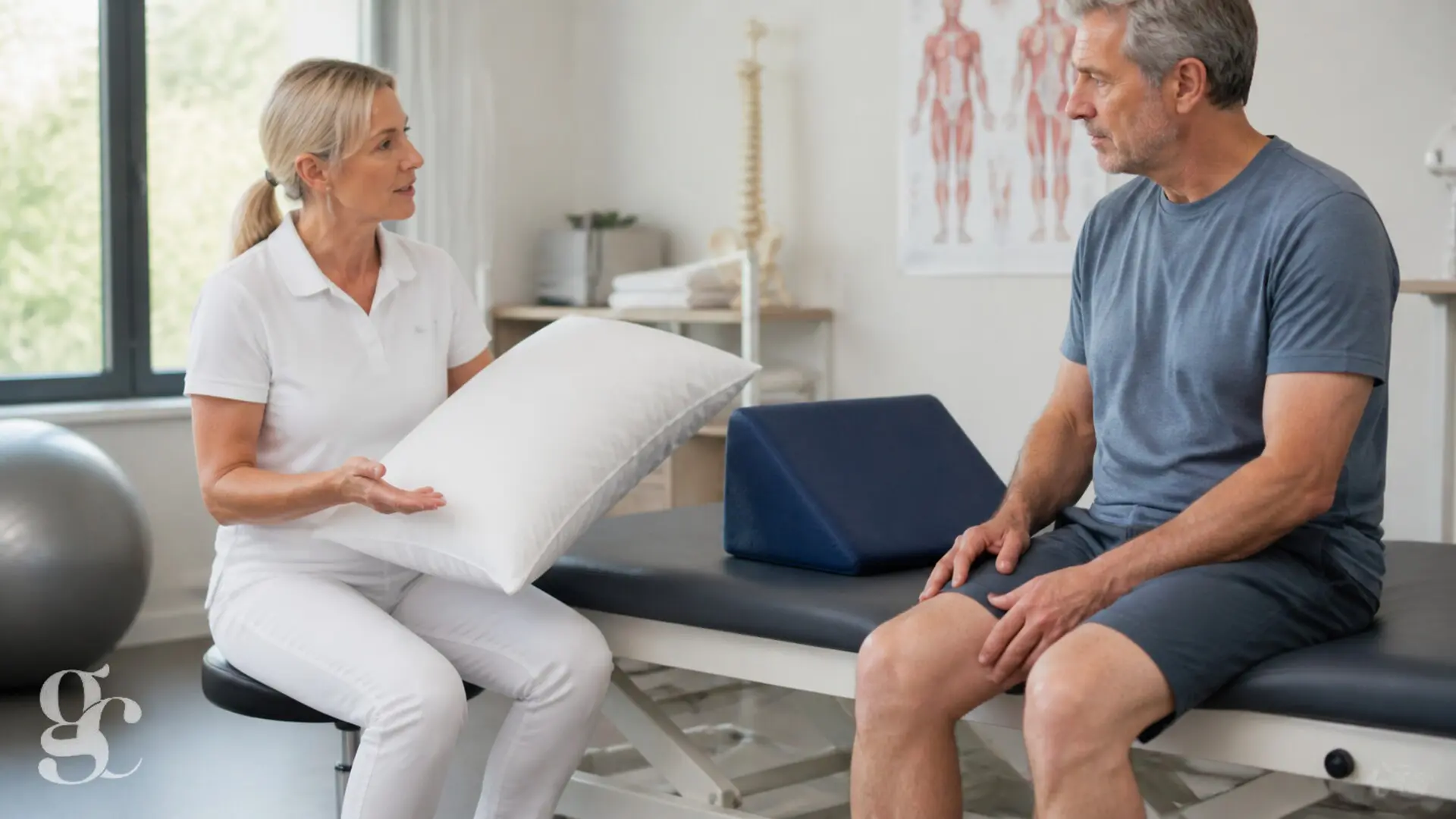
The ordinary pillow between the legs
It may be recommended in a specific position by some teams. However, its flexibility and thickness vary considerably, and it can slip. Do not assume that a pillow will suffice if a molded wedge or attached device has been prescribed.
The foam abduction wedge
Its shape keeps the legs separated more consistently. Some models include straps or compartments for the limbs. The width, length, firmness, and contact points should be tailored to the individual and the clinical objective.
The orthosis or specialized device
A hip brace or positioner used for a specific situation is not a comfort cushion. Its adjustments and limitations are the responsibility of the prescribing physician and the orthotist. Do not modify the straps, joints, or padding without prior approval.
What information should I ask for before leaving the hospital?
| Ask the healthcare professional | Choice criteria | Mistakes to avoid |
|---|---|---|
| Is the device required, recommended, or unnecessary in my case? | Written instructions on the document given upon discharge from the hospital: type, positions, duration. | Purchase an abduction or positioning cushion without a prescription or instructions. |
| In what positions should I use it or remove it, and how do I turn around? | Device provided or designated by the team; ordinary pillow between the knees if the team says so. | Stack unstable pillows or improvise some kind of support. |
| How can I get up at night without exceeding the permitted bending angle? | Lighted path, closed slippers within reach, stable support for getting out of bed. | Getting up in the dark by pulling on the nightstand. |
- Is the device required, recommended, or unnecessary in my case?
- In what positions should it be used or removed?
- How to perform a turning, lifting and transfer without moving it?
- What model, reference number, or dimensions have been validated?
- Who to contact if the pillow slips, compresses, or prevents sleep?
- What signs indicate that it should be removed and that advice should be sought immediately?
Have the patient, and if necessary, their caregiver, practice the procedures. A photograph of the correctly installed device can be helpful if the department allows it, but it does not replace a demonstration. Include these instructions in the discharge planning.
Advertising
How to check the installation without changing the prescription?
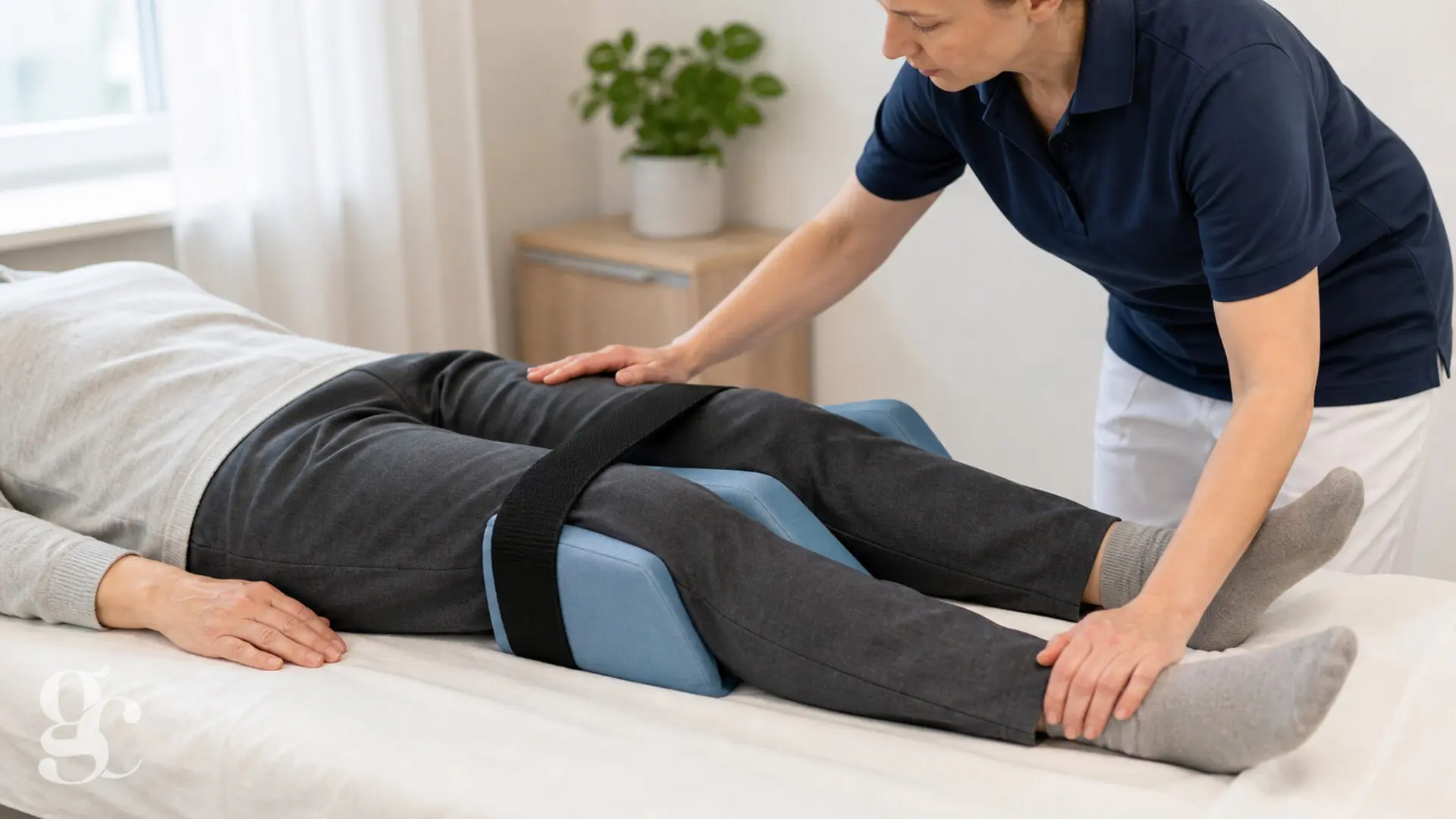
The device must remain in the position shown, without forcing the pelvis to twist or creating a hard edge against the skin. Any straps must be used according to the instructions and training received. Check that a sheet or garment does not create a thick fold under any support point.
The feet should maintain their usual color and temperature, and the person should not develop any new numbness. Observe the heels, ankles, knees, and areas in contact with the foam. Any persistent discomfort, marks, pain, or swelling requires contacting the team.
Sleeping and turning over with the device
The permitted sleeping position depends on the surgery. Do not spontaneously turn onto your side or remove the wedge while sleeping if the medical team has instructed otherwise. The post-operative sleep guide provides general principles, but only the medical team can confirm the correct hip position.
If turning requires assistance, plan the sequence with the physiotherapist or occupational therapist. Avoid pulling on the operated leg or the straps. A slippery bed pad, a very soft mattress, or a bed that is too low can affect the movement and should be reported before discharge.
Getting up, walking and the risk of falling
A bulky cushion should not remain attached during a standing motion unless explicitly instructed. Before moving, check that the legs are free according to the learned sequence and that the walking aid is accessible. Crutches after surgery also require adjustment and instructions on how to use them.
Don't leave the wedge on the floor near the bed: it can become an obstacle during nighttime movement. Plan for a stable location, accessible lighting, and someone to call. If getting up independently hasn't been successful, don't try to gain more autonomy in the middle of the night.
What signs necessitate a quick consultation?
- new, sudden or markedly increasing hip pain;
- sensation of dislocation, clunking or inability to move as usual;
- a leg that appears to be turned, shortened or placed in an unusual way;
- cold, pale, bluish, very numb feet or significant swelling;
- persistent redness, blister or sore on an area of pressure;
- fall, slip out of bed or forced movement despite precautions.
A possible dislocation requires urgent assessment: do not attempt to put the hip back in place and avoid having the person walk. Call 15 (SAMU) in France, or 112 from any European country if the pain is severe with deformity, inability to move, dizziness, or a significant fall.
Advertising
Do not confuse dislocation, infection, and phlebitis.
Pain or swelling after a prosthesis can have several causes. Redness, wound drainage, fever, or increasing pain warrants prompt contact with the team; also consult the guidelines on surgical wound infection.
A swollen, painful, or hot leg or calf may indicate a venous complication. Information on phlebitis after surgery does not replace calling emergency services. Chest pain, sudden shortness of breath, dizziness, or loss of consciousness requires calling 15 (SAMU) in France, or 112 from any other European country.
Why this article doesn't recommend any products
A generic knee cushion, an abduction wedge, a pediatric positioner, and a hip orthosis are not equivalent. Product descriptions do not allow users to confirm the surgical approach, the stability of the prosthesis, or the intended positioning. An inappropriate product description can provide false reassurance or create unnecessary stress.
Transparency: The device is neither automatic nor interchangeable. None of the links in this article are affiliate links. If the team recommends a model, request a written reference, relevant measurements, a demonstration, and the replacement process.
F.A.Q
Is a pillow between the knees enough?
Only if the team has approved it for your situation and sleeping position. Its shape, support, and risk of slippage differ from a prescribed wedge.
Can the cushion be purchased before the operation?
First, ask if a device will be needed and if it will be provided. Purchasing in advance without a specific reference number may be unnecessary or incompatible with postoperative instructions.
When can we stop using it?
There is no universally accepted date for discontinuing the cushion. Discontinuation depends on the intervention, the assessment of stability, and the team's decision. Do not discontinue the cushion simply because the patient appears to be improving.
Verified medical and institutional sources
- Royal National Orthopaedic Hospital: Individualized precautions after hip replacement
- American Academy of Orthopaedic Surgeons: Activities and positions after hip replacement
- NHS: Recovery after hip replacement
- NICE: Primary hip and knee joint replacement
- French National Authority for Health: Identifying an infection in a hip or knee prosthesis
- American Academy of Orthopaedic Surgeons: Total Hip Replacement and Prevention of Complications
Editorial note: This general information article was verified on July 17, 2026. It does not prescribe any device, position, or duration of use. The instructions of the surgical team take precedence.
This article contains no commercial links. For other recovery equipment after hip replacement surgery, consult the post-surgery equipment hub and its printable hip replacement list , or generate an equipment list based on your accommodation.